


From the Fields: Christopher Hight, Santa Barbara and San Luis Obispo counties Certified Crop Adviser
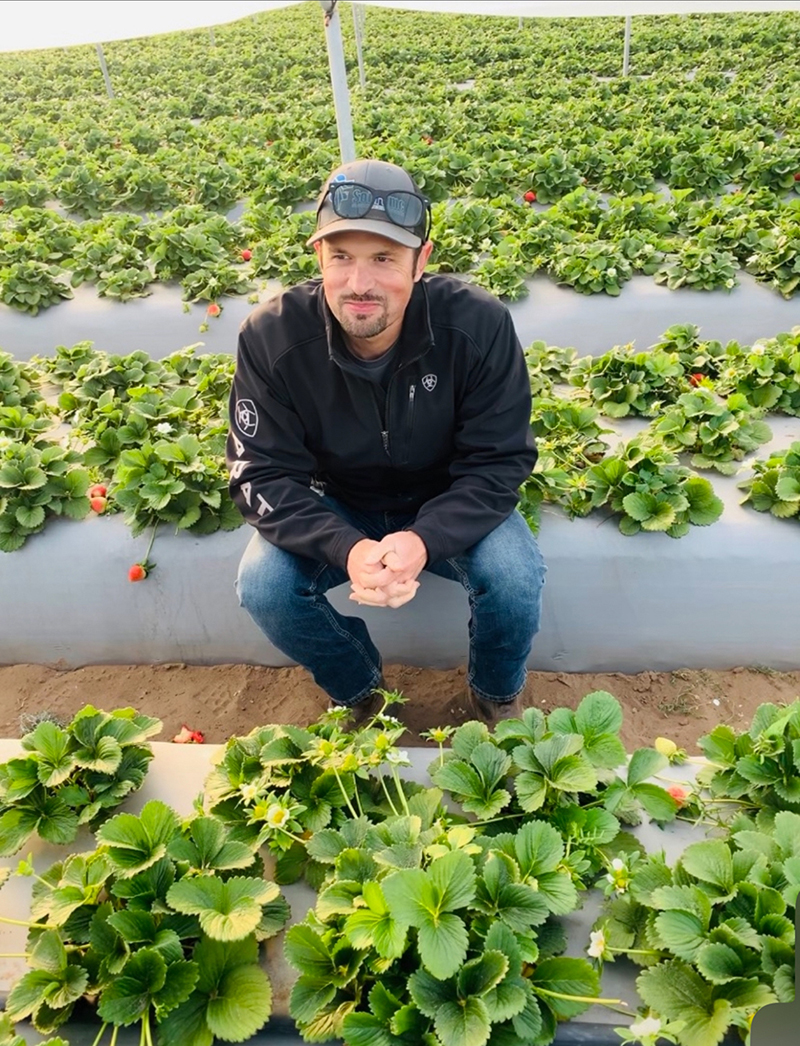
Christopher Hight
Photo/Courtesy of Christopher Hight



By Christopher Hight
Santa Barbara and San Luis Obispo counties Certified Crop Adviser
My day to day consists of visiting Central Coast vegetable and berry ranches to coordinate sampling of soils, tissue and water to provide the most environmentally sound advice to address fertility needs. The fields look great as we just got most of our vegetable crops in for the last rotation of the year, while summer strawberries and blackberries are coming in strong. We’re also getting ready to get next season’s winter strawberries into the ground. The weather is great for growing crops, but it also allows diamond back moth populations to get out of control, but we’re on top of it.
As a Certified Crop Adviser, I utilize my knowledge of right source, right rate, right time and right place of nutrients to provide recommendations for growers to achieve the best return on their investments while still protecting the environment. One of the biggest challenges is from the Regional Water Quality Control Board, which limits applications of nitrogen to limit nitrate loading to aquifers and groundwater. The challenge comes when one must produce the same quality and quantity of vegetables with lower nitrogen inputs. While not all nitrogen is from agricultural sources, it is important to do our part. This is where my knowledge of being a CCA comes into play, utilizing a complete nutrient profile to apply sufficient nutrients in balance with plant need. This is further complicated when crops are grown in a variety of soil textures and microclimates.
I have been investigating the effect that growing season and soil texture have on the amount of nitrogen mineralized from organic amendments in broccoli. Synthetic fertilizers are generally available to plants as inorganic nitrogen. In organic fields, the amendments applied must go through mineralization by microbial populations to become available to plants. I am looking into what variables impact the availability of these nutrients from organic amendments for plants.
Precision applications of fertilizers at the appropriate time in conventional and organic crops limit the cost to farmers and ultimately to consumers. It is important to build and maintain soil quality with the correct inputs so farmers can continue growing for generations to come.
See related news stories...
• CCAs can help farms maximize their water for crops
• CCA Today: How a Certified Crop Adviser approaches nitrogen management plans
• From the Fields: José Ramírez, Monterey County Certified Crop Adviser






.svg.png)
