


Kids learn about agriculture, find their voice in 4-H


By Shannon Douglass
I got my start in 4-H when I was a seventh grader in Sacramento County, inspired by my mother, who had been a 4-H member. 4-H is where I first learned to speak in front of a group and lead a committee meeting. It was a valuable foundation, upon which my leadership experience in agriculture was built.
Through 4-H, you acquire important life skills, building self-confidence, learning responsibility, keeping records, speaking in public and, of course, taking care of animals—all essential elements for agriculture.
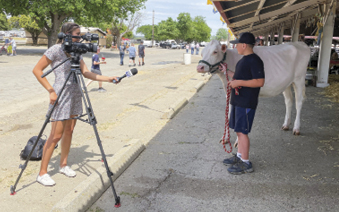
I’m now an adult leader for Schaffert 4-H Club in Orland, and I was recently honored with my 10-year pin. I have watched my son Heath, 11, flourish in extending our family’s 4-H journey into its third generation. My pride is immense, as I watch him share his passion for raising cattle. He did his first television interview at age 9—far younger than when I first did mine—and with no help from Mom. He enjoys explaining how cows are good for the environment and how chocolate milk is good for athletes. At fairs he helps people get first experiences with cows. 4-H is already inspiring him as an agricultural advocate.
National 4-H Week began Oct. 2 and runs through Oct. 8. It is our opportunity to recognize this excellent organization and the young people it influences in such positive ways. 4-H provides life-forming experiences and opportunities for our youth. It fortifies the values of farming and ranching in our rural communities. It also introduces kids in urban centers to agriculture.
In partnership with the University of California Agriculture and Natural Resources, the California 4-H Youth Development Program engages young people through raising livestock and learning about agricultural technology and robotics. 4-H also offers after-school enrichment programs and 4-H collegiate volunteers guide youths to participate in projects in neighborhoods and through local, regional and state 4-H programs. 4-H also tailors programs to provide nurturing environments for young people in military families.
I have witnessed how 4-H can make a difference in a child’s life and development far beyond the many ribbons they earn.
Last fall, at the beginning of the project year, I met a painfully shy 9-year-old boy who had no livestock or 4-H experience. His mom is a nurse, and his dad works for a farming company. Though the family lives in the city, fortunately, there is no rule against raising a goat in the city limits.
When this boy began in 4-H, he wouldn’t speak at the first meeting. He didn’t even share his name to our small group. His mom said he was even shy around extended family.
By the second meeting, when he first got to touch a goat, he slowly began to open up. His mom let me know she was pleased with how comfortable he was getting. By the third and fourth meetings, we were making progress: He was talking to the group. He made his required 4-H presentation and did so well that other mothers looking on were tearing up.
His confidence was growing, yet the junior livestock auction loomed as a potential challenge for him. We feared all the noise and action of the auction might be too much.
Together we watched as some animals were sold, so he would know what to expect. However, I warned him that the auctioneer was likely to mispronounce his name, and he may need to help him say it correctly.
Then his moment came. Suddenly, this shy, slight boy seemed to stand tall. In front of an audience of hundreds, he gave the auctioneer clear instructions on how to say his name. I was blown away by this small step. He had a successful show and sale with his goat, Muffin, and earned ribbons. But the real thrill was watching his confidence grow.
This is a just a sample of the 4-H journey. As a 4-H mom and leader, I am inspired by these experiences. Among the most rewarding are watching young people, including many who come from outside of agriculture, have such great experiences in learning even just a little bit about the agricultural industry. They are developing real-world skills, whether for agriculture, other professions or life in general. Many become positive representatives for our industry and its future.
When you participate in 4-H as a volunteer, your time makes a difference. While many 4-H members may not go on to lives in agriculture, they will be engaged in their communities, and they will be voters. They will look back fondly on their 4-H experiences, forever appreciating the vital role of agriculture.
(Shannon Douglass, first vice president of the California Farm Bureau, grows row crops and raises beef cattle in Glenn County. She may be contacted at sdouglass@cfbf.com.)