


Growers seek burning option for diseased vineyards
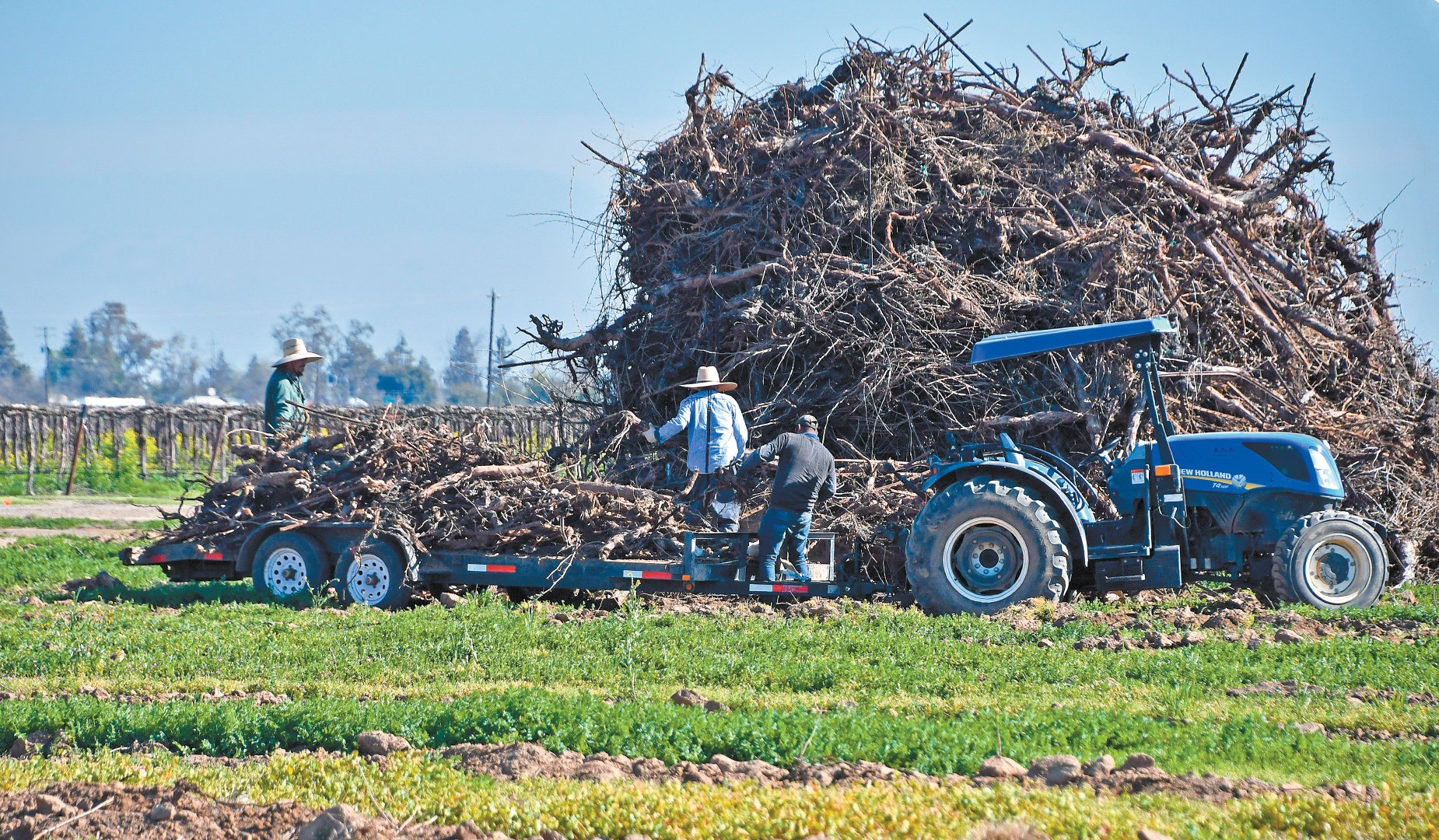
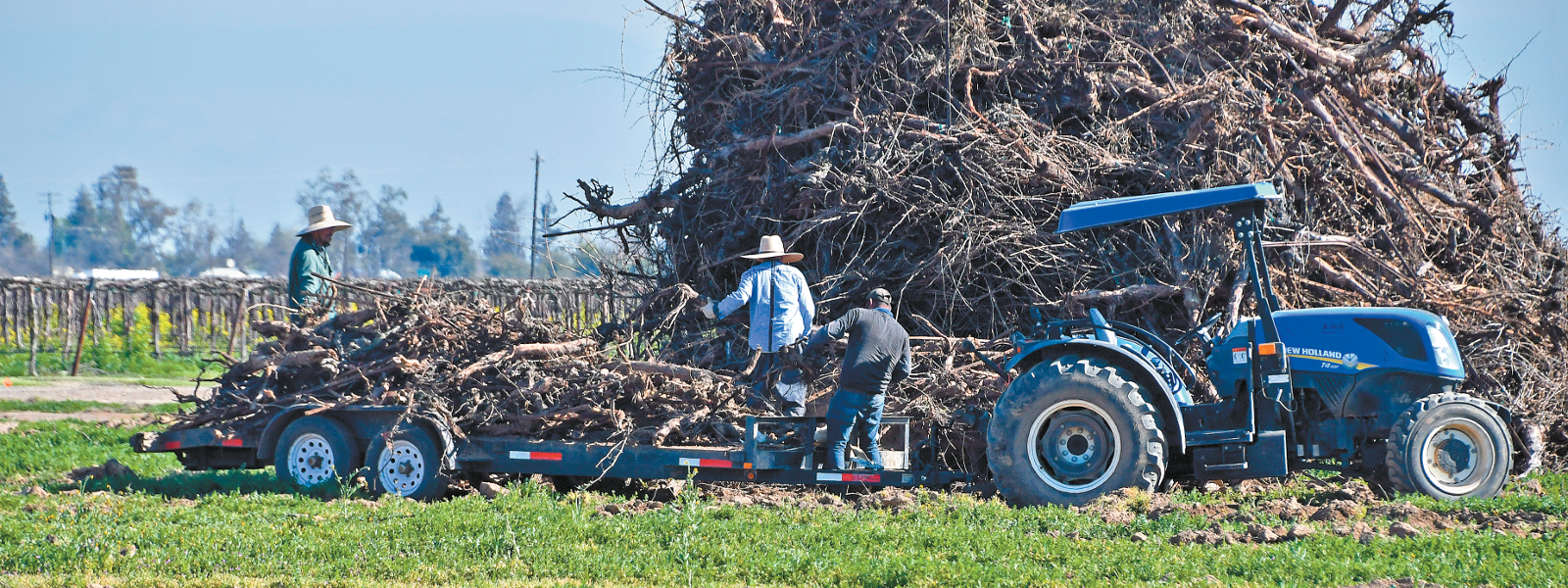
A crew near Lodi separates wood from wires and metal stakes after taking out a diseased vineyard. Some growers say burning discarded vines is the best option to prevent the spread of crop pests.
Photo/Vicky Boyd


Photo/Vicky Boyd
By Vicky Boyd
San Joaquin Valley grape growers who thought they could use an agricultural burn phase-out rule exemption to ignite piles of diseased vines have encountered yet another obstacle. They also have to obtain an increasingly rare burn permit from the regional San Joaquin Valley air district.
The frustration experienced by some growers became apparent at a recent agricultural burning outreach meeting hosted by the Lodi Winegrape Commission with help from the California Association of Winegrape Growers and the Lodi District Grape Growers Association.
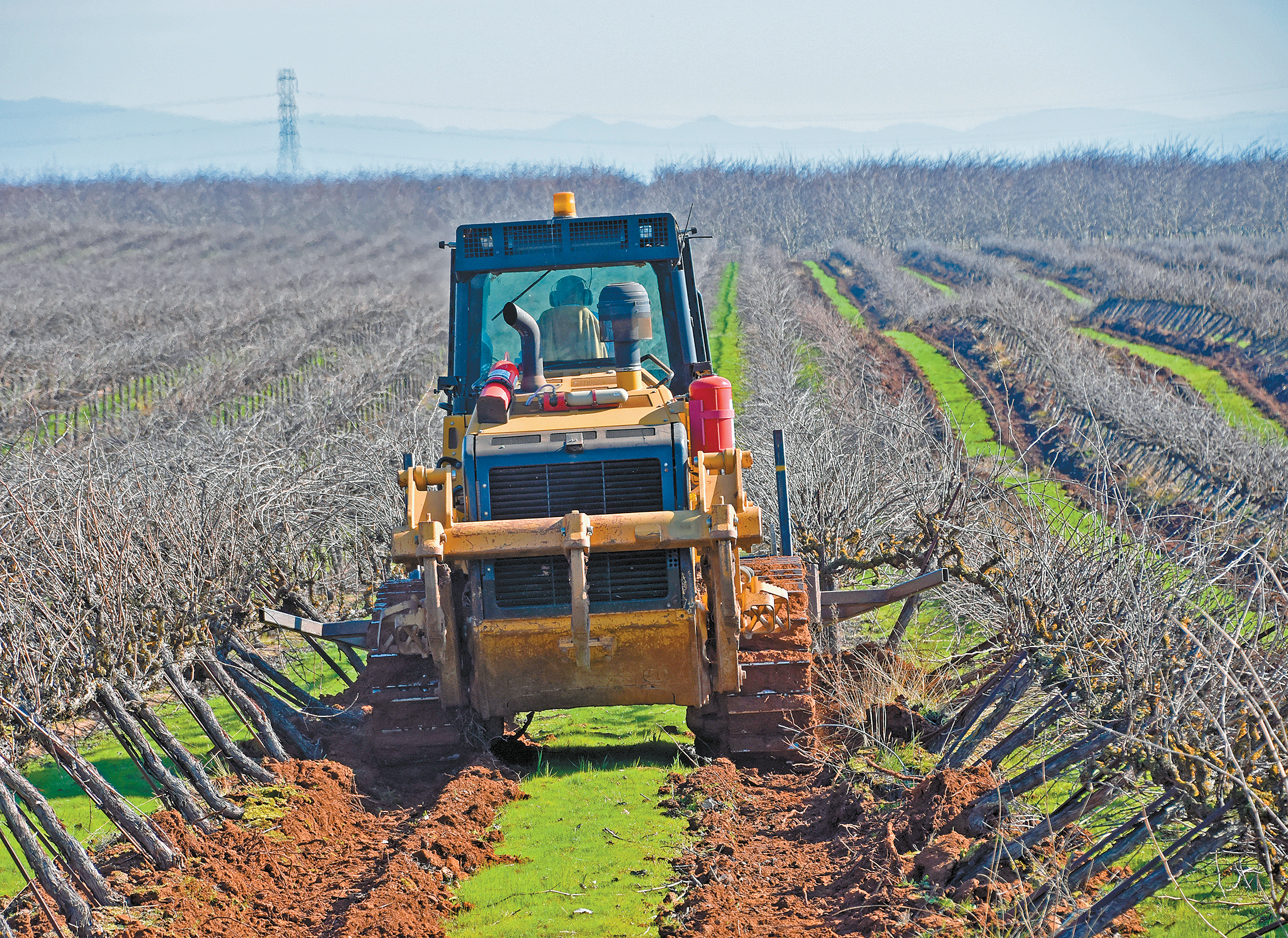
“When you have a diseased vineyard, it has to be taken care of,” said Randy Kazarian, a Lodi winegrape grower who had pushed an old vineyard and was waiting to burn it. “This is really a mess. I have vines in cold storage waiting for planting, and you can’t store vines for years. We have to make our plans a year in advance.”
The Lodi Winegrape Commission decided to hold the meeting to help reduce confusion that exists on all sides, from growers to regulators, surrounding the burn regulations.
Under Senate Bill 705, signed into law in 2003, open-air burning of orchards and vineyard material within the eight-county San Joaquin Valley Air Pollution Control District was to be phased out by 2010, provided alternate, less-polluting disposal methods were available.
Technological advances lagged, and several biomass plants that were expected to accept the agricultural material closed. As a result, the California Air Resources Board concurred with the air district’s request to extend the deadline to end burning several times. The final deadline is Jan. 1, 2025, and air district officials say they are adamant they will not extend it again.
To help with the transition, the regional air district secured state funding to provide cost-share to growers. Most recently, the air district received $187 million, of which $35 million went to help custom operators purchase new chipping and grinding equipment.
Some crops, such as tree nuts, were on a faster phase-down schedule. Many nut producers now have companies grind or chip orchards and incorporate the material into the soil—a system known as whole-orchard recycling.
Because of unique production practices, grape vineyards are on the tail end of the phase out. Depending on the type of trellising, vineyards may not be suited to recycling because cordons—side branch-like extensions from the main trunk—envelope support wires as they grow.
If those vineyards were pushed, piled and chipped, metal wire could damage equipment or become shrapnel, posing safety threats to nearby workers. In response, some growers have hired crews to painstakingly separate the wires and metal stakes from the vines, but the process is expensive.
The legislation also provided an exemption that if the county agricultural commissioner certified a vineyard was infested with economic pests, such as viruses, the grower could burn it. That’s because simply chipping and incorporating the vines into the soil could allow diseases in the woody material to carry over and infect a new vineyard.
Even with the agricultural commissioner’s affirmation, the grower must still obtain a burn permit. The air district declares a burn day and issues permits only if it forecasts atmospheric conditions the following day will allow for smoke dissipation, said Sheraz Gill, deputy air pollution control officer. During the winter, the district also has to factor in pollution from residential wood burning.
The cause for concern are minute particles known as PM 2.5, which are about 1/40th the diameter of a human hair and have been linked to respiratory problems. The U.S. Environmental Protection Agency has classified the San Joaquin Valley as a PM 2.5 nonattainment area, meaning it exceeds federal thresholds. If the air district can’t bring the area into compliance, the region risks losing millions of dollars of federal funding, he said.
Because the EPA continues to ratchet down the PM 2.5 threshold, Gill said the air district has had to reduce the number of burn days and burn permits the past several years. Even if a grower obtains a permit, it may be for only a fraction of the overall material he or she needs to burn.
Tom Murphy, who farms winegrapes and nuts with his brother, Chester, near Lodi and Farmington, recalled their experiences when they removed a vineyard about three or four years ago.
“It was a real challenge to get burn days,” Tom Murphy said. “We had a couple hundred acres and would get 10 to 15 acres, and then we’d have to wait to see if there was another burn day. It was very slow.”
Based on how this season fares and whether wineries renew some of their contracts, Murphy said they may consider removing additional vineyards that are not economical. Learning about disposal options was one reason he and Chester attended the agricultural burn meeting.
Aaron Lange, who heads vineyard operations for Lange Twins in Acampo, said he likely will remove 400 acres of vineyards after this season. Over the years, Lange Twins has worked to reduce vine mealy bug infestations and remove individual virus-infected vines.
To avoid pest management setbacks, Lange said he planned to use an air-curtain burner to dispose of the old vineyards. The device allows for open-air burning while reducing particulate emissions by about 80%. Because it still emits 20%, the curtain burner does not quality for air district cost-share.
“We’re being very cautious about how we remove them so we’re not creating a problem for ourselves down the road,” Lange said.
With low grape prices and lapsing winery contracts, Lange said he fears some growers may not have the money to push and remove diseased vineyards. Left in the field, the old vines could host pests—including particularly dangerous threats—that can spread to nearby vineyards.
“I’m not blaming anybody,” Lange said. “But I’m just saying the situation is really ripe to spread leafroll 3 and vitivirus, which we now know is the primary cause of sudden vine collapse.”
(Vicky Boyd is a reporter in Modesto. She may be contacted at vlboyd@att.net.)





.svg.png)
