


Wildfire losses inspire changes in avocado orchards
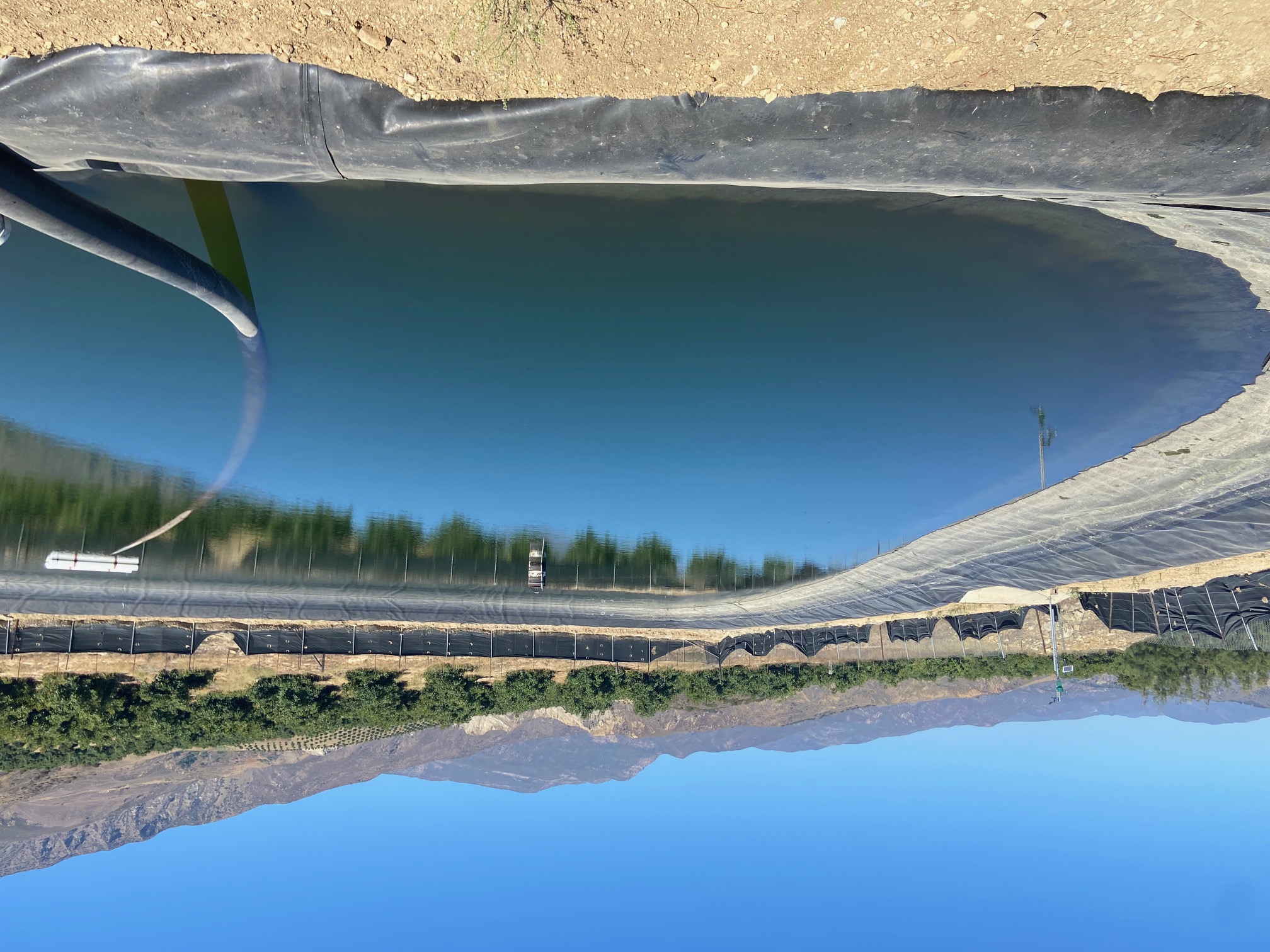
This reservoir at Brokaw Ranch Co. in Santa Paula holds 1 million gallons of water and is one of two reservoirs on the farm. Because it is gravity fed, it can deliver water even when there’s no electricity. This allows the farm flexibility in how and when to use irrigation.
Photo/Rob McCarthy


By Rob McCarthy
Lessons learned from destructive wildfires in Ventura County have given avocado growers a fighting chance to save their orchards when the next big blaze hits.
One of those lessons, shared by Ben Faber, University of California Cooperative Extension citrus and avocado adviser for Ventura and Santa Barbara counties, is that healthy avocado trees can survive a fast-moving wildfire. And, he said, the rescue operation starts before the flames and intense heat arrive.
“If a sick tree isn’t picking up water, it’s going to burn,” Faber told growers and ranch managers at a fire-resilience workshop, held Aug. 19 in Somis and sponsored by the California Avocado Society. “Sick trees burn first.”
The “shocking” amount of heat from the 2017 Thomas Fire in Santa Paula and last year’s Mountain Fire in Somis and Camarillo can turn tree canopies brown within 48 hours, Faber said. But correctly irrigated trees can recover from a fast-moving blaze in four months, he said, showing new bud growth on the trunk and limbs.
He cautioned growers not to give up on their trees, because a fast, wind-driven fire may cause only superficial damage that looks bad but may not be. The worst cases occur when mulch and leaves catch fire, creating so much heat that the avocado tree trunks melt.
“You have to wait to let the tree tell you what’s going to happen,” Faber said.
John Schoustra, who raises avocados on his Somis ranch, reported that 75% of his trees affected by the Mountain Fire in November survived. Fortunately, he had irrigation water available on the day of the fire and was able to soak the orchard ground with overhead sprinklers.
The losses of trees and production from fires dating back to the mid-1990s have Ventura County ranchers—especially those on hillsides in burn-prone areas—considering establishing reservoirs to hold water year-round.
Brokaw Ranch Co. in Santa Paula keeps two reservoirs filled. They are gravity-driven and can deliver water even when the electrical power goes out, ranch manager Nathan Lurie said. Whether it’s a fire or a heat wave, the reservoirs give Lurie “ownership and flexibility” on when and how the water gets used, he added.
The upper reservoir holds approximately 1 million gallons of water, and a second lined pond has a capacity of almost 2.3 million gallons, Lurie noted. During the Thomas Fire, the ranch—which had only the larger reservoir at the time—took a severe hit. Nearly 95 acres of orchards were heavily damaged, and another 40 acres were partially damaged, he said.
The 200-acre ranch isn’t taking any chances, Lurie said: It keeps water trucks downhill from its orchards and didn’t replant along the road through the orchard after the Thomas Fire. The bare ground is dotted by tree stumps that serve as a defensible perimeter designed to keep a fire from jumping the road.
The ranch also installed a system of water lines with shut-off valves, which can be used to fight spot fires, and bought commercial-grade fire hoses.
Ventura County citrus growers also face the threat of fires, but citrus fruit is grown on flat ground and has less mulch on the ground to ignite, Faber said.
“Lemon trees burn, and once burned, they don’t come back like avocados do,” he added.
Nov. 6 marks the one-year anniversary of the Mountain Fire, which caused significant damage to homes and structures in the Somis and Camarillo areas. Growers reported losing 389 acres of avocados and $5 million in production, according to the Ventura County agricultural commissioner’s office.

Photo/Rob McCarthy
Another important lesson from the earlier Thomas Fire is that farmers must be self-reliant and have resources—including water and backup generator power—to protect avocados, grower Rachael Laenen said.
Local fire departments and CalFire crews can’t be everywhere during a wildfire; the Ventura County Fire Department advises ranchers and rural property owners to reduce the amount of fuel for a fire by establishing and maintaining defensible spaces around and within the property.
People who have endured wildfires say PVC irrigation lines regularly catch fire and become a conduit for flames to enter their orchards. For this reason, one longtime Santa Paula ranch began replacing flammable irrigation equipment and hardening the system with steel parts and components.
Laenen, whose family’s ranch sits between Santa Paula and Fillmore, places a high priority on protecting the water system. The Kimball family ranch lost electrical power two days before the Thomas Fire reached the property, leaving them defenseless and unable to pump water to the orchards.
They’ve switched to a 1-million-gallon water tank that’s also gravity fed, she said, “so we can irrigate the bottom part of our ranch without power.”
Another fire-resistant measure the Kimballs have taken since 2017 is the addition of generator switch panels and cables to run the ranch’s booster pumps.
“We can plug it in and have power to keep irrigating and fight the fire, too,” Laenen said.
Wildfires have led Ventura County avocado orchards to modernize their irrigation systems and replant orchards, getting younger and more productive in the process, industry observers say. Though the threat of wildfires isn’t new, farmers say their capabilities to protect their investment are noticeably better these days.
“Fire can be a catalyst, but there is so much aging infrastructure, and margins are so tight. Costs are continuing to go up. Water availability is scarce,” Laenen said. “If you don’t innovate, you’re just not going to make it.”
Ventura County growers face a 2025 fire season prolonged by below-average rainfall. Camarillo, in the area where the Mountain Fire erupted last fall, has received only 4.7 inches of rain, compared to an average of 14 inches for this time of year.
Dry conditions on hillsides and in back canyons have elevated the fire risk, according to Ventura County Fire Department spokeswoman Megan Yessner, who said live fuel moisture has dropped to “critical levels” throughout the county.
Fire season won’t be declared ended until the area experiences “consistent, measurable rainfall,” the fire department said—and that could come as late as December or January.
Faber blogs for Cooperative Extension about wildfires and fruit trees, including recommendations and advice for avocado growers after a fire occurs, at https://ucanr.edu/county/cooperative-extension-ventura-county/living-fire.
By preparing for wildfires, avocado and citrus growers stand a better chance of protecting themselves, their employees and their trees, and minimizing losses to their businesses.
1. Make sure trees are watered.
2. Have backup power.
3. Store irrigation water, if possible.
4. Blow leaves away from the bases of trees.
5. Create defensible perimeters.
6. Remove dead or dying trees; they burn first.
7. Have an escape route.
Sources: University of California Cooperative Extension, Ventura County Fire Department, Ventura County growers Rachel Laenen and Nathan Lurie.
Rob McCarthy is a reporter in Ventura County. He can be reached at agalert@cfbf.com.
See related news stories...
• What is the best way to manage avocado thrips?
• New research helps avocado growers save water, cut costs
• Avocado producers adapt to become more resilient






.svg.png)
