


Commentary: Foundation's work uplifts farmworkers, helps farms
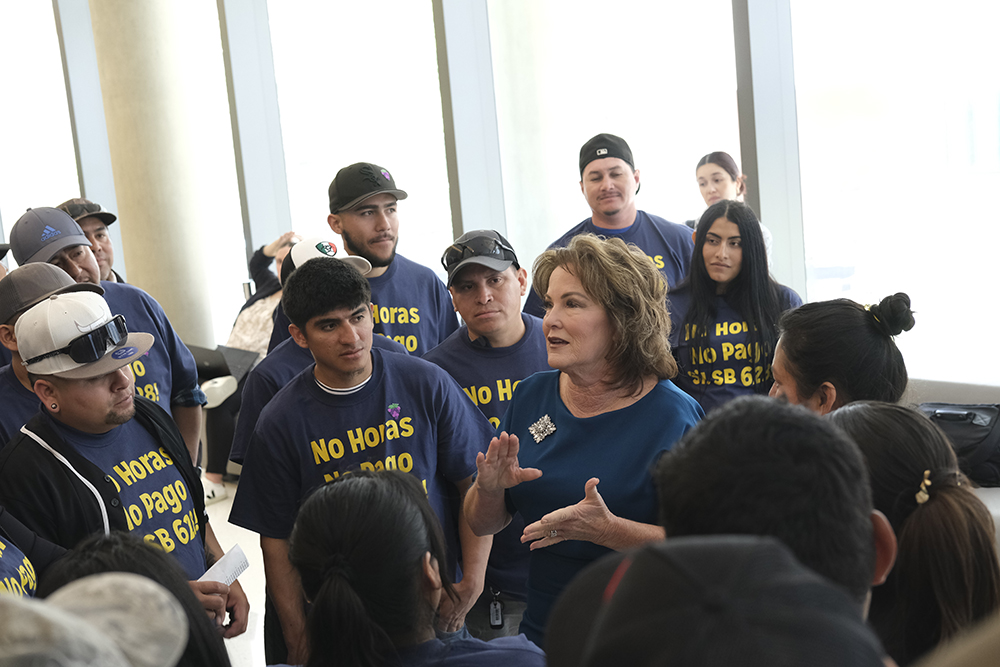
Farmworkers wearing shirts that say “No Horas, No Pago,” or “No Hours, No Pay,” engage with state Sen. Shannon Grove, R-Bakersfield, after a hearing on Senate Bill 628.
Photo/Caleb Hampton


By Bryan Little
California farmers face unprecedented challenges this year, from soft commodity markets to shrinking availability of water for irrigation. Immigration enforcement activities add a new dimension to the familiar challenges of operating a farm or ranch in California.
Recent activities—and the social and legacy media buzz they generate—have caused concern and stress for the hundreds of thousands of people who work on farms and ranches and in associated agricultural businesses. These people came to California to work in our food and agriculture industries, many of them decades ago, with no real opportunity to first gain legal status and no real opportunity to correct that situation as they built families and lives, paid taxes and participated in our communities. They plant, harvest, prepare and pack California’s agricultural bounty, feeding America and the world; they are an integral part of California’s $61 billion food production sector.
Immigration enforcement, however, is only the latest challenge faced by farm employees and rural communities across California. People in our workforce face other social challenges such as limited literacy, numeracy and technological literacy, which limit opportunities for economic and social participation that would otherwise be open to them. Issues such as their immigration status and limited literacy can challenge their ability to do something as simple as open a bank account, forcing them to rely on dubious and expensive alternative sources of financial services.
Legal status and financial and literacy challenges play out in other ways to hamper their ability to feed, house and otherwise care for themselves in a state that features some of America’s highest living costs. These issues are exacerbated by health challenges stemming from poor dietary habits, limited access to preventive medical care and the management of chronic diseases such as high blood sugar and diabetes—conditions that significantly affect our workforce.
The California Farmworker Foundation, headquartered in Delano, was established in 2016 to address a range of pressing community issues, including health care, housing and food insecurity. Focusing on Kern, Tulare, Madera, Fresno, Santa Barbara and Riverside counties, CFF is engaged in critical, innovative farmworker services meeting those challenges for California farmworkers and their families. CFF offers important support through education and services for this community, building alliances with community partners to provide educational, civic and social service support to families in need.
The foundation’s civil assistance services address needs that have become increasingly apparent in recent months. They support farmworkers by helping them comprehend educational materials regarding their rights, facilitating connections with community partners for immigration-related legal services and providing access to essential services such as locating a reputable public notary—an often challenging task for a predominantly unbanked population.
California Farm Bureau and its affiliated company Farm Employers Labor Service have featured CFF’s work in resources provided to FELS members. A recent webinar featured and highlighted CFF services, and FELS and Farm Bureau members can access those services for their members and agricultural employees.
Earlier this summer, a group of farmworkers played an important role in the efforts of agriculture policy advocates by coming to Sacramento to advocate on their own behalf. They sought to convince the California Legislature to help agricultural employers provide more hours of employment by giving a tax credit to defray the cost of overtime premium pay.
An effort to address farmworkers’ concerns about fewer working hours and less take-home pay, Senate Bill 628, by state Sen. Shannon Grove, R-Bakersfield, was the subject of an unusual hearing where more than 30 farmworkers testified in support of the bill, which was opposed by the California Federation of Labor Unions and self-appointed farmworker advocates. Wearing T-shirts that said “No Horas, No Pago,” or “No Hours, No Pay,” farmworkers explained how their families would have benefited from the tax credit.
While the effort to pass SB 628 was ultimately unsuccessful, for the first time, workers spoke directly to policymakers about their deep concerns about the impact of California’s 2016 agricultural overtime law, which has had the perverse effect of diminishing their standard of living. CFF’s efforts to bring farmworkers to Sacramento were pivotal in having their voices and stories heard.
The next step for the foundation is to form the Farmworker Advisory Council, featuring farmworkers who can talk to policymakers and influencers about farmworkers’ needs and the foundation’s efforts to meet those needs and create a safe platform for farmworkers to speak out. In this way, the foundation will facilitate an honest, unfiltered voice for farmworkers to communicate their needs and desires directly to decisionmakers.
The foundation is in a unique position to support California’s farmworker population, while Farm Bureau members are especially well-placed to provide valuable support to CFF. The California Farm Bureau has already facilitated a key connection between CFF leadership and the California Problem Solvers Caucus, a bipartisan, bicameral group of legislators committed to moving beyond partisan gridlock in Sacramento to pursue practical, real-world solutions.
At the California Farm Bureau and FELS, we look forward to helping CFF with its important work. We hope you’ll take a few minutes to visit californiafarmworkers.org to learn more about the foundation’s initiatives focused on uplifting farmworkers, supporting farmers and ranchers, helping the industry navigate these difficult times and serving as an essential resource for California agriculture.
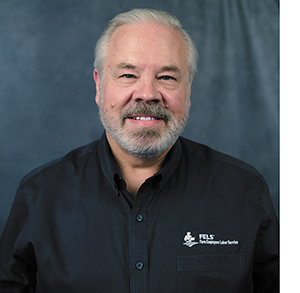
Bryan Little is senior director of policy advocacy for the California Farm Bureau and chief operating officer for the affiliated Farm Employers Labor Service. He can be reached at blittle@cfbf.com.
See related news stories...
• On the Record: Foundation offers farmworkers programs, services
• Advocacy in Action: Water, labor and endangered species
• Report assesses how farms adapt to labor shortages






.svg.png)
