


Immigration raids slow farm work in the Central Valley
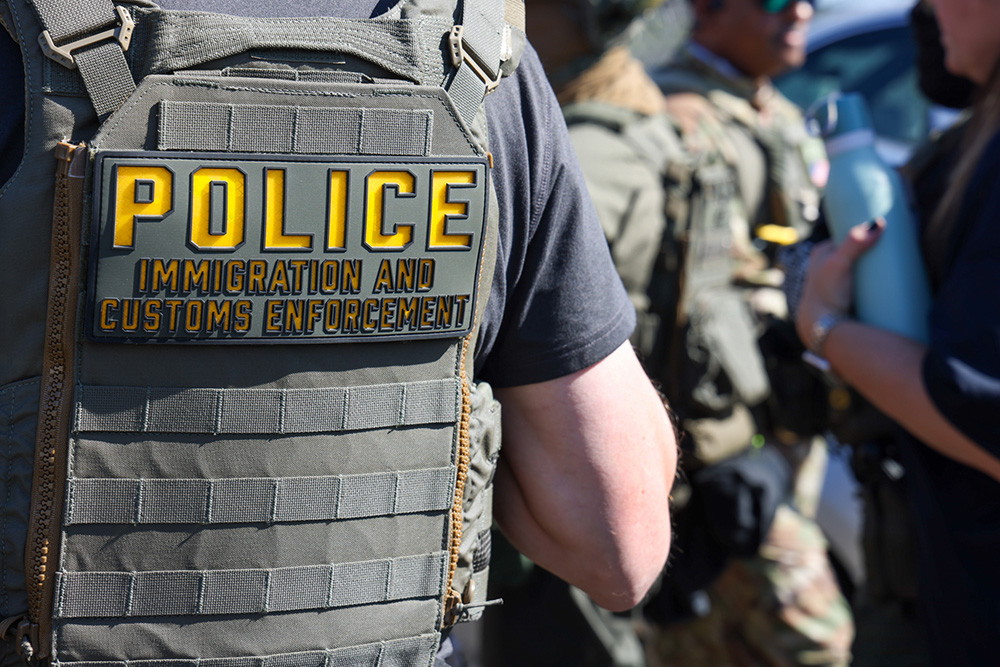
A surge in immigration enforcement in the Central Valley this month has caused some farmworkers to stay home, disrupting work in the nation’s most productive farming region.
U.S. Immigration and Customs Enforcement


By Caleb Hampton
A surge in immigration enforcement in the Central Valley during the past two weeks stalled agricultural work in parts of the nation’s top farming region as some workers were detained and others stayed home.
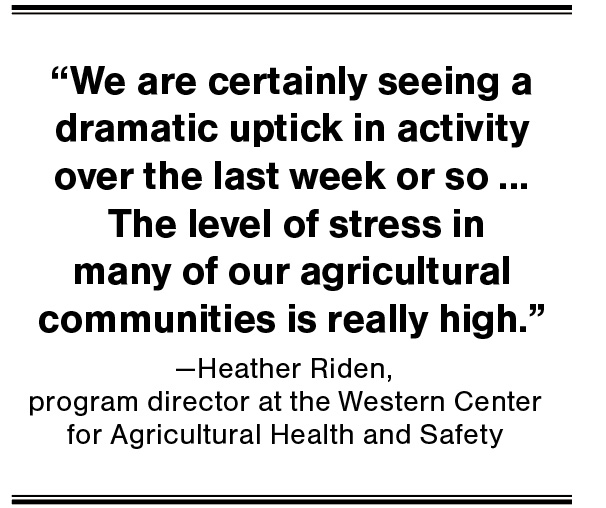
“We are certainly seeing a dramatic uptick in activity over the last week or so,” Heather Riden, program director at the Western Center for Agricultural Health and Safety, said last week. “The level of stress in many of our agricultural communities is really high.”
 Joe Garcia, president of the California Farmworker Foundation and owner of Delano-based Jaguar Farm Labor Contracting Inc., which employs about 3,000 people in the Central Valley and Central Coast, was sifting through one possible sighting of immigration agents after another last week. In some cases, he drove by fields and vineyards in the San Joaquin Valley to investigate conditions for his employees.
While he was not aware of federal agents entering any farm properties, Garcia said arrests made at supermarkets and roadsides—and a steady stream of unverified sightings posted online—sent “ripple effects” through the valley, with worker turnout in some of his crews plummeting.
“There is heightened fear,” Garcia said.
Kevin Herman, owner of Madera-based The Specialty Crop Co., said the raids were causing about half the roughly 100 workers hired to harvest figs in his orchards to miss work for more than a week. As a result, the farm was unable to ship its full volume of fresh-market figs to retailers it supplies across North America.
“It’s a little bit of a challenge when you have a sales order for five pallets of fruit and you only pick two or three,” said Herman, who grows figs and other fruit in Fresno, Madera and Merced counties.
Joe Del Bosque, owner of Firebaugh-based Del Bosque Farms in Fresno County, said a “handful” of workers did not report for work harvesting cantaloupe on his farm after immigration agents were seen in the area.
“It slowed down our crew,” he said. “You need everyone to fulfill their part.”
Del Bosque said melon harvest—which concluded last week—requires about 20 people trained to perform different jobs, such as driving a tractor, identifying ripe melons and picking them, packing the melons into boxes and stacking the boxes with a forklift.
“These are skilled positions,” Del Bosque said. “If they don’t show up today, you can’t just go out and look for somebody on the street to replace them.”
Immigration enforcement also ramped up this month in parts of Southern California, the Central Coast and the Sacramento Valley, according to community organizations.
“This is absolutely out of the norm,” said Giselle Garcia, program director at Sacramento-based NorCal Resist, which operates a rapid response hotline and assists people held in immigration detention in Northern California.
Garcia said Friday that since the prior week the organization met or spoke directly with nearly 20 newly detained people or their family members.
“That is a huge increase,” she said, adding that higher funding and staffing levels for U.S. Immigration and Customs Enforcement had appeared to increase the agency’s ability “to do multiple operations at a time.”
Last year, Congress roughly tripled funding for interior immigration enforcement and detention facilities.
While the Trump administration in recent months mostly shifted away from the high-profile operations that characterized its deportation efforts last year, overall immigration arrests climbed steadily this year.
In July, the most recent month with data available, ICE arrests hit record highs both nationally and in California, due largely to the agency detaining more immigrants without criminal convictions, according to federal data analyzed by the Deportation Data Project, which is based at the University of California, Berkeley, and UCLA.
That month, 41,786 people nationwide were arrested and booked into immigration detention. About 74% of those detained did not have a criminal record—also a record high—while around 25% had been convicted of a nonviolent crime and less than 2% had a conviction for a violent crime.
For decades, California farmers have advocated for legislation that would create a pathway to U.S. citizenship for longtime farmworkers and have warned that immigration raids in the state could threaten national food security.
“California agriculture depends on and values its workforce,” Shannon Douglass, president of the California Farm Bureau, said in a statement. “Farm employees are not just workers—they are partners in this industry.”
The state grows more than a third of the nation’s vegetables and about three-quarters of its fruits and nuts, with much of that production in the Central Valley. The sector relies on hundreds of thousands of farmworkers, more than half of whom are estimated to be undocumented.
Last year, isolated immigration raids in California farming regions, each of which lasted a few days at most, had a limited impact on production as workers generally returned to the fields soon after immigration agents left, according to experts.
But growers said a prolonged operation, as has been reported to be taking place in the state through next month, could significantly disrupt food production.
Herman, the fig grower, said he was concerned by news reports describing plans by the U.S. Department of Homeland Security to conduct 45 days of ICE raids in California leading up to next month’s midterm elections.
About a tenth of his fig crop is waiting to be picked, and citrus harvest is set to begin this week. “That could be problematic for us if this continues on for another month,” Herman said.
DHS declined to answer questions from Ag Alert® about the objectives or timeframe of the reported immigration enforcement surge in the state.
“For operational security and the safety of our officers, ICE will not disclose or discuss law enforcement operations,” a DHS spokesperson said in a statement.
Caleb Hampton is an editor at Ag Alert. He can be reached at champton@cfbf.com. Ag Alert staff writer Manola Secaira contributed reporting.
Reprint with credit to California Farm Bureau. For image use, email agalert@cfbf.com.