

Bottling the future
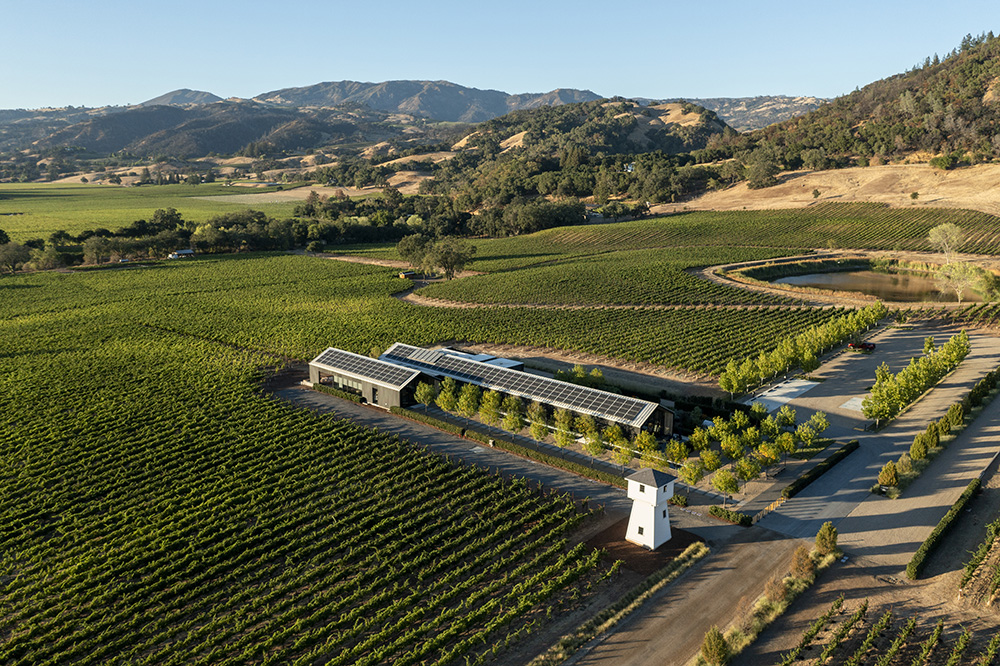
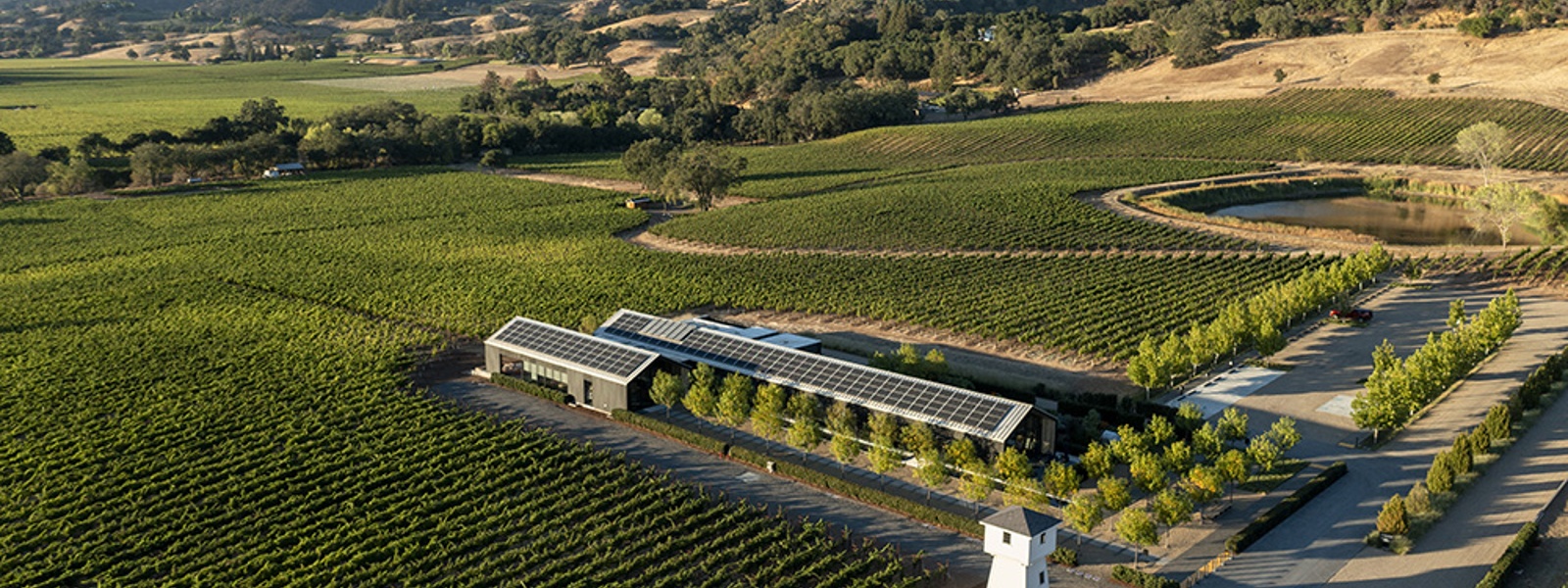
Silver Oak Cellars, with locations in Napa and Sonoma counties, is recognized for its sustainability efforts, which have earned the company LEED certifications, or Leadership in Energy and Environmental Design. This aerial shot shows solar panels at its Alexander Valley winery in Healdsburg. The solar panels provide nearly all the winery’s energy needs.
Photo/Courtesy of Silver Oak Cellars


Groundbreaking construction and eco-friendly farming propel Silver Oak Cellars forward
By Manola Secaira
At a typical winery, producing a single gallon of wine can require around 10 gallons of water. At Silver Oak Cellars, the family-owned winery has brought that number closer to one.
 With locations in Napa and Sonoma counties, Silver Oak has found a way to whittle down its water use with technology. A membrane bioreactor purifies wastewater from the winemaking process by biologically breaking it down and filtering it. The same technology has been used by some cities to treat municipal wastewater. But at a winery, the approach is considered novel.
It’s part of Silver Oak’s mission to make its wine as sustainably as possible.
“These tools ultimately help us craft great wines,” said Justin Hirigoyen, vice president of wine growing for Silver Oak. “But they help us do it in a way that is responsible, that is good for the people, for the place.”
Sustainability in winemaking has made big strides during the past decade. A 2025 report from the California Sustainable Winegrowing Alliance found about 70% of the state’s winegrape acreage has been certified to a sustainability program, and more than 90% of the state’s wine was produced in a certified sustainable winery. The report also noted steady, continuing progress as more growers adopt and expand their sustainability efforts.
Photo/Paige Green
At Silver Oak, that progress has included experimenting with new ways to reduce the environmental impacts of winemaking.
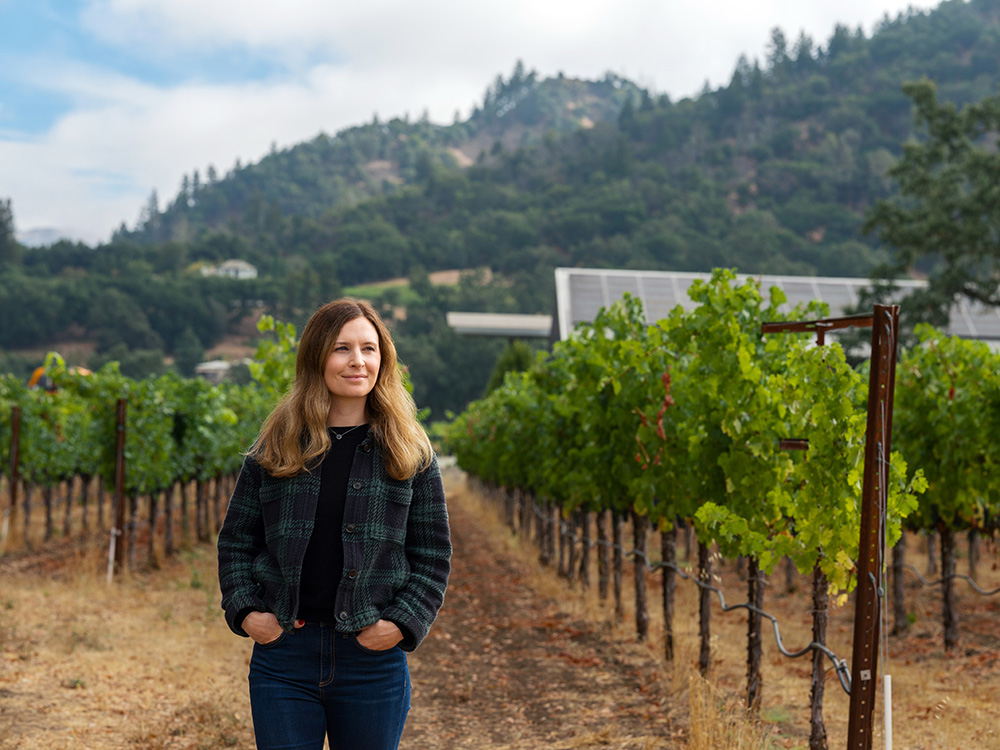
Haley Duncan, whose grandfather co-founded Silver Oak and opened the Napa Valley location in the 1970s, has been the architect of that effort. As an undergraduate, she worked toward a degree in environmental studies and found a passion for sustainability. She wasn’t sure where her studies would lead her. By the time she graduated in 2013, she had a newfound vision that would allow winemaking and sustainability to intersect.
Her uncle, David Duncan, Silver Oak’s CEO at the time, had expressed interest in designing and building a sustainable winery after visiting a brewery that sparked the idea.
“That tour was really inspirational for him,” she recalled, adding that if they were to build a facility of the size they had in mind, “we really should be thinking about sustainability.”
David Duncan wanted to make Silver Oak’s existing Napa Valley winery more sustainable. He also wanted to build a new winery in Healdsburg with sustainability in mind.
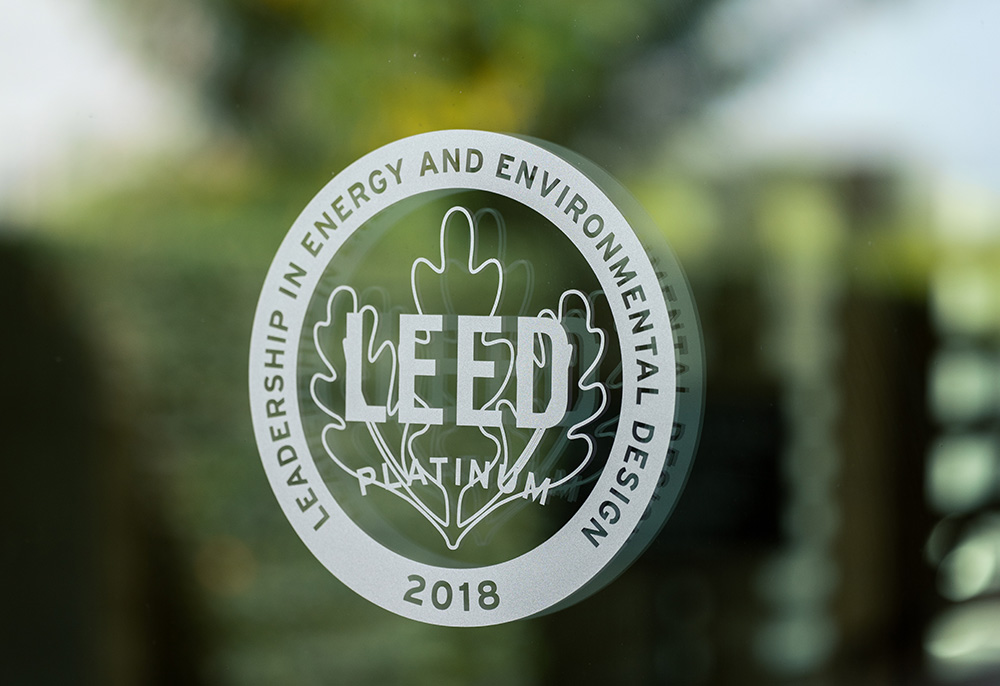
One of his goals was to have both buildings earn LEED, or Leadership in Energy and Environmental Design platinum certification, along with Living Building Challenge certification. Both recognize buildings designed and built to meet high standards for sustainability.
In short, it would require a lot of work. All they needed was someone to lead the effort.
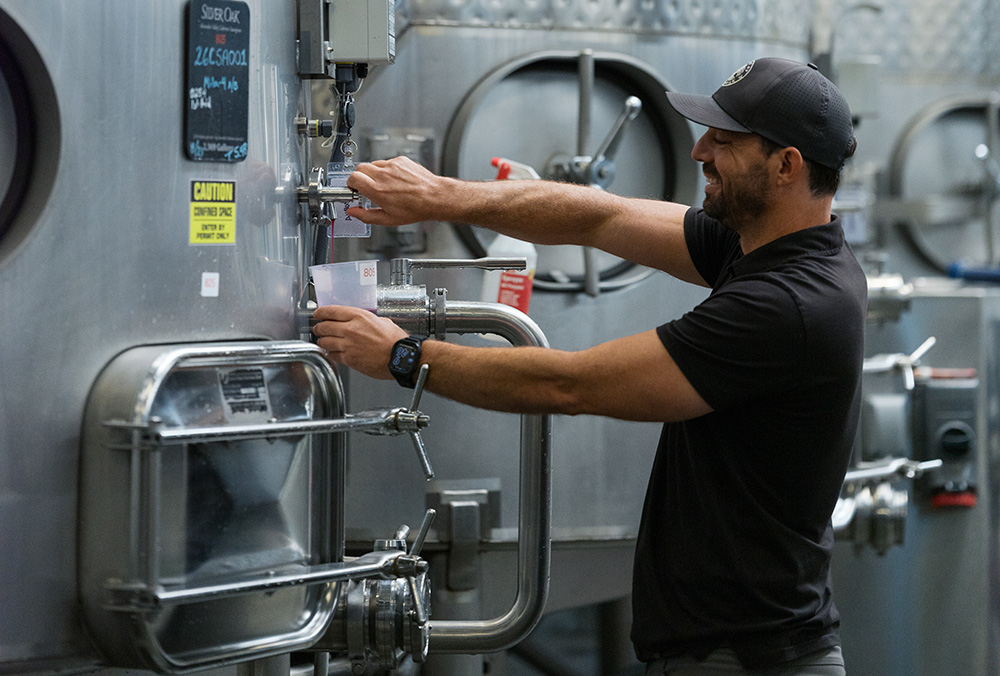
Photo/Paige Green
“They were looking for someone to really own those certifications and see them through from the beginning of design through to construction,” Haley Duncan said. “I just thought it was the perfect opportunity to do something professionally, something that I’m passionate about, but also work with my family, so it’s kind of the best of both worlds.”
But sustainability isn’t about just water use, said Allison Jordan, executive director of the California Sustainable Winegrowing Alliance. Though vineyards and wineries continue to adopt sustainability practices, expanding what sustainability looks like has been a core part of the alliance’s educational outreach, she added.
“It’s sort of building the depth,” Jordan said, noting that her group tries to provide “a deeper understanding” of climate action, soil health, regenerative agriculture and the social aspects of sustainability.
Duncan said working on Silver Oak’s Alexander Valley winery gave her a chance to incorporate sustainability practices from the ground up. When construction began in 2014, she said she had seen office buildings achieve LEED certification but not commercial wineries. The project often involved adapting familiar technologies in new ways to meet sustainability goals.
“There was a lot of opportunity to come up with our own solutions with our designers and design team,” she said.
Using a membrane bioreactor to recycle water is not a new idea, but Duncan hadn’t seen the technology used at a winery. After Silver Oak installed one at its Healdsburg winery, the facility began reusing wastewater that would have otherwise gone down the drain for tasks such as washing equipment and irrigation.
“In that way, we kind of took a risk with trying to figure it out as we went to make sure that the water was going to be clean enough to reuse for all these different things in the winery,” Duncan said.
By the time the Healdsburg winery was completed in 2017, Duncan had learned myriad approaches to making a building truly sustainable. Even choosing the materials for the building became an investigation. Duncan said she had to call manufacturers one by one, asking them to disclose the ingredients in their products or confirm that they contained none of the chemicals prohibited under Living Building Challenge certification standards.
Photo/Paige Green
“It was extremely difficult,” she said. “There was no approved materials list like there is now,” meaning she had to build the information herself.
Aside from addressing water use, the building provides nearly all its energy needs through the use of solar panels.
Today, both Silver Oak locations have achieved LEED platinum certification, but their sustainability efforts continue to evolve with new technologies.
Hirigoyen, who oversees Silver Oak’s vineyards, said the company often works with researchers who are testing new approaches to sustainable farming. More recently, Norway-based Saga Robotics has been testing ultraviolet-C technology at Silver Oak’s ranches as a possible alternative to traditional crop spraying.
“Where we excel is that we’re able to rigorously incorporate these tools, try them, see if they drive decisions, see if they have a measurable impact on quality, on efficiency, on sustainability,” he said.
Duncan said her work is often guided by an unofficial Silver Oak tagline: “We have yet to make our best bottle.” She said that philosophy permeates through all the work she does, including advancing sustainability efforts.
“We always want to be improving and learning more about how we could be better stewards of our land and a more responsible business overall,” Duncan said. “We’re never done improving.”
Manola Secaira is a staff writer for Ag Alert. She can be reached at msecaira@cfbf.com.
Reprint with credit to California Farm Bureau. For image use, email agalert@cfbf.com.