


From the Fields – Matt Stayer


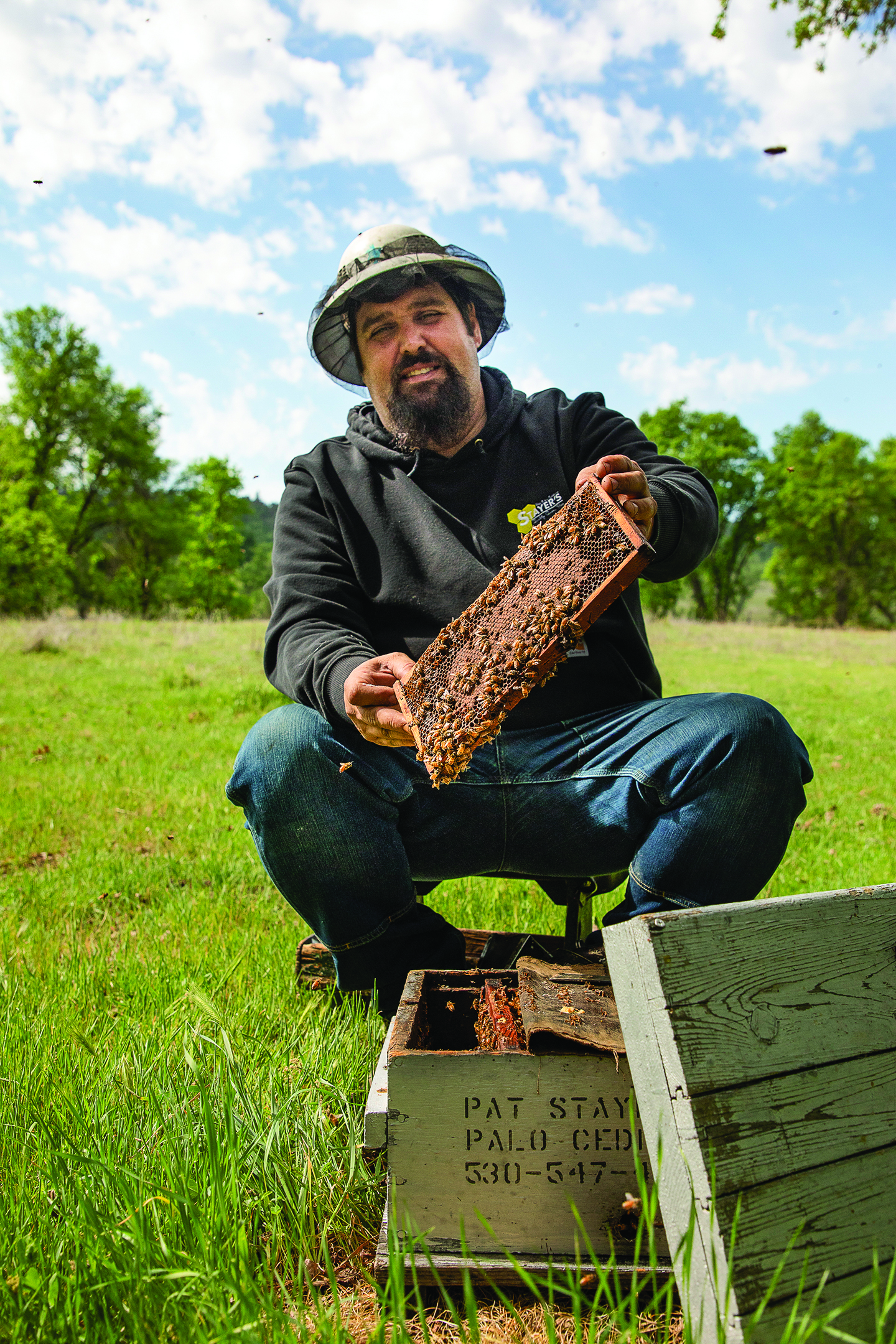
Photo/Lori Eanes
By Matt Stayer, Shasta County queen bee breeder
We are a commercial queen breeding operation for Italian honeybees. We also do almond pollination and a little bit of honey production. We ship bees to Montana every year for honey production but keep a large number of breeder queens and hives that we produce our queens with.
During spring, we go out and catch queens, and then we graft our queen cells. We graft seven days a week producing the cells that we need to raise our queens. That’s almost 2,000 cells every day. We start the first week of March usually, and we don’t stop until close to Father’s Day.
As far as raising queens, this was a successful year. We had good mating weather. The bees were healthy coming out. Hives were in good shape going into winter. The almond pollination was good. We had good fly days. We didn’t get as much moisture as I’d like to keep the summer forage for the bees. April showers bring May flowers is very true. If we don’t get the weather during that time, we won’t have forage for the bees later in the year, and that could affect them dramatically. We can supplement feed, but bees do way better on natural forage.
Being a beekeeper is changing with the almond industry not being as strong. Bee pollination is a big part of a beekeeper’s yearly income, and with the uncertainties of the almond prices, that does worry a lot of beekeepers. I feel the industry is strong, but we’re fighting against a lot of imports. The honey price is low, and the price of labor has gone through the roof. We take advantage of the H-2A program with our workers because of the seasonal working conditions. The overtime hours in California have impacted the beekeeping industry a lot because we’re working 10 to 12 hours a day from January to Father’s Day. Ag labor laws have changed some things, and we have to adjust to that.





.svg.png)
