


From the Fields - Matt Stayer


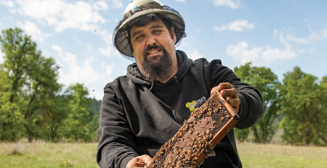
Photo/Lori Eanes
The cold, wet winter last year lasted longer than normal, which halted our queen production and pushed it back to a later start than we are used to. Pretty much the whole industry in Northern California got a late start. It was trying on any queen-producing company because the demand was still strong, and the later start meant you were turning down people that needed queens. We were able to make it up on the back end. The weather brought a lot of moisture to the ground, so a lot of people made some nice honey this year. The honey of choice was starthistle up in the foothills.
Bees in Northern California are looking good. We got a lot of late pollen flows, which are very important to bees when they are getting ready for winter. In the fall, the winter bees have higher fats in them, and they will live longer. Those are the bees that live through the winter. They can live up to four months or more if they’re in hibernation. A normal bee, when it’s active, can live 31 to 35 days, so you want a strong protein pollen coming in the fall. As the weather cools down, hopefully everything will go to bed and come out of the winter strong for almond pollination.
The beekeeping industry is partnered with cattle. When cattle are having a hard time with feed, bees are having a hard time with feed. When cattlemen can’t make their hay, the bees aren’t making their honey. All the ranches where we summer our bees in made some hay this year, and their cows are looking good. As beekeepers, we adapt to every season and come through somehow amazingly every year. It was refreshing to see the honey flows, the very good quality honey. Hopefully, we get some more weather this winter and have the reservoirs full, with everybody making hay and making honey.





.svg.png)
