


From the Fields - Grant Chaffin


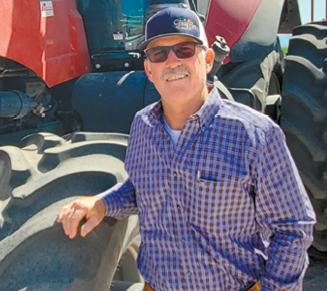
Photo/Courtesy Grant Chaffin
By Grant Chaffin, Riverside County farmer
Garlic has been planted, and we are in the midst of doing ground preparations and pre-irrigation for planting dehydrated onions. Onion planting started last week and will continue through the first three weeks of November.
We are starting to defoliate upland cotton, and I anticipate starting cotton picking right after Thanksgiving. The crop looks good. Last year, there were some terrible yields. This year, the cotton isn’t defoliated yet, but so far the fields look pretty good.
Typically, October is our month to plant new fields, so from mid-October to mid-November, we’re reseeding alfalfa fields. Running the numbers, alfalfa is down almost 50% in our Palo Verde Valley. Statewide, the alfalfa market is down in price between 40% and 60%. The dairy industry has been going through some tough times, and that tends to be a real driver in the alfalfa market. Exports are off. Although we don’t export any alfalfa hay, it is a driving force in the market.
The cost of fuel has gone up slightly, but our fertilizer costs are down 10% to 15% and maybe 20% on some products. Overall, input pricing has not followed commodity pricing, and that always cuts into our bottom line.
In August when Hurricane Hilary came through, the expectation was that we would receive 75% of our annual rainfall, but that did not materialize. We got maybe 25% of our annual rainfall from that weather event, and the following weekend we got probably 70% of our annual rainfall, which was unexpected. Over the course of a year, we probably have seven rain events that come through and normally, we get the bulk of our rain in three or four storms.
The weather has been pretty nice. There’s talk of an El Niño weather pattern this winter, so we’ll have to see what happens. We’re trying to make sure that any hay that is out is tarped and not on low ground, so it doesn’t get wet.





.svg.png)
