


Farm-to-table restaurateur returns to farming roots
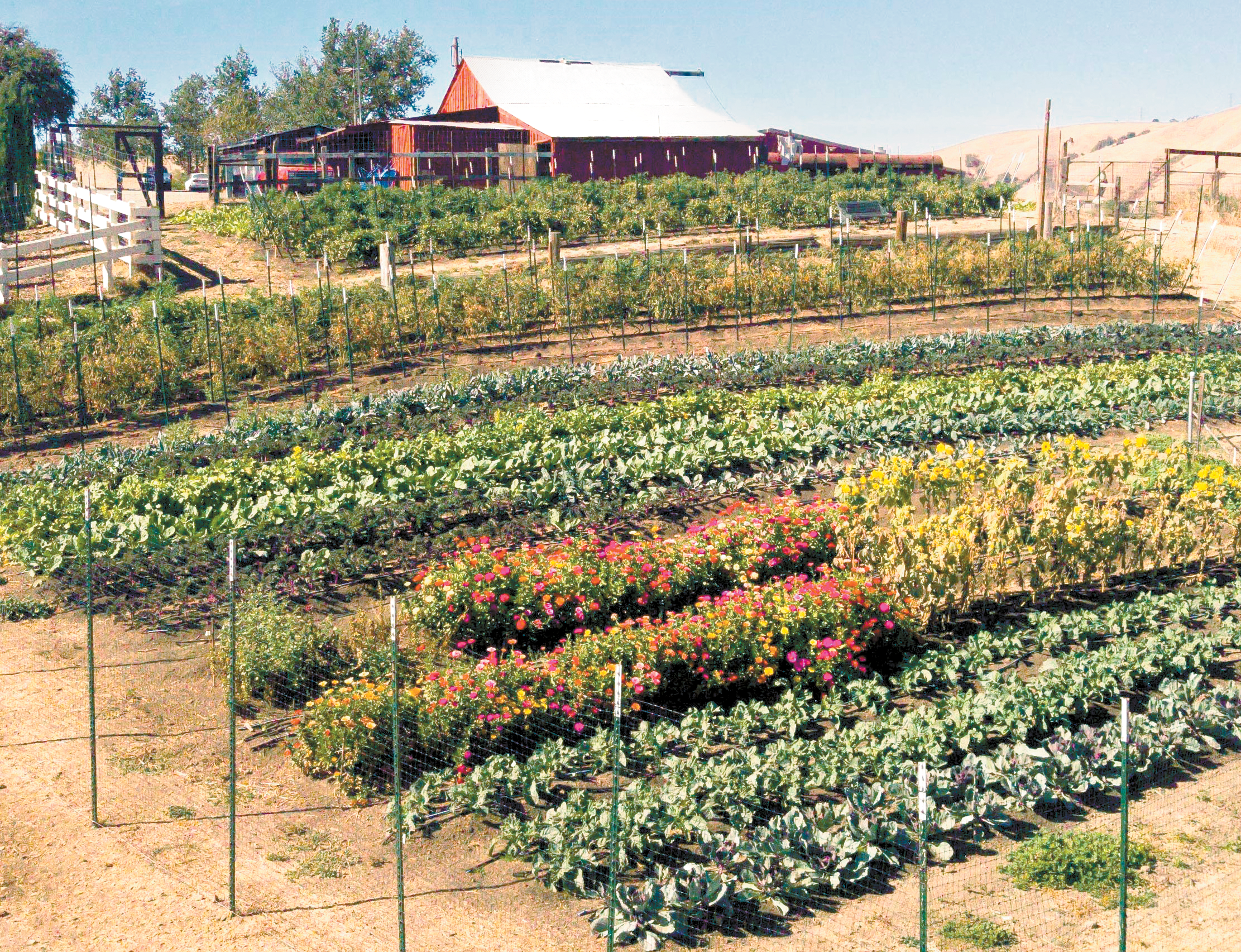
Maurizio Carrubba worked at family farms in Italy. After he and his brother purchased the Mt. Hamilton GrandView restaurant in Santa Clara County, he opened a farm next door to grow their own fresh produce.
Photo/Courtesy GrandView Farm


Photo/Courtesy GrandView Farm
By Caitlin Fillmore
GrandView Farms rests on 60 acres of Mount Hamilton, a rural area on a winding road about 11 miles east of downtown San Jose. Here, the Sicilian-born Maurizio Carrubba raises a variety of heirloom root vegetables, including baby carrots, turnips, beets and radishes, all sown from seed.
The farm’s tomatoes, onions and garlic support Carrubba’s Italian foodie tastes, while other plants such as corn and edible flowers impart a California flair. It is part of a transition that led a successful restaurateur with farming roots to return to growing fresh produce himself to help supply his dining enterprises.
“Back home we come from a family of farmers as well as a family of folks in the food industry. I was raised in the lifestyle,” Carrubba said. Cherry tomatoes grew prolifically in Carrubba’s hometown. He worked at family-owned vineyards and farms throughout his childhood before moving to Palo Alto in 1989.
Carrubba spent the past 25 years building a diverse restaurant group with his brother and business partner Giuseppe Carrubba. In 2013, the brothers added to their group of restaurants by purchasing Mt. Hamilton GrandView, a regional culinary mainstay that has existed since 1876 at the top of Mount Hamilton.
At the time of the restaurant purchase, a parcel of land next door had been used as pasture for grazing cattle for more than a century. Carrubba’s farmer-restaurateur pedigree inspired him to explore the adjoining parcel as the first roots of creating a farm-restaurant idea began to grow.
Once he shared his concept with the landowner, a hobby rancher, a deal was made. In 2015, GrandView Farms opened, giving Carrubba the chance to return to farming with a fresh perspective and unique mission: to source as much of the produce and ingredients his restaurants could use from his own farm.
“I always had an idea to use part of the footprint of the GrandView to do something on a much smaller scale. It had incredible soil and no infrastructure whatsoever,” Carrubba said. “When the property came up for sale, we really jumped on the opportunity to expand this idea much further and start getting into production for the restaurant.”
He said the Mt. Hamilton GrandView elevates the idea of farm-to-table dining, as even the closest locals will travel farther than the ingredients on this hybrid restaurant-farm property. Each of Carrubba’s five Bay Area restaurants receives farm-fresh products every day from GrandView Farms.
A 200-person team helps Carrubba’s restaurant group function, including farm staff that harvest, package and distribute ingredients in-house.
Microgreens adorn the plates of nearly every dish, grown from a 400-square-foot indoor growing operation. In the winter, plants such as micro kohlrabi and baby kale are grown while baby basil and micro radishes sprout in warmer months. Restaurants receive about 30 pounds of microgreens each week, said Biagio Florio, GrandView Farms’ main caretaker.
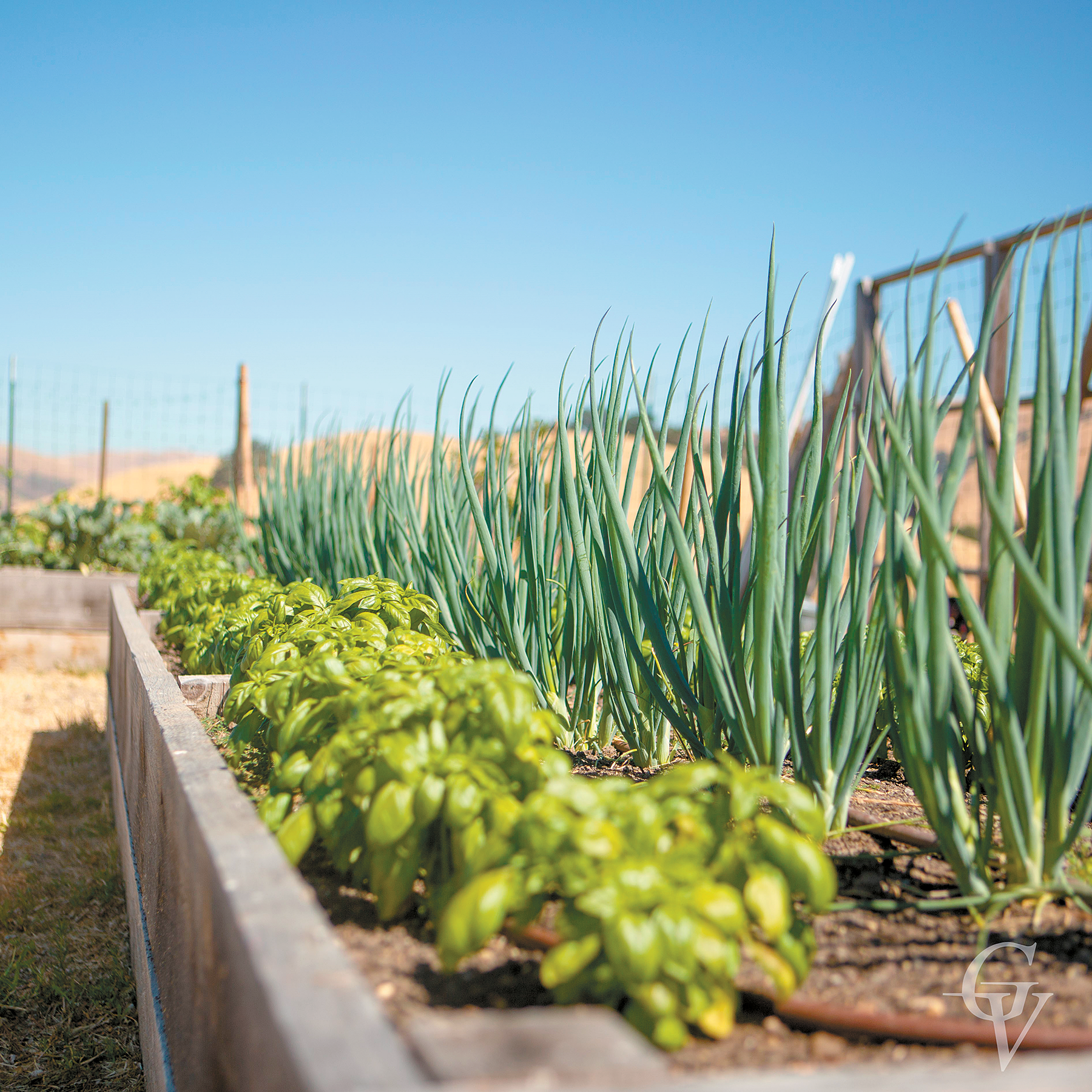
To support Carrubba’s five-entity restaurant group, GrandView Farms also produces various culinary herbs such as thyme, sage and basil. An orchard produces peaches, pears and apples while Florio prepares to add citrus trees this year.
“The farm touches every plate, even if it’s with a microgreen,” Carrubba said. “Every guest is getting something from our farm.”
Only 5 acres of the farm are cultivated for in-ground crops. The remaining acreage is reserved as pasture for grass-fed beef, which ends up on the GrandView steakhouse menu.
Chef Daniel Herrera uses eggs gathered from GrandView Farms’ flock of 60 Barred Rock hens to produce desserts and eight different kinds of fresh pastas for three of Carrubba’s restaurants. The heritage-breed hens can collectively lay up to 120 eggs in a day, used to make the 60 pounds of each pasta needed daily, Herrera said.
Carrubba calls his “latest and greatest” effort the GrandView’s plans to offer its own single vineyard cabernet blended with traditional Sangiovese and Nero d’Avola varietals. This creates “super Tuscan wines,” he said.
GrandView’s position on top of a windswept hill makes weather one of the land’s biggest challenges. Carrubba dug a well early in his farm ownership, but his water challenges persisted with relentless drought conditions. He said sometimes snow has fallen on Mount Hamilton as the microclimate gets “crazier.”
Florio said the dates for planting and sprouting seeds “are way different than farming in the valley” nearby.
“Up there sometimes the time to sprout seeds is way earlier,” he said. “Then all of a sudden there is a big wind coming that will lower the temperature radically.”
In addition to managing the seasonal array of food-producing crops, Florio also oversees the farm-restaurant’s zero-waste efforts and practices including no-till gardening, companion planting and using winter cover crops such as fava beans.
The farm runs on solar power. A herd of GrandView goats gobbles weeds to reduce wildfire risk, and a vermiculture program employs worms to quickly produce nutrient-dense compost.
“Instead of wasting the manure, we collect it, ferment it and create an amazing compost from all these animals,” Florio said. “We pride ourselves in running green and zero-waste facilities.”
(Caitlin Fillmore is a reporter in Monterey County. She may be contacted at cslhfillmore@gmail.com.)





.svg.png)
