


Farm leaders urge action on port and freight issues
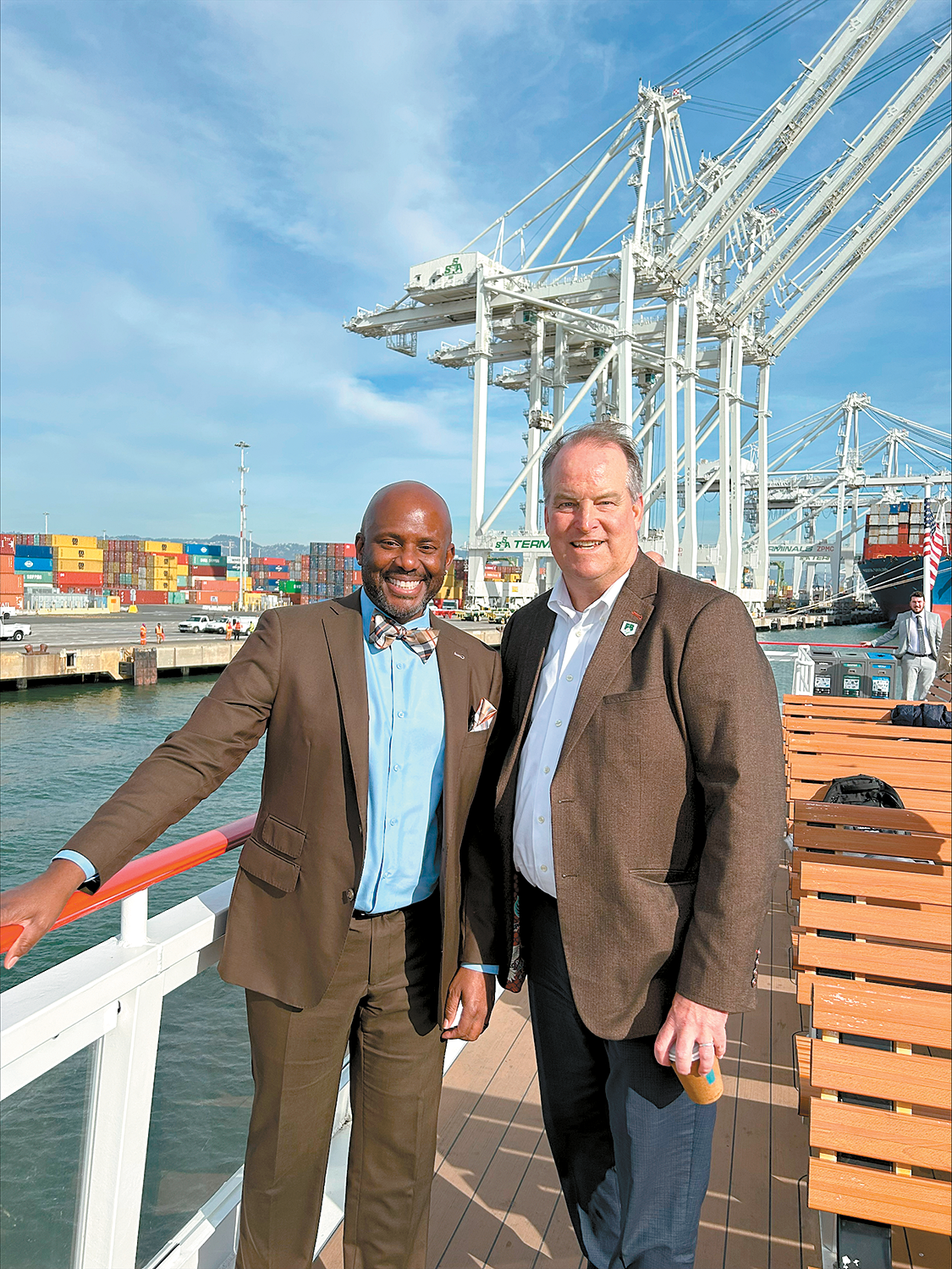
After testifying last week at a hearing held by the California Assembly Committee on Ports and Goods Movement, California Farm Bureau President Jamie Johansson, right, and Assembly Member Mike Gipson, D-Carson, toured the Port of Oakland.
Photo/Katie Little


Photo/Port of Oakland
By Caleb Hampton
Officials for Bay Area ports and leaders of California agricultural associations met last week to brainstorm on solutions to better facilitate farm exports from state ports, which a 2021 study called “the least efficient in the world.”
At a San Francisco hearing held by the California Assembly Committee on Ports and Goods Movement, farming leaders and port directors discussed port shortcomings during the pandemic that stranded farm goods and continue to challenge the movement of freight within California.
A large portion of the food grown in California, especially tree nuts, rice and wine, is exported, making the state’s farms and farm communities dependent on foreign demand and the flow of agricultural commodities through ports.
“Over 40% of what we grow in California needs to find an export market,” California Farm Bureau President Jamie Johansson said at the hearing.
“Port infrastructure and functionality opened the world to California’s bountiful agriculture and incredible innovation,” said Aubrey Bettencourt, CEO of the Almond Alliance. “It has made California the global economic powerhouse that it is in the last century. But what got us here isn’t going to get us there in this next century.”
California farm products typically fill about one-third of all shipping containers leaving California ports and about half the containers that leave from Oakland.
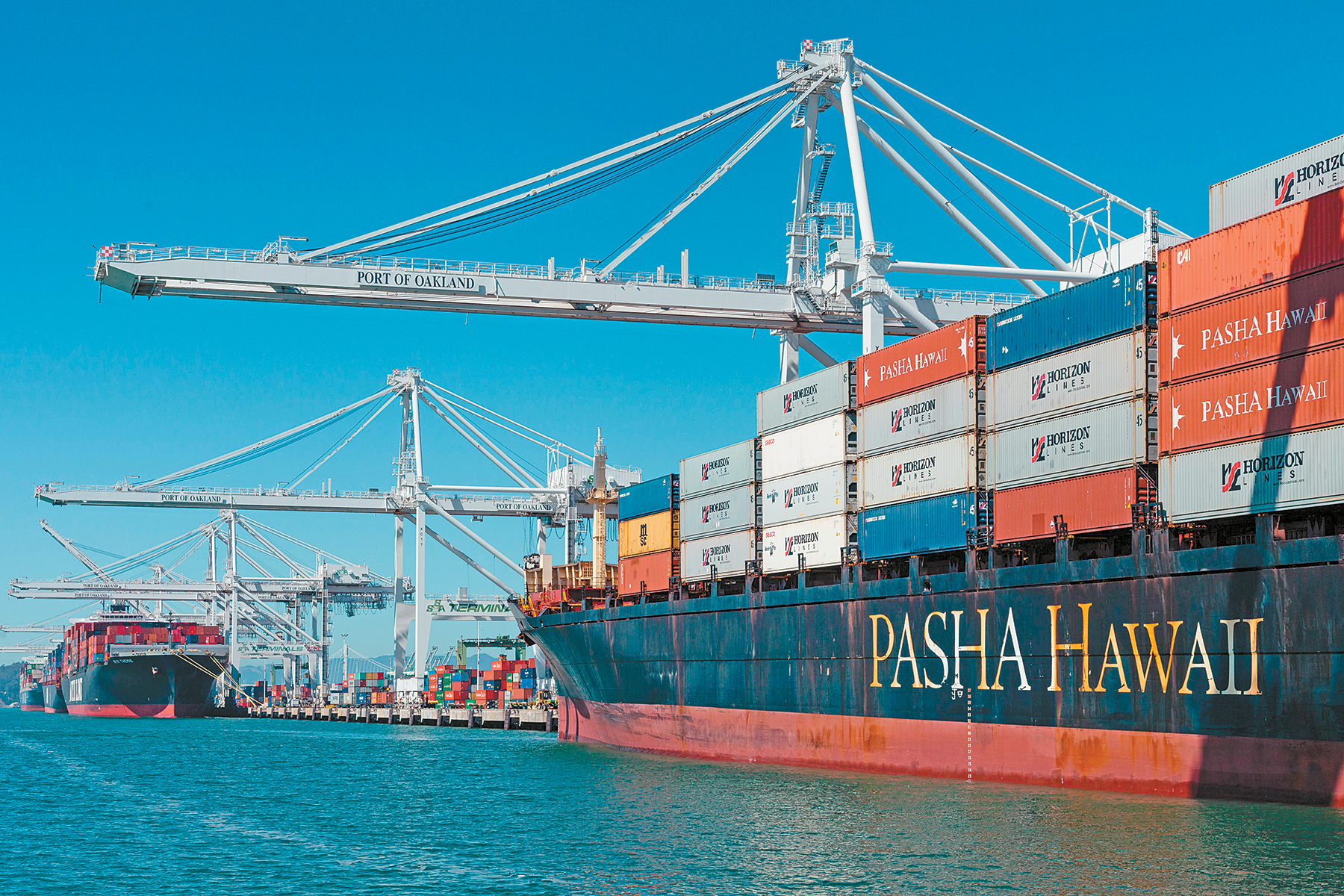
In 2021, pandemic-related supply chain gridlock at the Port of Oakland resulted in a shortage of shipping containers, disrupting the export of farm commodities and causing an estimated $2.1 billion in agricultural export losses. Many container ships skipped the Port of Oakland altogether due to the congestion.
“Foreign markets turned to other countries to supply their goods,” Johansson said.
California farmers and farm communities are still dealing with the fallout of that congestion, Bettencourt told committee members. “Pandemic supply chain disruptions wreaked havoc on the almond industry,” she said.
A large inventory of unsold almonds has destroyed the market, depressing global almond prices. “We are still not recovered from the pandemic because of how much product was unable to be shipped,” Bettencourt said. “The cash flow into the communities is totally drying up.”
Now, two years later, farmers are still trying to win back export markets they lost due to the port backlog. Bettencourt said some carriers restored services out of Oakland, but “some may never return.”
University of California researchers have cautioned that reputational damage to California ports could have lasting consequences for the state’s agriculture sector.
“The lost farm exports mirror the fact that California ports are among the least efficient in the world,” the researchers said in a 2021 study titled “‘Containergeddon’ and California Agriculture,” which analyzed the impacts of the supply chain gridlock. “As a result, some importers now view California as an unreliable source of agricultural products due to inferior port infrastructure.”
Port directors who testified at the hearing advocated for investment in improving infrastructure at the ports. Projects are already underway to widen roadways at the Port of Oakland and widen the turning basin to improve the traffic flow of container ships. “We need to be more resilient taking care of our exporters,” said Danny Wan, executive director of the Port of Oakland.
Assembly Member Mia Bonta, D-Alameda, emphasized the need for California’s ports to run efficiently so that businesses in the state can compete globally. “I want to make sure California maintains its primacy,” she said.
Assembly Member Vince Fong, R-Bakersfield, added that state legislators want to “keep our farmers competitive overseas.”
Last week, the Biden administration announced $653 million in grants for 41 projects to improve ports across the country. The grants include $52.6 million for upgrades to the Port of Long Beach, which also exports commodities from California farms.
In addressing future challenges, discussion at the hearing centered on a landmark rule adopted earlier this year by the California Air Resources Board. The Advanced Clean Fleets rule will phase out most diesel trucks in the state over the next two decades.
Under the rule, drayage truck fleets, which haul agricultural products and other cargo from rural parts of California to coastal ports, must fully convert to zero-emission vehicles by 2035, seven years before most other sections of the trucking industry. Agricultural and trucking groups have raised alarm over that deadline, cautioning that it could impede the movement of fresh produce and other freight.
Wan questioned the wisdom of a rule that he said will likely see the diesel trucks decommissioned from California sold to other states and used there. “It’s not like these trucks are going to disappear from planet Earth,” he said.
Rather than regulators imposing unrealistic deadlines on trucking companies, a better route would be for the state to encourage the transition from diesel trucks to zero-emission vehicles through “penalties and incentives rather than regulatory mandates,” Wan said.
Rayne Thompson, vice president of government relations and sustainability for Sunkist Growers, said the concern with the CARB rule is that freight costs are going to go up significantly” due to expenses related to investing in the necessary infrastructure and technology.
With stringent regulations and high input costs, California farmers are already “struggling to compete” in the global marketplace, Johansson said. “This problem will soon be exacerbated by the impending Advanced Clean Fleets rule.”
The increased costs will likely weigh most heavily on small farmers, Johansson added. “The consolidation that you see happening is a real effect of any rising costs,” he said. “You simply have to become more efficient. And oftentimes to do that, you have to become bigger.”
(Caleb Hampton is an assistant editor of Ag Alert. He may be contacted champton@cfbf.com.)





.svg.png)
