


Southern California a focus in screwworm preparedness
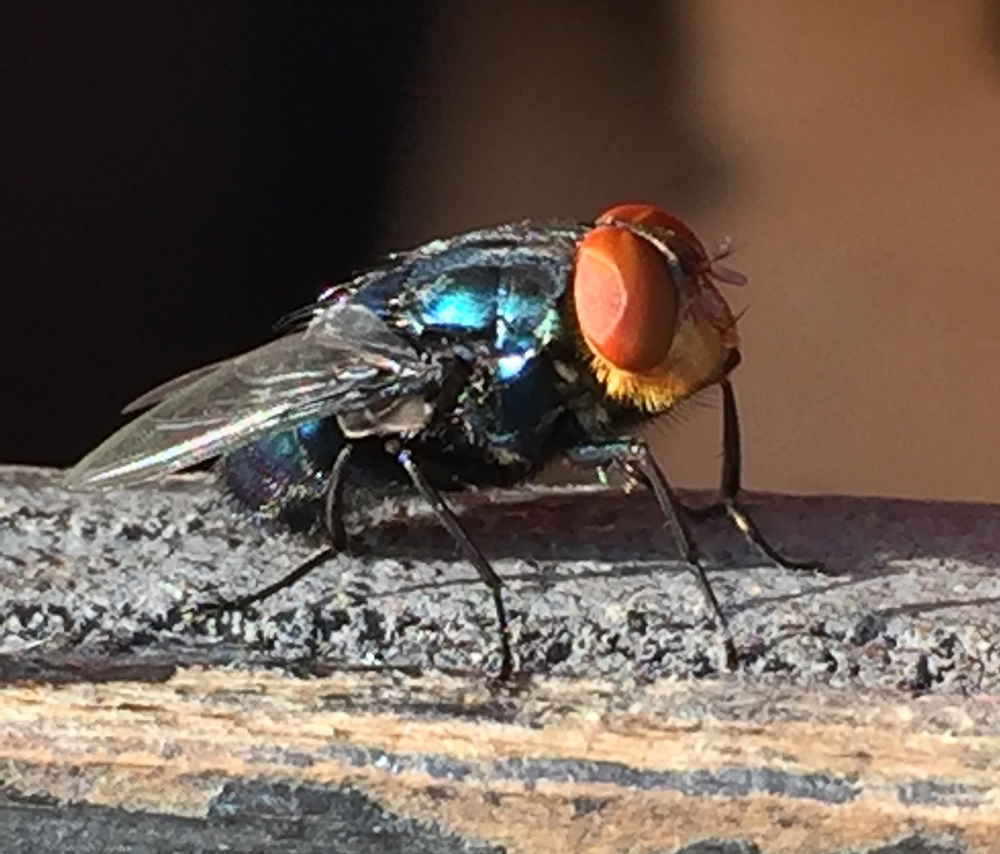
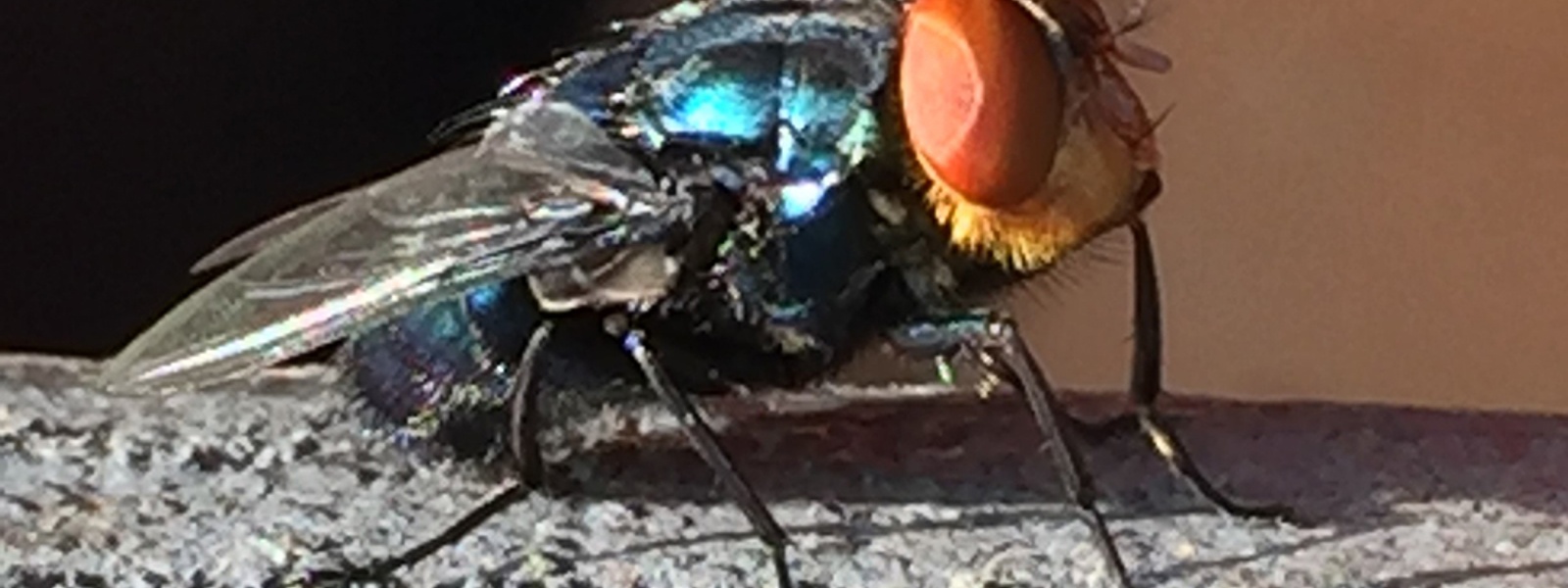
The New World screwworm adult lays eggs on warm-blooded animals, typically wounds or orifices.
Photo/Courtesy of USDA


By Ching Lee
With detection of New World screwworm less than 70 miles from the U.S.-Mexico border, California animal health officials are urging ranchers, dairy farmers, feedlot operators and other livestock handlers to stay vigilant for signs of the parasitic fly, which can inflict great harm to animals—and economic damage to the livestock sector.
The fly larvae, or maggots, feed on living flesh. That means all warm-blooded animals, including humans, are susceptible, said Matthew Vahabi, California Department of Food and Agriculture veterinarian at the Animal Health Branch. Left untreated, screwworm infestations can be fatal within seven to 10 days, he added.
Of “utmost importance” is for producers to regularly and thoroughly inspect all animals they receive, Vahabi said, whether it’s cattle or other livestock, to ensure they don’t have any visible wounds infested with maggots. Producers should try to look as deep into the wound as possible to see if larvae and eggs are present. If maggots are found, they should contact CDFA for instructions on collecting and submitting a sample.
Because the maggots are small, Vahabi said it would be difficult to see the distinct features that differentiate New World screwworm larvae from other fly larvae, which is why samples are sent to the U.S. Department of Agriculture National Veterinary Services Laboratories for confirmation.
CDFA has been doing screwworm outreach to inform producers and veterinarians in Southern California, with emphasis on San Diego and Imperial counties because they both touch the U.S.-Mexico border. Vahabi said the department has also been working with producers and landowners adjacent to the border in both counties to set traps for the flies. The traps contain a synthetic bait that mimics a scent the flies are attracted to, he added, and CDFA has so far received approval to place traps on several properties.
In addition, CDFA is trying to hire more agricultural technicians in Southern California to work and manage the traps.
Since July, USDA has been monitoring thousands of fly traps along the U.S.-Mexico border across Texas, Arizona and New Mexico.
Though the pest is found in many areas of South America and some Caribbean islands, it has been slowly spreading northward. In September, it was discovered in Sabinas Hidalgo in the Mexican state of Nuevo Leon, less than 70 miles from the U.S. border—the northernmost detection of the fly. Before that, the northernmost detection was reported in July, in Veracruz, about 370 miles farther south.
Because an adult screwworm fly can fly only up to 10 miles, Vahabi said spread of screwworm to a new area “is most likely going to be related to movement” of infested animals.
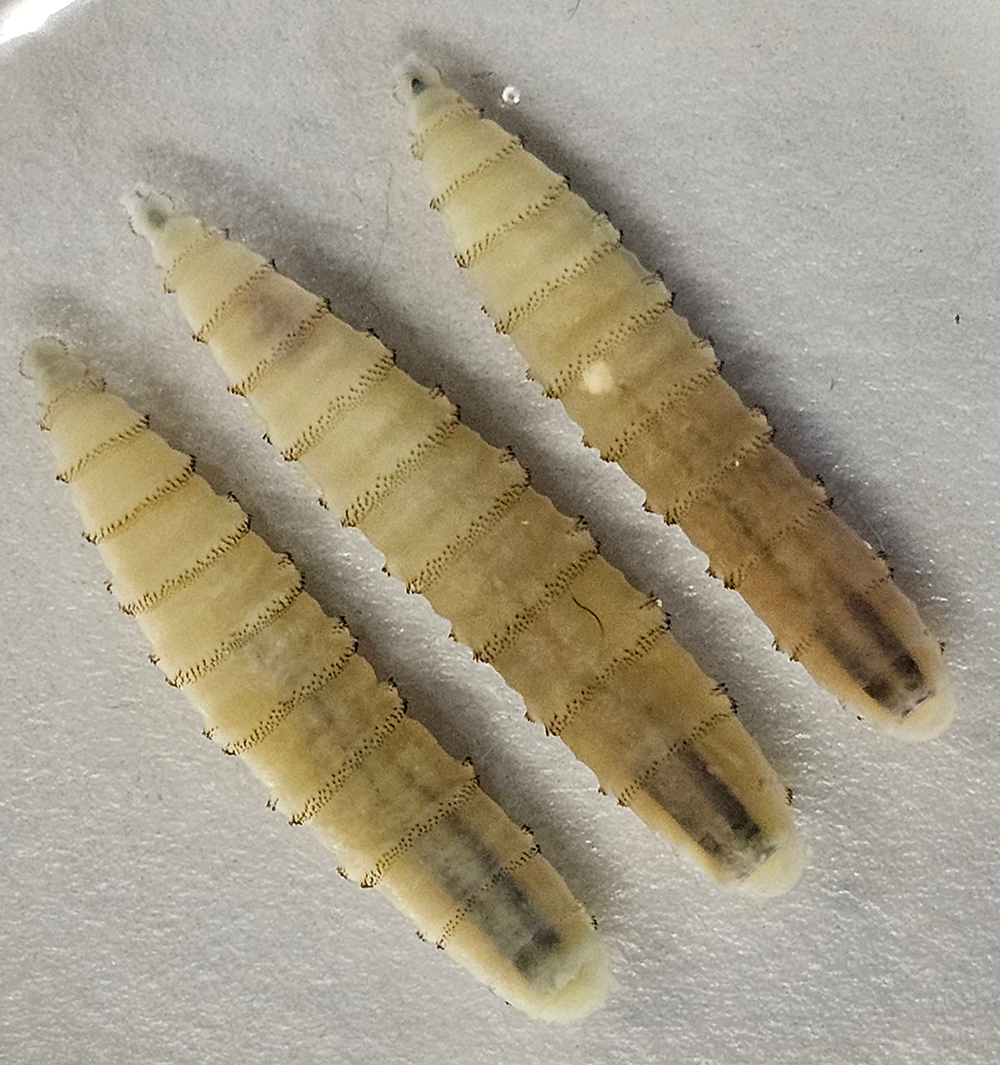
Photo/Sohath Yusseff-Vanegas, USDA
“Then you have introduction of the maggots, and the maggots eventually become flies,” he said, “so now you have all of that in a new area where it can further spread.”
He said CDFA is trying to increase awareness so that producers know what to look for, what to do should they find suspicious infestations and how to report potential cases. He stressed that producers should be on the lookout for infestations not just on their livestock but any animal around their property.
“If New World screwworm enters the U.S. sometime soon, it’s not guaranteed that it’s going to enter on a cow,” he said. “It might be on a wild bird, or it might be on some type of cat or a dog. It could be anything, really.”
Vahabi said that’s why CDFA has also been conducting outreach with small animal veterinarians and animal shelters.
“We want to make sure that we’re focusing on every potential source of introduction to the United States,” he said. He noted the San Diego Humane Society, for example, has so far submitted about 10 samples, all of which were negative for screwworm.
In cattle, wounds that might become infested include those caused by dehorning, castration, branding and injuries from their environment. A newborn’s umbilical area could potentially become infested until the navel closes. Screwworms could also infest body openings such as nose, eyes, mouth, ears and genitalia.
To reduce risk of infestation, Vahabi said management options include covering the wounds or keeping animals with fresh wounds indoors.
Screwworms infest only live animals. Therefore, maggots found on dead animals will not be screwworm, Vahabi said, because as soon as the host dies, the parasite leaves.
If screwworm is detected in the U.S., Vahabi said USDA will implement control measures, including the use of sterile flies, which has proved effective in ending the screwworm’s life cycle in areas where sterile flies are released. USDA has already dispersed hundreds of millions of sterile flies per week in Mexico and is helping the southern neighbor produce more sterile flies.
An incursion of screwworm into the U.S. would have immediate and severe trade impacts. Due to detections in Mexico, U.S. ports remain closed to livestock imports from the North American trading partner. Similar disruptions are expected if the screwworm is found in the U.S.
In an economic impact analysis using a 1976 screwworm outbreak in Texas as a case study, USDA estimated the pest could cost Texas producers $732 million a year and the Texas economy a loss of $1.8 billion in 2024 after adjusting for inflation.
Bill Brandenberg, an Imperial County rancher who runs feeder cattle, said while he understands why CDFA has focused on his region for outreach, as it borders Mexico and is home to numerous feedlots, “I don’t think anybody is too super concerned” about the screwworm.
He said feedlots have “too many other problems on their plate,” including “the super-high price of feeder cattle” and California’s “ridiculous regulations.” Therefore, they view the screwworm as “a back-burner issue.”
“We’ve got too many other issues to deal with to worry about something that’s a fairly minor concern at this time,” Brandenberg added.
Rachel Magos, executive director of Imperial County Farm Bureau, said she has sent her members information she received from CDFA on the screwworm, but she has yet to receive any calls or feedback about it. She said she reached out to a local feedlot operator, who acknowledged that while the Mexican border remains closed to cattle, “risk from wildlife still exists.”
But with no detections of screwworm in the U.S., “it is a bit down the list of current issues,” her contact said in an email.
“At this point it is thought that it can be reasonably treated/contained in a feedyard setting,” the operator wrote.
Help stop New World screwworm spread
• To report suspected cases of New World screwworm or concerns about sick animals, contact the California Department of Food and Agriculture hotline: 866-922-2473.
• For general inquiries about New World screwworm, call Matt Vahabi at 916-594-3166 or email matthew.vahabi@cdfa.ca.gov.
• To apply for the agricultural technician position, visit https://calcareers.ca.gov/CalHrPublic/Jobs/JobPosting.aspx?JobControlId=493305.
Ching Lee is senior editor of Ag Alert. She can be reached at clee@cfbf.com.
See related news stories...
• News Briefs: New World screwworm, endangered species, groundwater, annual meeting, prescribed fire
• USDA halts Mexican cattle imports due to parasitic fly
• Record-high beef prices keep cattle population down








.svg.png)
