


Inside Farm Bureau: If farmers don't tell their stories, somebody else will
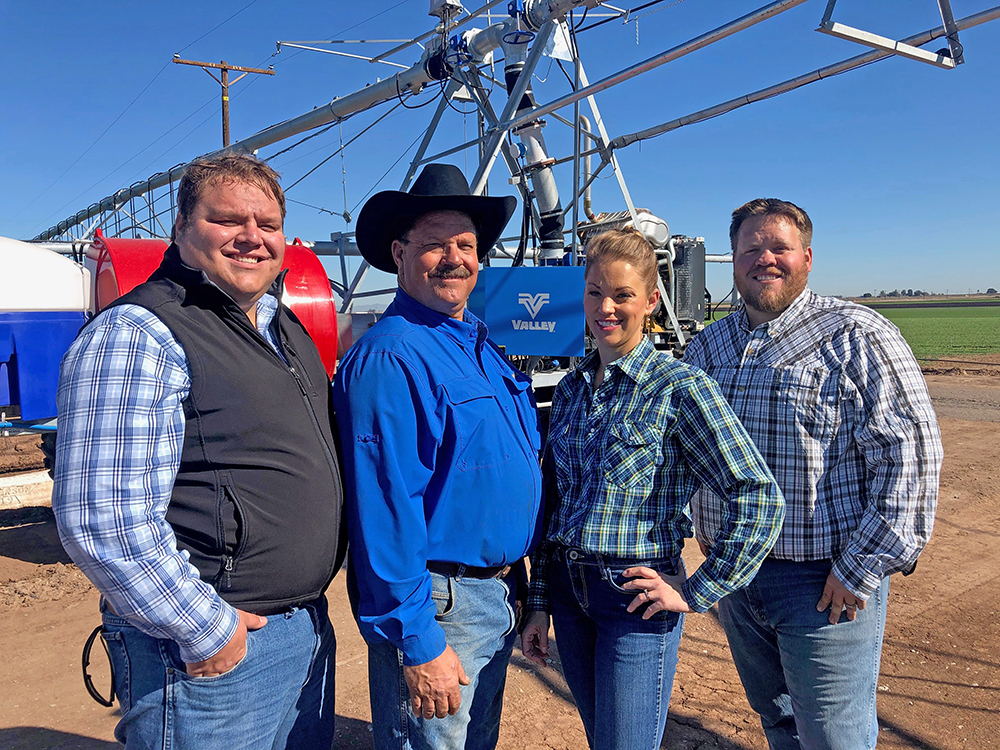
Andrew Leimgruber, far right, on the family farm in Holtville with his sister Stephanie, father Ronnie and brother Paul.


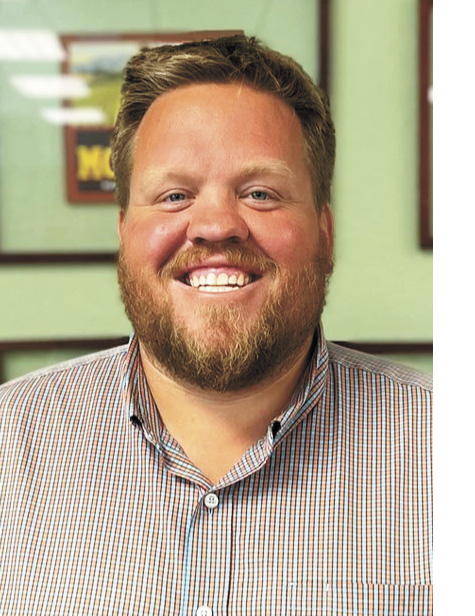
By Andrew Leimgruber
Imperial County Farm Bureau first vice president
I’m a fourth-generation farmer in Holtville, located in the Imperial Valley near the U.S.-Mexico border. My family emigrated from Switzerland in 1918, and we’ve farmed much of the same land for more than 100 years. Today, I’m raising the fifth generation. Our primary crop is alfalfa, but we also grow produce such as onions, carrots and leafy greens and other forage crops such as grass hay, wheat and corn.
Farmers tend to keep to themselves, but we have a great opportunity to tell our story, thanks to the farm-to-fork movement and increased interest in where food comes from. We have to be advocates. I speak up—even if there’s a chance I’ll be misquoted—because no one will tell our story better than we do. If I don’t speak, someone else will, and they may not get it right.
 In the U.S., we enjoy the safest, most affordable and readily available food supply in history. The fresh produce that we grow is medicine. If you want a Caesar salad in January, it likely comes from Imperial. During winter, we supply 90% of the nation’s leafy greens.
Farm Bureau’s Food Check-Out Week highlights how, by early February, the average American has earned enough income to pay for his or her annual grocery bill. In Europe, food costs can be nearly half of a family’s income.
The dilemma in California is consumers support high standards for labor and food safety, which bring farmers added regulations, yet at the grocery store, they are willing to buy less expensive imported produce that doesn’t have the same standards.
Anyone who farms in California has dealt with water issues. Farmers must show the value we bring to justify our water use. Imperial Valley farmers hold some of the most senior rights to Colorado River water. My great-grandparents farmed here before Las Vegas existed, yet because our irrigation district is the largest user on the river, we are targeted.
It is my job to remind people that we are growing the population’s food. People say 40 million use Colorado River water, but in reality, hundreds of millions rely on it for food. If you wipe the region’s farmers off the map to solve a water crisis, in the process, you’re going to create a food crisis.
I’ve done many media interviews, but this was my first year doing live national TV spots. I was interviewed by Fox News about the Colorado River. A week later, they called me to talk about tariff issues affecting agriculture and another time to talk about Chinese ownership of U.S. farmland. During one segment, an economist spoke on behalf of tariffs affecting big corporations. I followed by saying that many farmers support efforts to level the playing field when it comes to tariffs. Short-term pain can lead to long-term gains.
Short interviews and sound bites don’t always capture the farmer’s story well. Years ago, I gave a Las Vegas TV crew a half-day tour of our conservation efforts—our technology and water efficiency—but only a 2-minute piece aired. Still, the same folks who enjoy the salad bar in a casino are eating what we grow. Getting people to understand this disconnect is a reason I keep advocating. Longer-format coverage, such as podcasts and documentaries, allow farmers more time to talk about the real work we do, the challenges we face and why farming matters.
Much of my advocacy connects back to my Farm Bureau role. I serve as first vice president of the Imperial County Farm Bureau. I’ve chaired our water and political affairs committees. We started a political affairs committee because local elections have massive impacts on farming. When I returned from college more than a decade ago, some on the five-member irrigation district board were anti-agriculture, which made no sense. Our ancestors built this district, so farmers should be represented. We worked to elect directors who advocate for our efficient water delivery. Since we got involved, we no longer have an anti-agriculture board, and we have farmers at the table.
Our county formed a political action committee, and we produce a voter guide and regularly meet with candidates. Right now, we’re tackling big issues such as solar energy development on farmland. Sometimes getting involved means taking tough stances, even within our community. In small counties, elections can be decided by just 60 votes. Our 550 Farm Bureau members are highly engaged voters—and that makes a real difference.
To increase Farm Bureau membership, we must show its value. We defend and advocate for agriculture in the Imperial Valley. All the major agricultural boards here share one thing: They are Farm Bureau members. We are the unifying voice, and others want to align with what we’re doing. In Imperial County, Farm Bureau leads the way—and we plan to keep it that way.
Andrew Leimgruber is first vice president of the Imperial County Farm Bureau and a partner and farm manager at Leimgruber Farms in Holtville. He can be reached at media@cfbf.com.
See related news stories...
• Inside Farm Bureau: Farm Bureau remains rural health, safety champion
• Inside Farm Bureau: Legal successes deliver results for California farmers
• Inside Farm Bureau: Farm leader shares thoughts on balancing work, life






.svg.png)
