


Artichoke farmers use genetics to improve quality
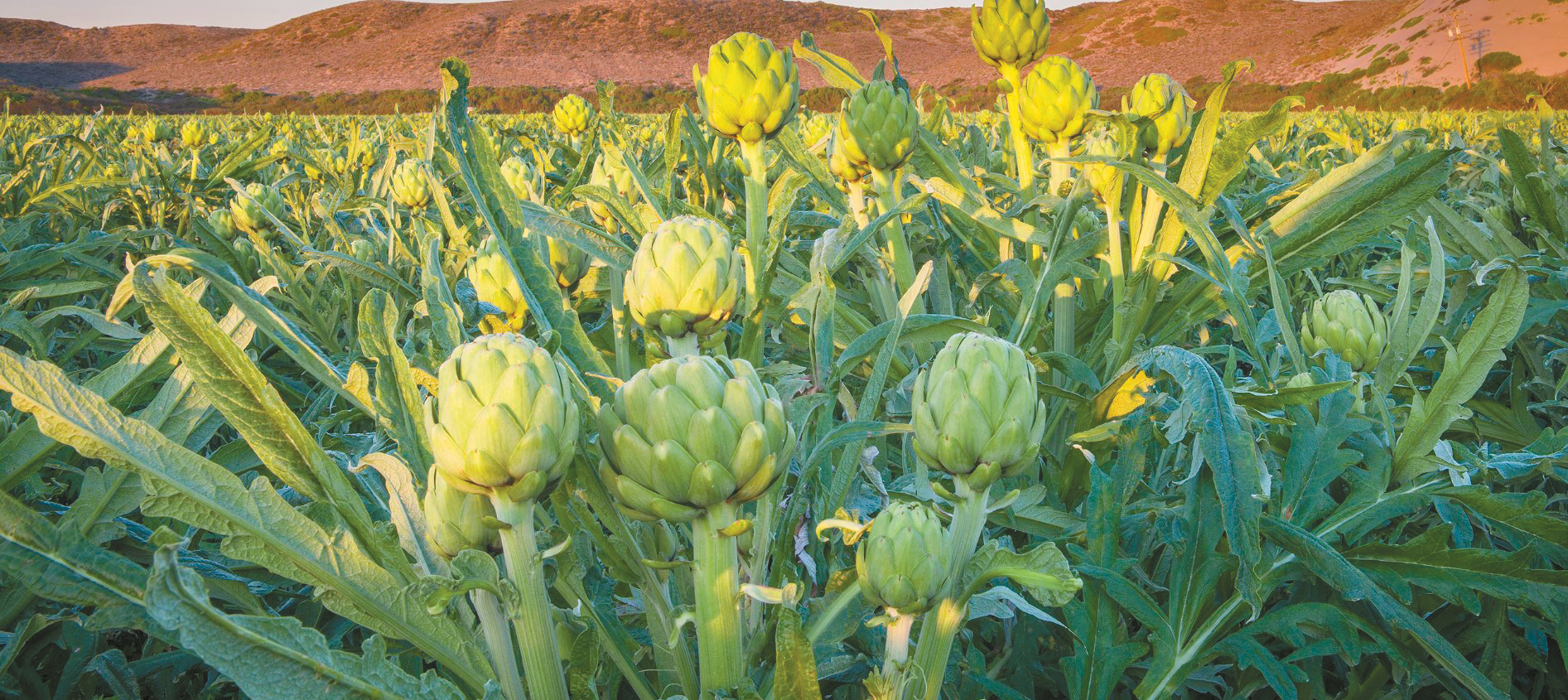
Artichokes thrive at Monterey County-based Scattini Farms in Castroville. The state’s artichoke acreage has dropped in the past few decades, but farmers are looking to genetics to improve quality and production.
Photo/Scattini Farms


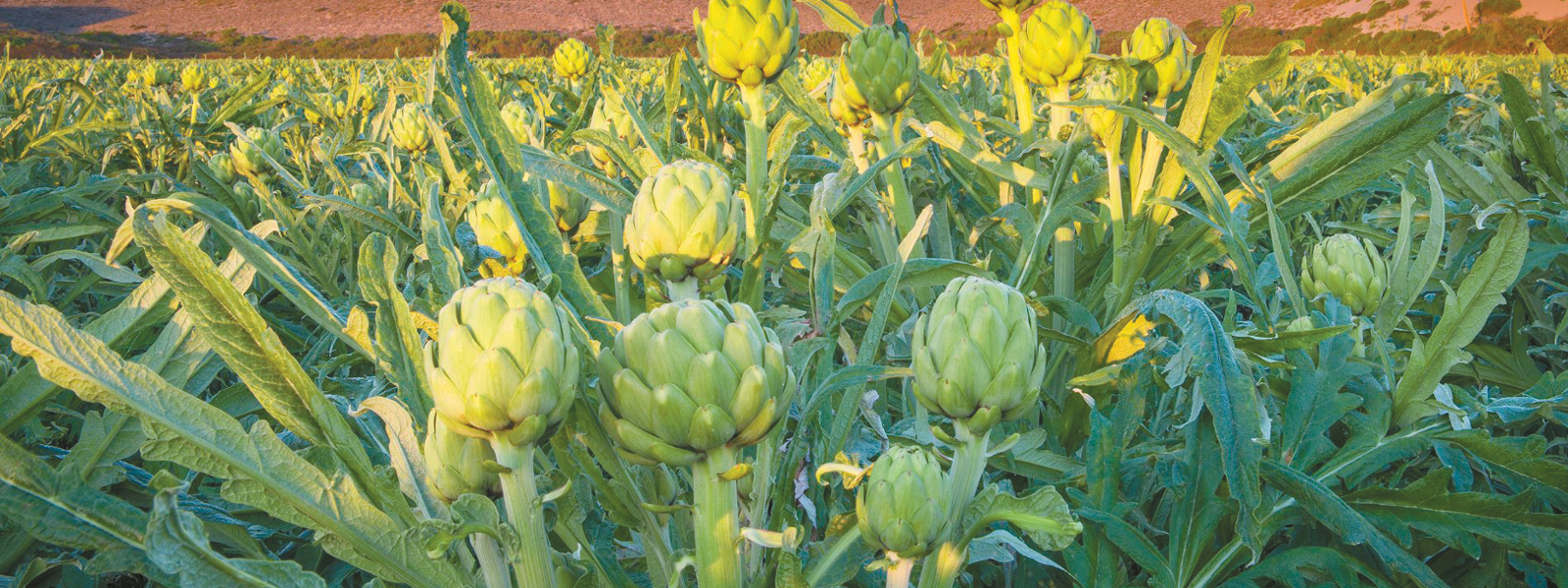
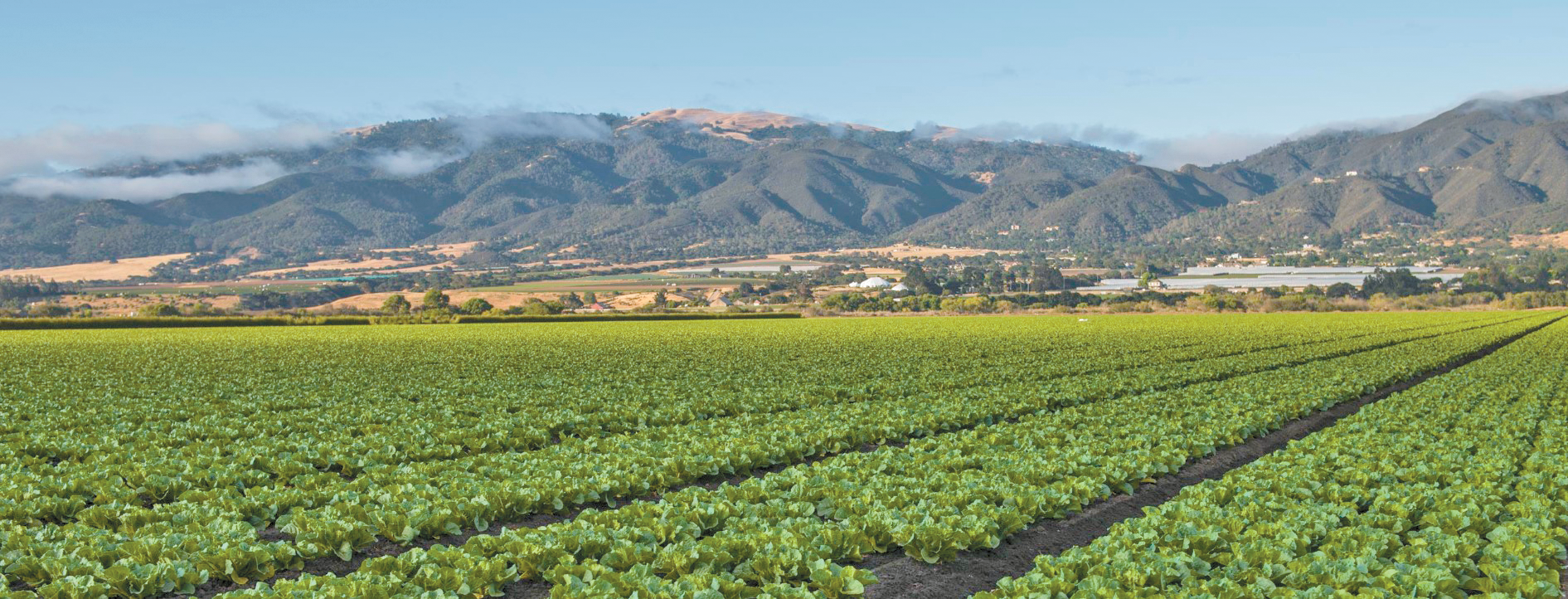
Photo/Scattini Farms
By Caitlin Fillmore
Monterey County is largely known as the Salad Bowl for its agricultural bounty of leafy greens. Yet since 1948, when it honored Marilyn Monroe as California’s first Artichoke Queen, the county has celebrated a petaled thistle plant with meaty hearts that enhance salads and inspire culinary creations.
California produces 97% of the nation’s fresh artichokes, and 75% of those are grown in Monterey County. The artichoke is the county’s official vegetable, and tourists flock to restaurants and farm stands along the Artichoke Trail, which opened in 1957.
Yet artichoke production on California’s Central Coast has steadily fallen over the past three decades since its peak of 18,000 acres in the 1980s.
In 2022, Monterey County farmers grew 4,750 acres of artichokes. This year, acreage dropped to about 4,300, according to the California Artichoke Advisory Board.
This is partly due to a transition from perennial artichoke plants to an annual or seeded variety in the 1990s, after a lengthy cold snap killed acres of perennial artichokes in the county. Seeded varieties can be more densely planted and produce a more uniform crop that can be harvested in weeks vs. wilder perennials that require months of harvesting.
“(Seeded artichoke) varieties are higher yielding, so you don’t need as much land to get the same yield,” said Michael Cahn, a University of California Cooperative Extension irrigation and water resource advisor in Monterey County.
Artichoke farming is labor intensive, challenging harvest crews and farmers facing employee shortages. Harvest workers navigate plants that tower over their heads. They evaluate and grade buds that mature at different rates before they chop and separate larger ones destined for premium markets from those headed to secondary markets.
The hands-on process, with employees making four to nine passes through a field, is “just the name of the artichoke harvest,” said Mark McLaughlin, president of the Artichoke Research Association.
Mike Scattini, a fourth-generation farmer who grows 100 acres of artichokes in Castroville, said it used to be easier to hire farm crews when artichoke harvest happened primarily in winter as opposed to year-yound. Scattini said many people “still want to work in the winter but don’t want to in the summer when there are other crops that are easier (to harvest) for the same amount of money.”
To address labor concerns, Scattini hires 15 to 20 agricultural guestworkers each spring, providing housing, paid transportation and guaranteed wage scales under federal H-2A visa program requirements. He said the H-2A visa program helps him “ensure we have the employees.”
“You can meet your goals, but it’s not cheap,” he added.
Harvesting artichokes requires human hands and is unlikely to be helped by automation, Cahn said.
“Artichokes are one of the more difficult ones” to automate due to the plants lack of uniformity,” he said. “Hybrid production is helping them be more uniform. But there is still a strong wild component to them.
“How can a robot know the best way to make a judgment?” he added.
Pest concerns, including lygus and proba bugs, present another challenge for artichoke growers. Proba bugs specifically target artichokes. Both pests discolor leaves and eat the base of the artichoke bud, turning it black and useless.
Because artichokes are a niche crop, McLaughlin said growers face a shortage of approved pesticides.
“We’re the minor crop. The interest of ag chemical suppliers to come up with labels for artichoke use is difficult,” said McLaughlin, who also serves as president and general manager of Kleen Globe, a Castroville agricultural pest management company. “It’s not like corn in Iowa. The economic interest from ag suppliers is just not there.”
McLaughlin and Cahn agree the artichoke sector is increasingly looking to genetic research to improve labor and pest control.
“Genetics will play a huge part in the future of the artichoke industry,” McLaughlin said. “Innovation within the artichoke industry is at the forefront.”
McLaughlin described a cloning process to reproduce the heirloom green globe artichoke. Researchers recreated this hardy perennial variety using modern propagation techniques, combining heirloom quality with uniform crop production.
“We are looking to innovation to solve the problems coming up,” McLaughlin said. “We’re developing new varieties that will produce that heirloom artichoke.”
This may present a full-circle moment for the artichoke sector, using genetic technology to return to a version of the perennial artichoke variety first popularized in Castroville a century ago.
For his part, Scattini said his focus on artichoke genetics is aimed at enhancing the flavor of the vegetable, which is challenging to grow and to prepare for meals. Scattini said he educates customers about the worthiness of artichokes, including instructing them on potential dishes.
“The industry’s going toward yield. I’m going toward quality,” said Scattini, who describes his crop as “tender and original.”
“If you’re going to take the time to do all the things you have to do (to cook and eat an artichoke), I want to exceed your expectations,” he said.
He said he is committed to the vegetable and continuing its production on the Central Coast.
“There’s pride and enjoyment in growing artichokes,” Scattini said. “When I tell people I’m an artichoke farmer or give them artichokes, the response I get is like I’ve given them a nice gift.”
(Caitlin Fillmore is a reporter in Monterey County. She may be contacted at cslhfillmore@gmail.com.)





.svg.png)
