


From the Fields - Jocelyn Anderson


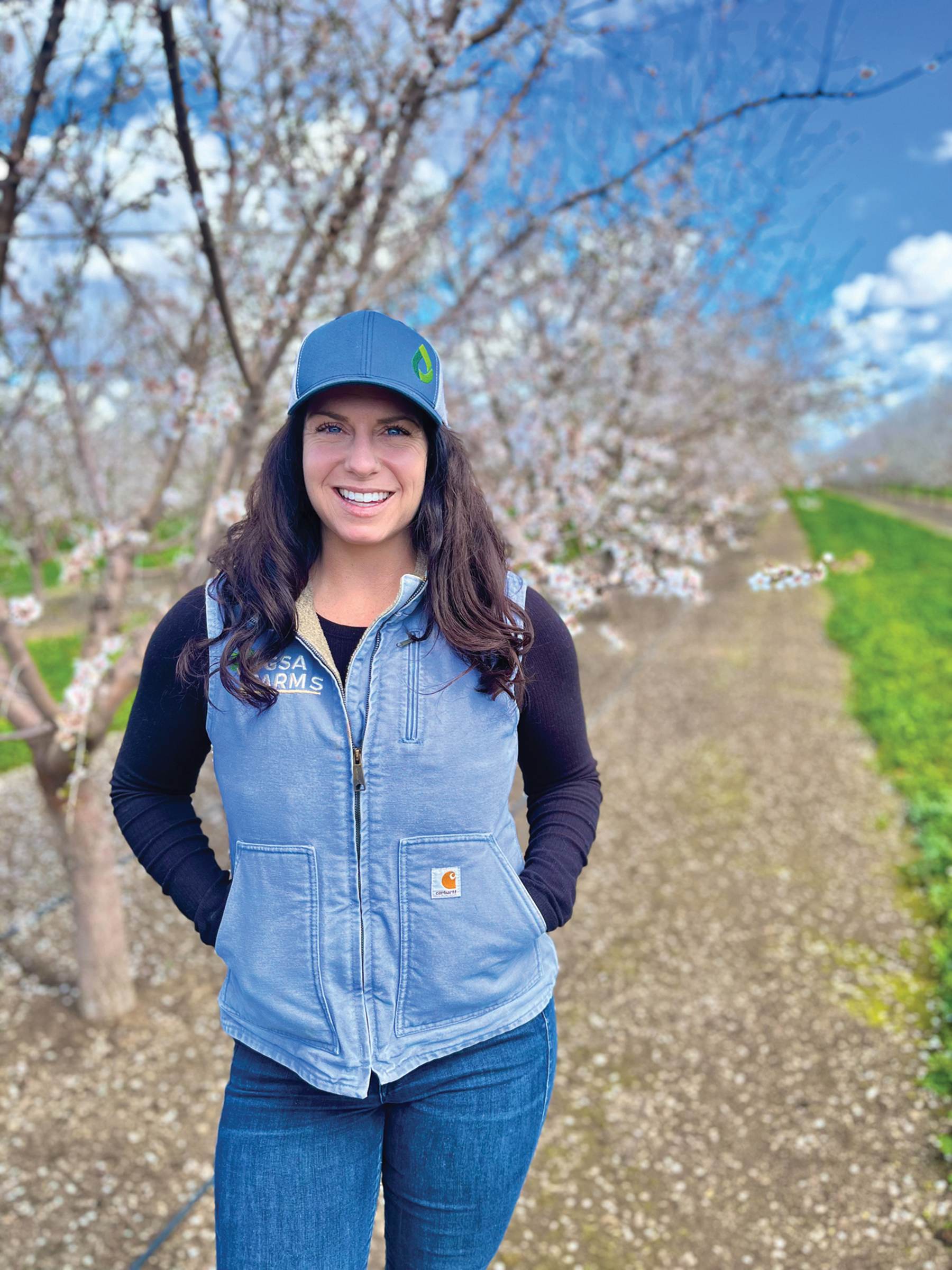
Photo/Courtesy of Jocelyn Anderson
By Jocelyn Anderson, Glenn County walnut and almond farmer
I work on my family farm outside of Willows. I’m a fourth-generation farmer. We have a walnut huller that we run during harvest season. We grow a small amount of row crops like corn and winter wheat.
We finished harvest a couple of weeks ago. In general, harvest for almonds starts in August, and it is late October when we finish walnuts. We are focused on servicing and cleaning up our harvest equipment. We also do a full clean of our walnut huller so that it is ready to go for the next season.
It’s been a rough couple of years for walnuts, but the market is looking decent. Across the board, at least in Northern California, most saw walnut production down anywhere from 10% to 50% per pound, especially in some of the older orchards.
The high-heat days we had this year could be a reason that factored into everyone seeing a decrease in their yield. We had a very long streak of days with temperatures greater than 100 degrees. Thankfully, it cooled down to below 80 degrees at night, so that didn’t affect the coloring of the walnuts like it did a few years ago.
The lower walnut production is not totally devastating because the smaller crop has helped to strengthen pricing. I know a lot of processors are hoping for 90 cents per pound to possibly $1.10 per pound, which is much better than the last two years.
We are always trying to keep up with regulations in the state, such as new water fees that are going up with SGMA (Sustainable Groundwater Management Act). As a small family farmer, it’s getting harder and harder to operate because of the cost of doing business. This is one of the biggest things we have to keep a really close eye on and make sure to manage the business appropriately because costs keep going up and up for us.





.svg.png)
