


From the Fields: Kyle Harmon, Monterey County vegetable grower

Kyle Harmon
Photo/Kyle Harmon


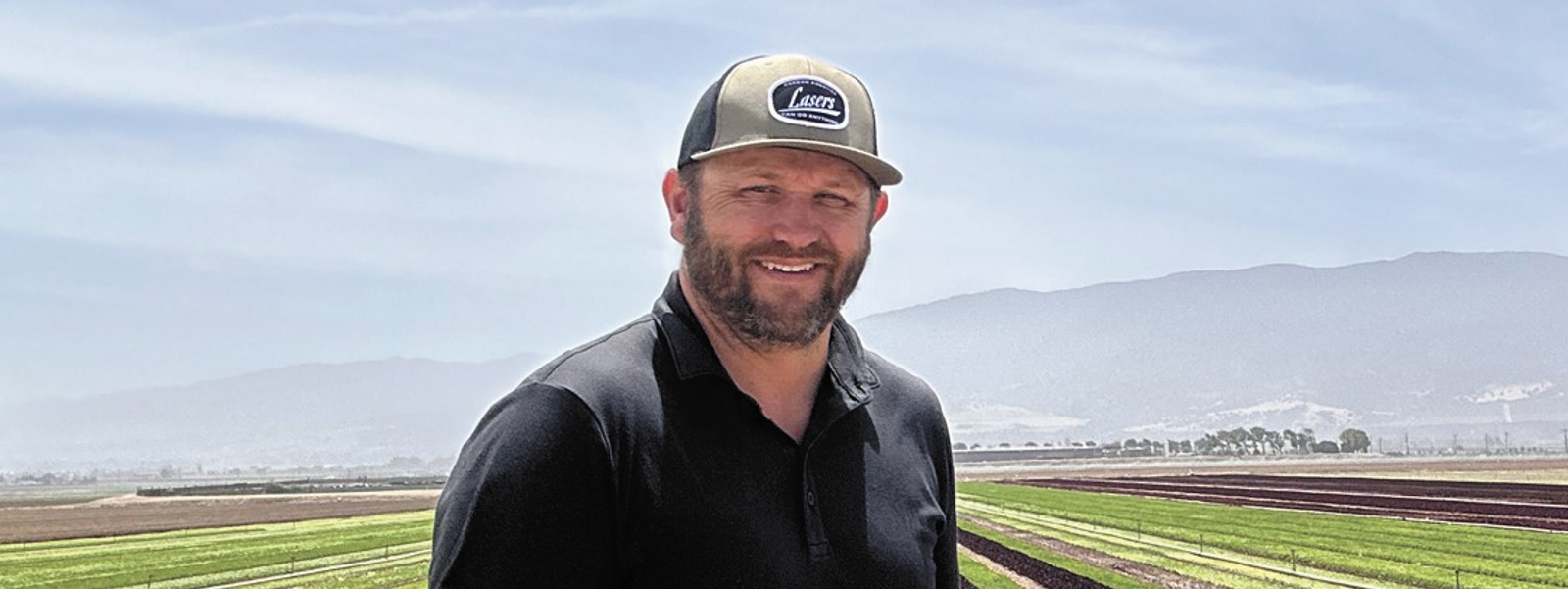
By Kyle Harmon, Monterey County vegetable grower
We grow 38 different commodities throughout the Salinas Valley. Eighty-percent are organic, and 20% are conventional. We have another 2,000 acres of organic crops in the Imperial Valley. We are mostly sprinkler irrigation. Within the last year and a half, we have expanded our drip irrigation practices. We are using more buried drip instead of surface drip tape.
We’re doing drip germination on romaine, iceberg, and our red and green leaf lettuces, both conventionally and organically. We’re seeing a reduced input on water, less weeds and better germination uniformity. There is definitely some labor savings. Once we put the drip tape in place, it is there throughout the crop cycle, and we’re not having to go through and check sprinklers. In the desert, we still do some furrow irrigation, which is pretty typical. But even in the desert, we are expanding our drip tape impact both for uniformity distribution and for water savings. In the desert, we’re seeing a 40% water savings by doing drip tape compared to our traditional irrigation practices.
We are planting and harvesting. We’re finishing our first round of crops in the Salinas Valley and are getting ready to start our second round. Back in November, we used some drip tape, but because we have Mother Nature on our side, we don’t tend to use much drip tape because we rely somewhat on rainfall.
We use recycled drip tape, the ReGen brand from Netafim. It’s made from 50% recycled drip tape from the previous seasons. All the drip tape we use is picked up and recycled. They have a regenerative certification program for growers that use the recycled program.
The markets are a little soft this season, both for conventional and organic. We are seeing that lettuce and celery have some strong demand, but our other commodities are a little slow to move. I don’t know what the cause of that is. I think that’s the golden question.





.svg.png)
