


Commentary: Farmers curb emissions while producing more food
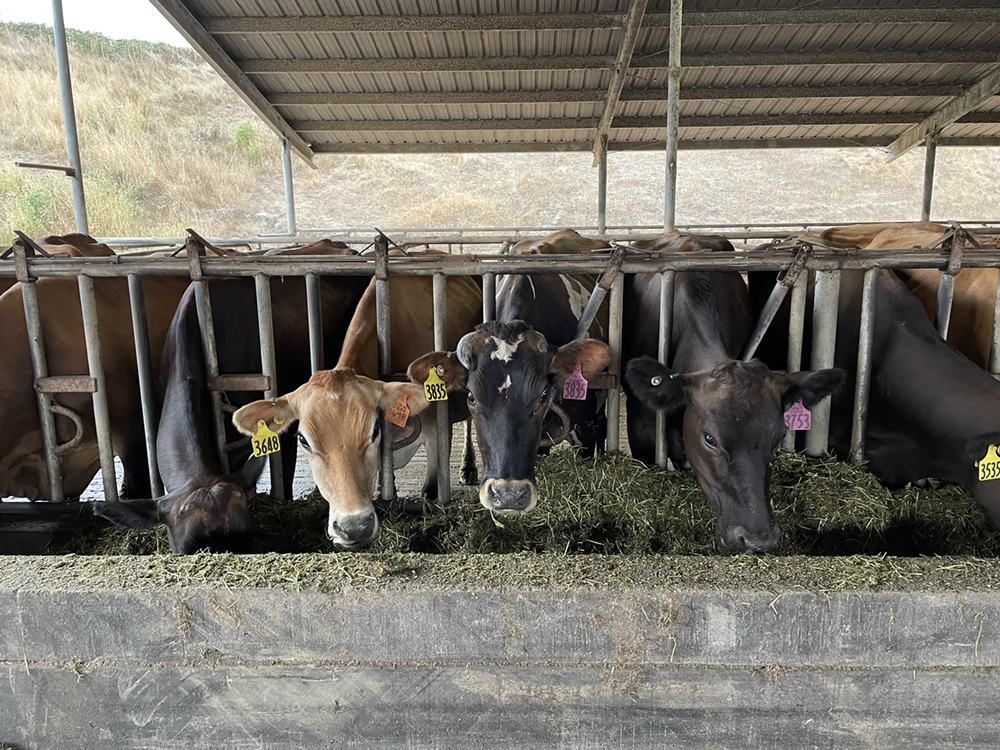
Cows at Straus Dairy Farm are fed a diet containing seaweed to curb enteric methane emissions during a commercial trial in 2021. U.S. dairies increased milk production by 53% from 1990 to 2022 while cutting emissions by 26%.
Photo/Courtesy of Straus Dairy Farm, Petaluma



By Daniel Munch
The U.S. Environmental Protection Agency last month published its estimate of all man-made greenhouse gas emission sources in the U.S., a report submitted to the United Nations as part of the United Nations Framework Convention on Climate Change reporting guidelines.
According to the findings, U.S. agriculture represents less than 10% of total U.S. emissions. While overall U.S. greenhouse gas emissions increased from 2021 to 2022 by 1.3%, agricultural emissions dropped 1.8%—the largest decrease of any economic sector. Agricultural emissions in 2022 were the lowest in a decade.
The drop in emissions highlights the success and continued importance of voluntary, market- and incentive-based conservation practices that help farmers and ranchers access finances for the research and technology needed to take ever better care of our natural resources.
In 2022, crop cultivation emissions were down 1.7% from 2012. Agricultural fuel combustion was down 1.2%. For livestock categories, enteric emissions from beef cattle sat at 2.19% of total U.S. emissions in 2022. That is a 2.43%, or 3.3 million metric-ton, decline from 2021. Dairy cattle contributed just 0.77% of total emissions and recorded a 451,000-metric-ton decrease from 2021.
U.S. agricultural emissions for 2022 totaled 593 million metric tons, down 11 million metric tons from 2021, representing 9.3% of all U.S. greenhouse gas emissions. Agricultural soil management represents approximately 50% of all agricultural emissions but only 4.6% of total U.S. emissions.
Agricultural productivity is increasing, as it must to keep feeding a growing global population, and emissions are on the decline relative to this productivity and population increase. Innovation and advancements in technology have allowed farmers and ranchers to increase their productivity while using the same amount of inputs.
Acreage in operation has declined by 323 million acres since 1950, almost double the size of Texas. This means that farmers and ranchers continue to produce more using fewer resources. The additional decrease in agricultural emissions shows that voluntary, market-based incentives are helping farmers and ranchers accomplish this.
Production of food is important not just for farmers and ranchers, but also for the millions of families in the U.S. and around the world that U.S. agriculture feeds. Agriculture’s sustainable intensification through productivity gains, in addition to the adoption of practices that further shrink the environmental footprint of farms and ranches, has had remarkable results in crop yields and animal nutrition and breeding.
Between 1990 and 2022, U.S. dairy farmers increased milk output by 53%, going from 148 billion pounds to 226 billion pounds to meet increasing global demand for products such as cheese, butter and dairy powders. During this same timeframe, emissions from enteric fermentation from dairy cattle per billion pounds of milk produced dropped 26%.
In 1990, U.S. farmers produced 39 billion pounds of red meat; this grew 44% to 55.6 billion pounds in 2022. In the same timeframe, greenhouse gas emissions from enteric fermentation from beef cattle dropped 28%. Livestock producers have embraced technological innovation and production practices that increase output while reducing associated emissions.
Not only have producers focused on improvements to production and sustainability, but they have also focused on feeding more families, both at home and abroad. Since 1990, U.S. agricultural emissions have increased by 6.4% while the U.S. population increased 33%, adding more than 83 million people in three decades. This means U.S. agriculture has been called upon to feed more people than ever before.
When factoring in productivity and population gains, however, both per unit and per capita agricultural emissions are declining. That means U.S. agriculture is producing more food, fiber and renewable fuel for more people while using fewer resources and emitting fewer greenhouse gases. Additionally, the adoption of conservation practices through voluntary, market-based incentives has helped farmers and ranchers trap 854 million metric tons of carbon in the soil.
With conversations on a new farm bill gaining momentum, it is vital that investments in conservation are maintained to assist farmers in further improving efficiency. Ensuring that the U.S. leads in agricultural research that allows farmers and ranchers to be part of cutting-edge plant and animal technologies that increase productivity, capture more carbon in the soil and reduce livestock-related emissions even more, among many other environmental benefits, is also vital.
The data show that when agriculture is recognized as a partner in reducing greenhouse gas emissions, farmers and ranchers have more opportunities to use voluntary, market-based incentives that work to reduce agriculture’s environmental footprint. This also helps farmers and ranchers economically produce the food, fiber and renewable fuel that U.S. families—and the world—rely on.
(Daniel Munch is an economist for the American Farm Bureau Federation. He may be contacted at dmunch@fb.org. This article is adapted from his April 15 Market Intel report, which can be found at fb.org/market-intel.)





.svg.png)
