


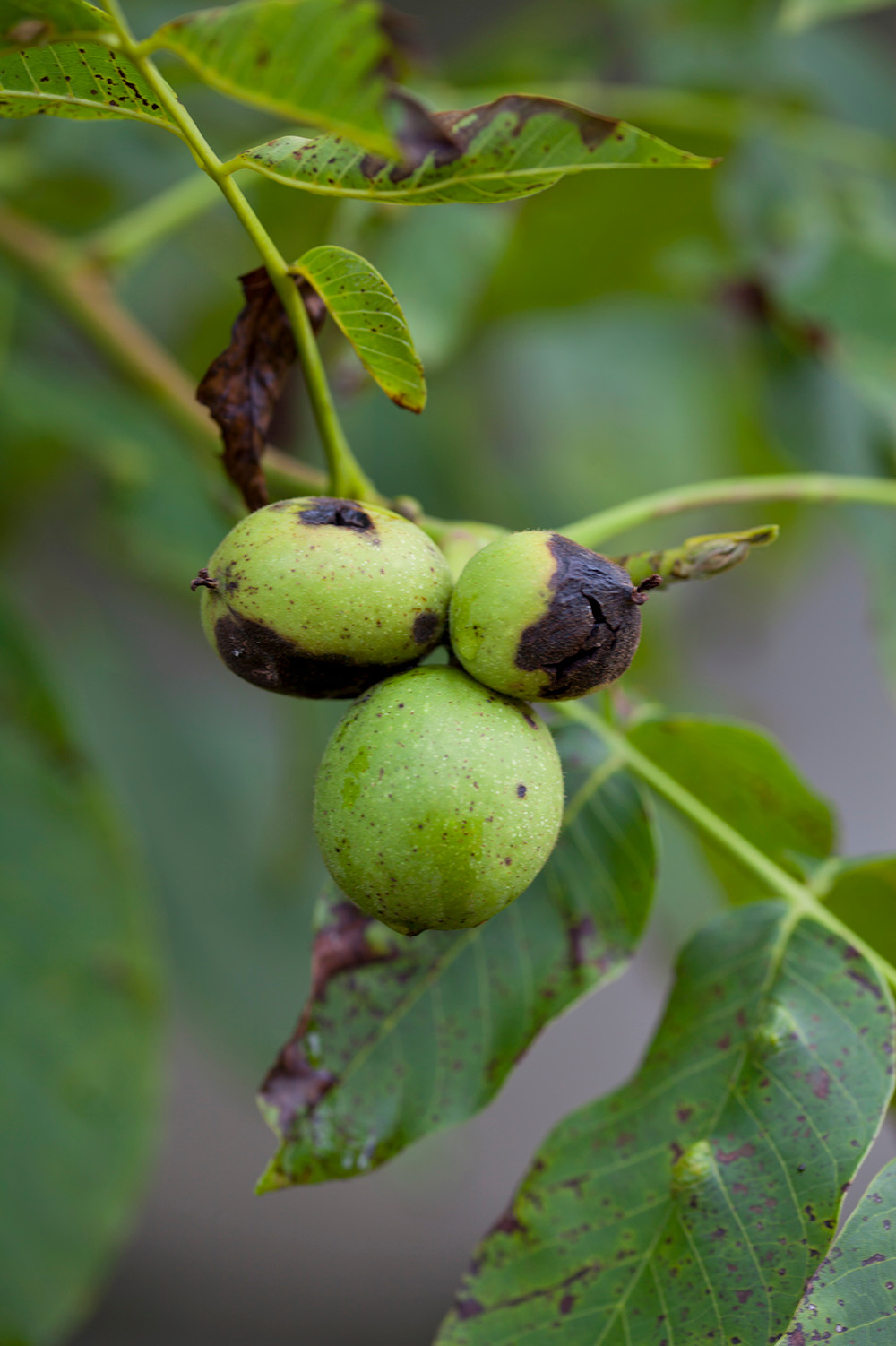
What is needed to protect against walnut blight?
Photo/Licensed image


By Justin Nay
Integral Ag Services, Durham
From March into April, walnuts begin pushing new growth and become vulnerable to walnut blight.
Last year, growers invested more heavily in disease programs, increasing spray applications, mostly copper. Kasumin, a newer and highly effective product, was used less frequently due to cost. But rotating copper with Manzate or Kasumin is advised to limit resistance development and maintain long-term efficacy.
If weather conditions favor blight, spraying begins at 5% during the “prayer” stage (when pistillate flower buds first unfold and look like praying hands on the twig) or earlier if significant catkin expansion is present.
In higher-risk blocks, some growers start even sooner when rain is imminent. Varieties such as Tulare, Vina, Howard and Solano are more susceptible than Chandler because they bloom earlier. However, late rain events can make Chandlers vulnerable as well.
Any green plant tissue, especially early in the season, is susceptible and can increase blight infections. While Chandlers often miss early rain events due to later bloom, shifting weather patterns and late rains can still create risk, particularly when new tissue continues to emerge.
Ground applications have traditionally been the norm, but if orchards become saturated, aerial applications may be the only option to stay on schedule. Although aerial treatments have typically been more expensive and slightly less effective than ground sprays, except in very tall trees, they are becoming more cost-competitive in some areas.
Most growers, except in areas consistently impacted by blight, make one application and then monitor weather conditions to determine if additional sprays are necessary. If no rain is in the forecast and infection history is low, a preventive spray may not be needed, and delaying can help avoid unnecessary applications.
As trees continue pushing new green growth, that tissue remains at risk. Nuts sizing after bloom are also susceptible and may require another application. Under heavy pressure, repeated sprays are recommended to protect new plant material and reduce the likelihood of infections building through the season.





.svg.png)
