


Vision tech allows dairies to identify lameness early
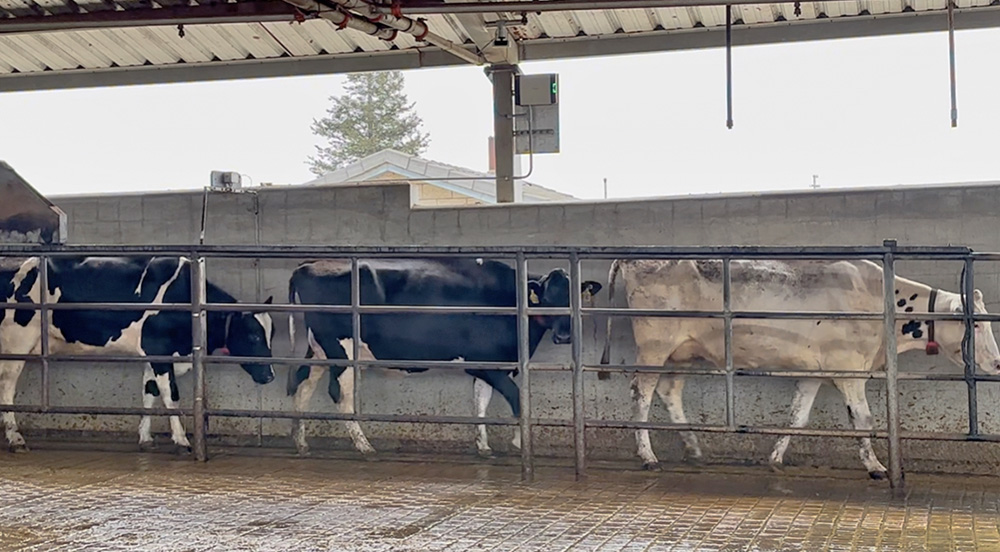
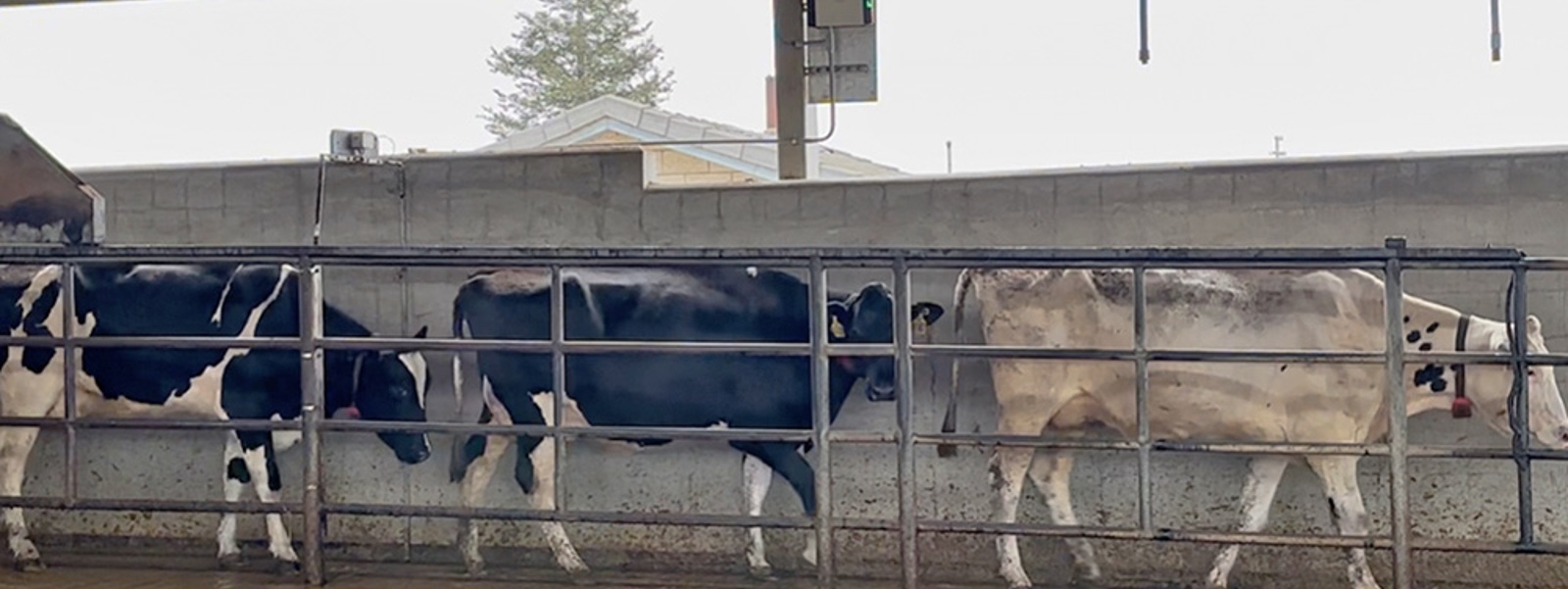
Cows at Rib-Arrow Dairy in Tulare walk under an AI-powered SmartSight camera.
Photo/Joya McCarthy


By Cecilia Parsons
At least once during their lifetime, 90% of dairy cows will be affected by some degree of lameness. That statistic from the University of Wisconsin, Madison, won’t shock too many hoof trimmers who work at dairies or dairy workers who are responsible for identifying lame cows in the milking herd.
Lameness is one of the main reasons a dairy cow will be culled from the herd due to cost of treatment and impacts on milk production and reproduction.
 The most common causes of dairy cow lameness are infections such as digital dermatitis and hoof rot and diseases such as white line, sole ulcers and laminitis. Lameness can also be caused by injury, overgrown or misshapen hooves or skeletal issues. A lame cow will land on the hoof trimmer’s list for diagnosis and treatment.
Joya McCarthy, technical product manager with Specialty Herd Solutions in Fresno, said that despite the dairy industry’s best efforts, there has not been significant improvement in preventing lameness losses. Treatment costs are rising, with an average price for treating a lame cow at $336.91. Globally, lameness costs dairy farmers $6 billion annually.
“Traditional methods detecting and treating lameness are not enough. It’s time for a change,” McCarthy said.
Lameness detection includes visual scoring, manual gait analysis, hoof inspections and routine trimming. The problem with this method, McCarthy noted, is that it is subjective, can be inconsistent and is labor-intensive. Lameness can be missed and treatment delayed. Obvious limping is easy to catch, but subtle changes in a cow’s gait can be missed. Most cows don’t become lame overnight. There can be subtle changes in their gait over time until it is visible.
That is where vision technology changes hoof care. It allows for earlier detection and treatment of lameness, making smaller impact on a dairy’s time and labor. There are fewer severe cases, milk production and fertility are preserved, and cow health and welfare are improved.
“The goal with hoof trimming is not to trim less cows but to trim the right cows,” McCarthy said. “If you can trim 50 cows per day, make sure it’s the 50 that need it the most. Less severely lame cows and pre-lame cows are the targets for trimming.
“Lameness has been a huge unknown, but that is changing with vision technology,” she added.
The trademarked SmartSight system is an artificial intelligence-driven lameness detection tool. This vision technology monitors cow locomotion multiple times per day with a 3D camera taking numerous images and monitoring cow locomotion over time. It generates reports on lameness status before it is visible and tracks changes in severity. It generates a lameness score within minutes multiple times a day. It can score any breed.
The system is powered by Nedap, a Dutch technology company. Nedap uses computer vision to detect early signs of lameness. This vision is integrated with a cow monitoring platform.
McCarthy said once the SmartSight system is installed at a dairy, it takes about seven days of identifying, watching and learning to determine what is normal locomotion for each cow. After that, it detects differences in cow mobility over time by analyzing thousands of data points on the cow’s body. Noting trends, the system can flag cows before they are visibly lame and list them for treatment.
The early intervention shortens lameness cases by an average of 40 days, meaning less stress on cows and less loss, McCarthy said.
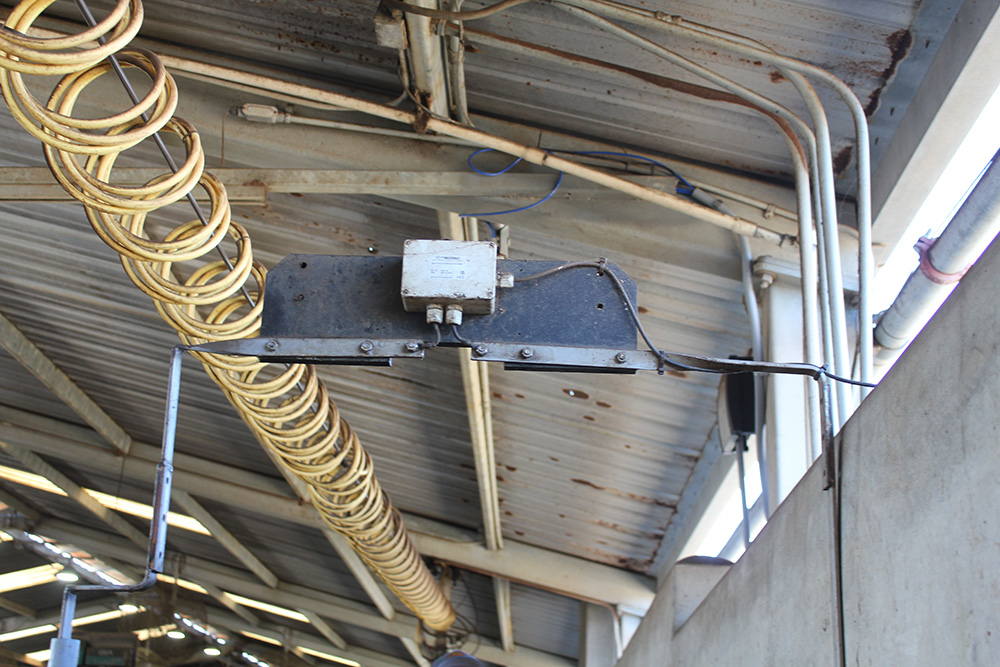
The SmartSight system consists of a camera and a process box for local, fast data processing, and identifies animals via antenna to read radio-frequency identification tags or Nedap collars, or cows can be identified by integrating a dairy’s existing parlor ID.
It is important there are no obstacles in the sight of the camera that would make the cows walk differently, McCarthy noted. The software analyzes the images and tracks the movement of each cow, whether exiting or entering, for consistent comparison.
Photo/Cecilia Parsons
Rib-Arrow Dairy in Tulare is the first California dairy to install the SmartSight system. Tyler Ribiero, a partner in the 1,500-cow dairy, said the system may be flagging more cows for hoof treatment, but it is finding fewer severely lame cows.
Acknowledging an old dairy truism that if cows can’t walk to the barn, they can’t be milked, Ribiero said catching lameness early is the goal with vision technology. With almost a year’s worth of data now collected on his herd, he said the hoof trimmer is still working on the same numbers, but they are catching cows well before they even begin to limp.
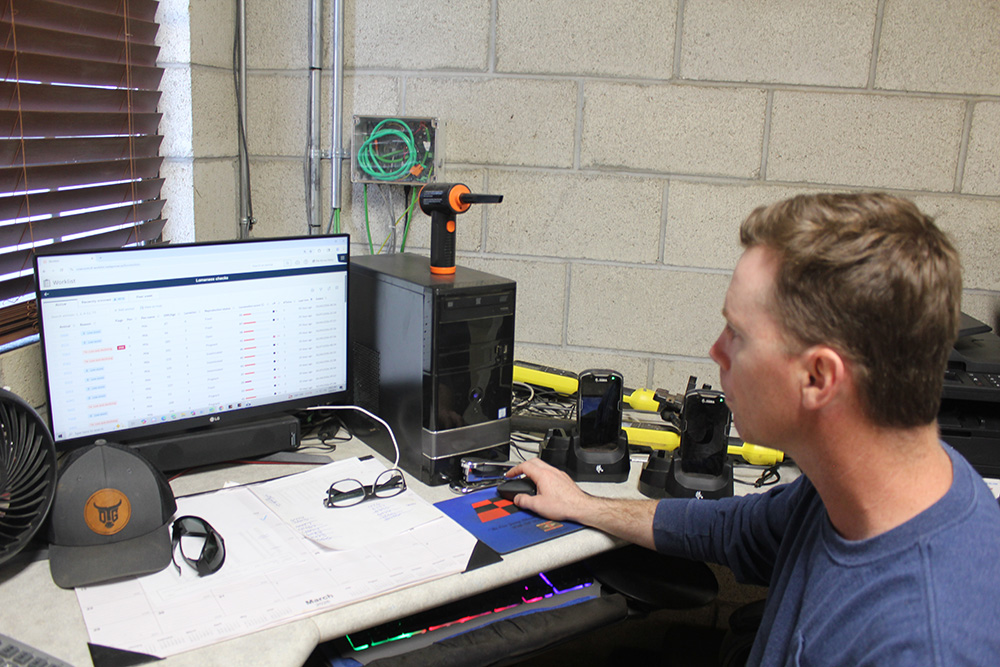
Looking at the monitoring screen in his office, Ribiero can see the current locomotion status of each cow and their locomotion history for the entire lactation, allowing him to determine where the problem occurred and why.
“All that data tells us what the problem is,” Ribeiro said.
Ribiero calls vision technology a new frontier in preventing lameness.
“We used to blame rocks, concrete, all the causes for lameness, but this system helps us identify the root problem going all the way back to transition (to the new system),” he said.
Photo/Cecilia Parsons
The SmartSight system was installed at the dairy in mid-2025. Ribiero said he did his own research into how the system worked and determined if it was a fit in his operation.
Vision technology catches things that the human eye cannot, he said. The information it supplies makes him ask why, what happened and when, and learn more about the health of the cows.
“We want to figure it out and give them what they need,” Ribiero said. “We want to see happy, healthy, old veterans of the milk string. Our goal is to have them walking well after multiple lactations.”
McCarthy said that building a cohesive hoof care team on the dairy is essential. The team can assess lameness prevention strategies, how cow hygiene and nutrition affect cow locomotion and treatment protocols, including hoof trimming and footbaths.
As for the future of hoof trimming on dairies, McCarthy said there is no industry standardized way to record hoof lesions and treatments. However, she said she thinks lameness data will be as common and standardized as milk quality and reproduction data.
“This new era in lameness management will require that everyone board and move forward as a team,” she said.
Cecilia Parsons is a reporter in Tulare County. She can be reached at agalert@cfbf.com.


In this issue:
- Farm Bureau leaders advocate at Capitol
- Iran war strands California farm exports
- Mentorship program grows next-generation farmers
- Vision tech allows dairies to identify lameness early
- Research looks to optimize pollination in avocados
- Advocacy in Action: Fire insurance, farm workforce, market relief and water infrastructure
- California farmer finishes AFBF leadership program
- State treasurer honored for being agriculture 'champion'
- In Brief: Pesticide labeling, H-2A wage rate and "Captive Audience" law
- What is needed to protect against walnut blight?
- California's top exports to China fell by 64% in 2025
- CDFA takes steps to stop spread of cotton leafhopper
- Low-cost ways small farms can lean into technology
- Pest control innovator shares take on biopesticides





.svg.png)
