


Pest control innovator shares take on biopesticides
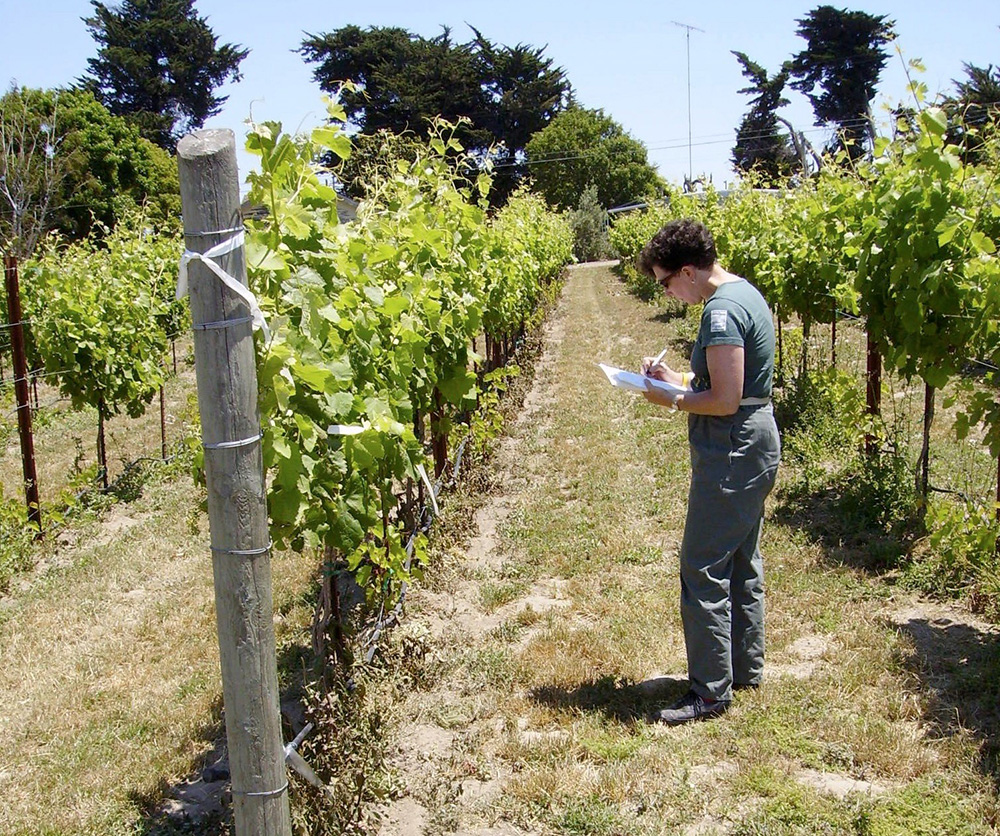
Pam Marrone makes notes in a California vineyard. She is founder and former CEO of Marrone Bio Innovations, now called ProFarm Group, which specializes in the development of bio-based pesticides.
Photo/Courtesy of Pam Marrone


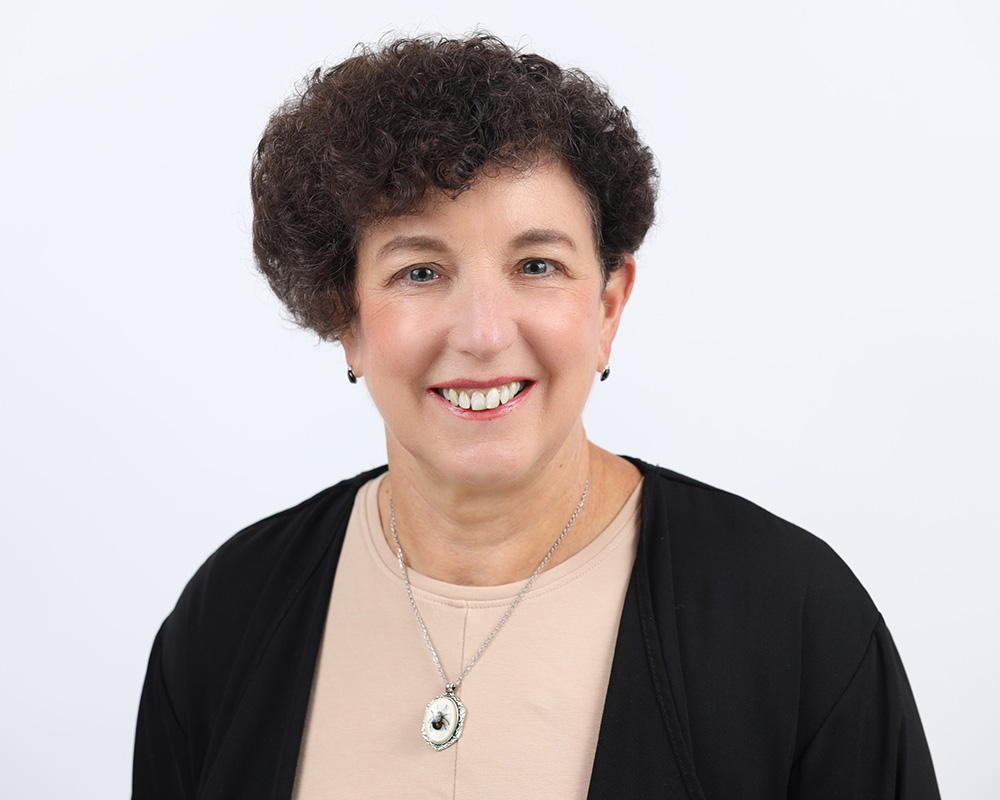
Pam Marrone is the founder and former CEO of Marrone Bio Innovations, now ProFarm Group, a leading developer of biological pesticides, or biologicals. An entomologist by training, she started her career in the early 1980s at Monsanto, where she led one of the world’s first microbial natural product screening programs focused on pest control without the use of chemicals. Marrone also started and led bio-based product companies Entotech and AgraQuest before forming the Invasive Species Corporation in 2022. She responded to questions during an interview with Ag Alert®. The below conversation was edited for length and clarity.
What is the biggest misunderstanding farmers have about the efficacy of modern biologicals compared to synthetic, traditional or older products?
The biggest is how to use them based on their mode of action, how to test them and integrate them into your farm. Most of the time, biologicals are tested alone against the best cocktail of chemicals at very high pest or disease pressures in very artificial situations. They may be very small plots, one branch of an almond tree or a 20-foot row, and that’s not how farmers use the product.
When we do more realistic trials on the farm and incorporate the products into their program with other tools and products, they usually see better return-on-investment results, yield and quality.
Given the high initial cost of adopting new technology, how can farmers justify the return on investment of switching to biologicals?
If you’re adding a biological to the program and you’re getting a 20-to-1 return on investment because you’re getting higher yield or quality, then it’s worth it. It does come down to money. It’s all about what farmers want. It’s not always a direct correlation between the number of dead bugs and yield because of the way biologicals work. You have to look at it differently than what it has historically been in how you evaluate these products.
Of the state’s top heavily restricted pesticides, what bio-based alternatives show the most promise?
One is Venerate from my old company Marrone Bio Innovations. It’s a new species of bacteria that produces compounds that kill insects, mites and nematodes. We amped up the natural pesticidal compounds in the fermentation over 150-fold, so it’s a much more potent and lower-use rate product. That could be a direct replacement for neonics, for example, or chlorpyrifos.
How would you advise farmers to best incorporate biopesticides into existing integrated pest management programs?
IPM was designed for when you had harsher chemicals and you could knock down pests and diseases. Most biologicals are preventative, not knockdown products. You have to retool traditional IPM when integrating biologicals. You need to start using biologicals early in the season before pests and diseases build up.
One of the reasons to use a biological is for the complex modes of action and resistance management. A great way to preserve your chemicals is to integrate biologicals in a tank mixture or rotational program. Instead of back-to-back chemicals, you rotate with biologicals.
How can farmers verify the efficacy of complex biological products to ensure they are getting a robust, functional product?
Companies have to be able to tell you what their product actually does, why it’s different from other products. If a company comes in and says it’s proprietary—forget it, just walk away. Today, the science is so sophisticated that I’ve seen companies that will tell you what pathways are turned on in the plant after it’s been treated with a biological or what is the shift in the microbiome in the soil after treatment with their product. That’s becoming almost necessary for companies nowadays—to be able to tell you how their product works and how you use it.
What is the minimum yield increase that you believe a biological must hit to be a viable investment?
Five percent would be considered the bare minimum and pretty mediocre these days. I see some newer entrants with 7%, 10% average yield increase. That’s what I like to see consistently because there are a lot of products that’ll do 5%. Consistency is important. If they show you that consistently 90% of the time their product performs and it gives you a significant yield increase of X, that’s a place to start.
If you’re going to try a biological for the first time, I’m not saying you shouldn’t try a product that’s 5%. If it’s statistically validated with really good trials and data, that’s a nice bump for a farmer. But there are a lot of companies asking farmers to try their product. If you have 10 companies and seven of them say I give you 5%, and three of them say I give you 10% and they have the data to back it up, you go with the one that gives you higher.
Do you think biologicals will get to a low enough price that they will be adopted in low-margin field crops?
Yes, there are a number of products that are already used in row crops. I bet people don’t realize that 90% of all corn and soybean seeds in this country are treated with biological seed treatments. Then there’s plenty of products that are under $10 an acre or even $7 an acre that are applied as biostimulants, so there are products out there that can meet that price point.
What’s on the horizon for a highly effective and cost-effective bio-based herbicide that can replace glyphosate?
That’s a tough one. There’s not many companies working on this, just a handful. My company, Invasive Species Corporation, is certainly working on it. We have picked two candidates from our research here in Davis that are out in the field now. They’re very good on some of the glyphosate-resistant weeds. It’s not likely to get all the weeds, but we’re now doing the spectrum testing.
What’s the timeline for getting it to market?
We hope to submit the EPA (Environmental Protection Agency) registration package this year, and it’s usually two years for registration, so we’re still some years away.
GreenLight Biosciences has submitted a product that interferes with RNA of the weed. But it’s one weed at a time. They have a product for controlling Palmer amaranth using RNA interference, and that has been submitted to EPA. That may be one of the first new generations of products, but it’s going to be very narrow. My company is looking for things that are broader spectrum. There’s a few things percolating up but not ready yet.
You’ve predicted that biologicals will match the chemical market by 2040. What major shift must happen first for California farmers to make that leap?
It all comes down to education. The products are there. There’s good science behind them. There’s plenty of registered products and more coming every day. For example, there’s only nine new chemicals, new active ingredients awaiting approval at EPA, whereas there’s 70-ish for biologicals. The innovation in biologicals is huge.
We’re going to have lots of registered products, so it’s about bridging the gap between products registered and how to use them on the farm. We have had that gap at universities, with PCAs (pest control advisers) and the companies themselves.
Every survey shows that about half of all growers are clueless about biologicals. They don’t know anything about them, and they’re afraid to try them because they lack confidence that they’re going to work. We’re lacking those who have the knowledge that can help growers learn how to use them and integrate them into their programs.
What role do you see for artificial intelligence, drones or automated, precise and efficient robotic systems in the application of biologicals?
I’ve got a project with the University of California that hasn’t been announced yet that’s going to be looking at some vision-based see-and-spray technology with a bioherbicide. That’s a perfect way to deliver because it’s more expensive to ferment a microbe than it is to make something synthetically, to deliver a smaller amount and get better results. We’re excited.
I’m seeing drones everywhere. We saw some on (California Department of Food and Agriculture Secretary) Karen Ross’ trade mission to Brazil. We saw growers flying drones to drop parasitic wasps on their avocado orchards to control caterpillars. We have growers in California dropping beneficials (by drones).
We see drones for scouting and for taking data. You can see what the effect of the product is on the crop and then see the imaging of the crop and match that to microbiome analysis.
There’s so much data out there that can be generated on the tech side, and I think the merging of tech and biologicals is really exciting. It’s happening, but we have a ways to go before we’re using tech to help you use biologicals better. Some companies are getting into that, but that’s another big gap.







.svg.png)
