


Advocacy in Action: Fire insurance, farm workforce, market relief and water infrastructure
Photo/Licensed image


Fire insurance
California Farm Bureau was the only consumer group to provide public comment last week during an oversight hearing by the Assembly Committee on Insurance to examine the “clearinghouse” program within the California FAIR Plan, the state’s insurer of last resort.
Established five years ago by Assembly Bill 3012, the law created a process for insurance policies to exit the FAIR Plan through a platform that allows brokers of record to review policies and move them back into the admitted market. The legislation established a clearinghouse for only residential policies. When agricultural policies entered the FAIR Plan, they were classified as commercial, meaning they were not eligible to use the clearinghouse to exit. In response, Farm Bureau sponsored Senate Bill 505, which established a clearinghouse for commercial policies and was ultimately signed into law.
The oversight hearing focused on the residential clearinghouse. The FAIR Plan reported that it does not have a complete understanding of whether the program is effective for several reasons. Most notably, insurers self-report why a policy leaves the FAIR Plan, and offers made through the clearinghouse are not tracked, making the data inaccurate and unreliable.
The FAIR Plan indicated that about 750 residential policies have exited to the admitted market through the clearinghouse. Comparable outcomes would likely be expected for the commercial clearinghouse. Committee members expressed concern about the lack of reliable data and were surprised by the low number of policies returning to the admitted market. The FAIR Plan noted that improving data collection would require additional legislation and regulatory action. The FAIR Plan also identified business practices involving brokers, agents and consumers that may limit policyholders’ ability to return to the admitted market.
Industry representatives, including independent agents, property and casualty insurers, and surplus lines associations testified that the clearinghouse is ineffective because the admitted market remains unstable, leaving few viable options for policyholders to return.
Testimony also highlighted that FAIR Plan rates are not actuarially sound and are often the lowest available, incentivizing consumers to remain in the plan. While only 10 to 15 admitted insurers currently participate in the clearinghouse, industry representatives noted that participation may increase as the market stabilizes. They also emphasized that the clearinghouse is not the sole pathway for exiting the FAIR Plan, as policies may return to the admitted market through other mechanisms not captured in clearinghouse data.
Farm Bureau noted that while the hearing focused on AB 3012 and the residential clearinghouse, the commercial clearinghouse established by SB 505 faces similar challenges. Farm Bureau emphasized that consumers should not be limited by prior broker or agent relationships when seeking to return to the admitted market. Additionally, Farm Bureau encouraged legislators to use the clearinghouse to promote competition among admitted carriers, particularly for landowners who have invested in risk mitigation and where wildfire risk is lower, such as on agricultural lands.
Farm workforce
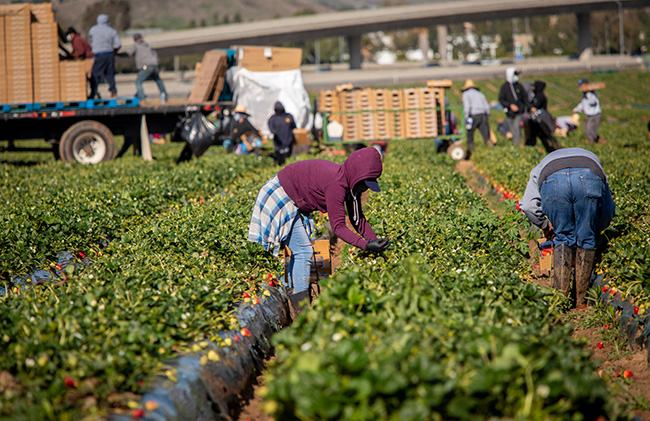
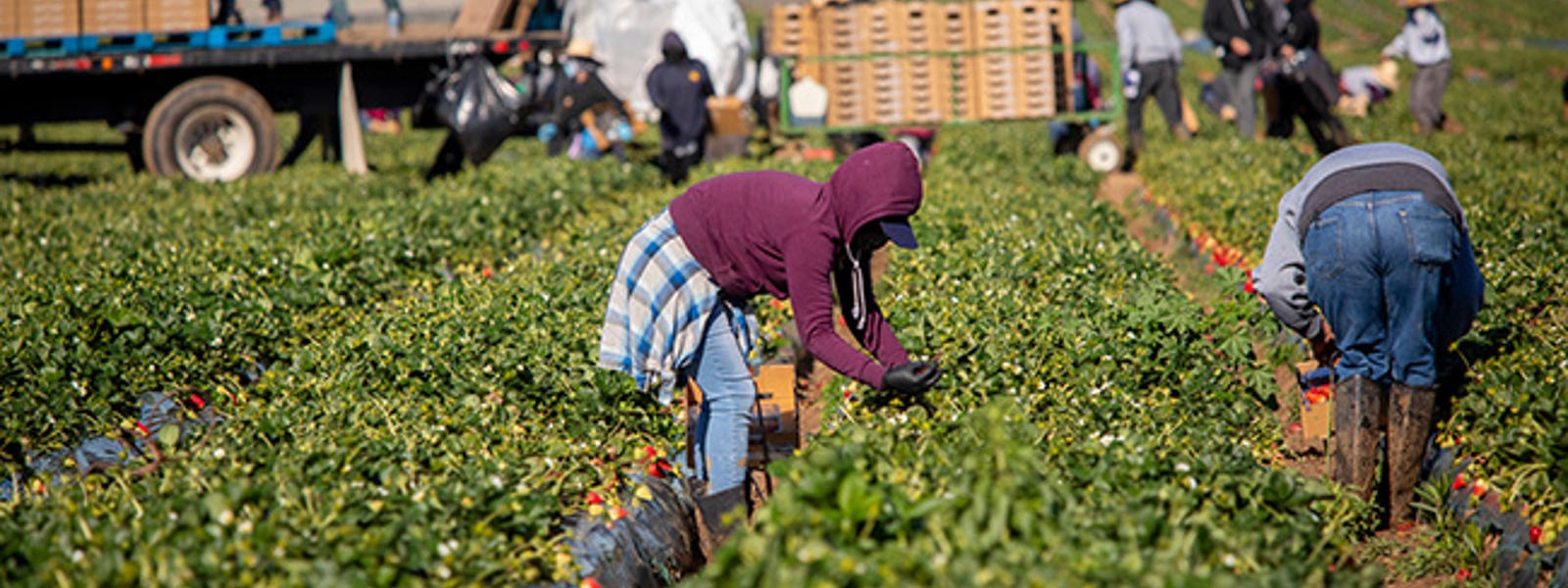
California Farm Bureau sent a letter last week to the state’s congressional delegation, urging comprehensive action on numerous agricultural workforce issues.
For the past three years, several labor bills have languished in Congress without much traction despite a worsening labor climate for many producers. Those issues are felt more acutely in California, where roughly a third of all agricultural workers reside.
With a potential H-2A temporary farmworkers program-centric bill in the works from the House Agriculture Committee, there is hope that some priorities might be able to gain traction in this Congress. Farm Bureau continues to advocate that any comprehensive bills must consider the importance of protecting the existing domestic workforce.
Market relief
A total of 54 agricultural organizations, including the California Farm Bureau, sent a letter to the White House last week urging the administration to support several industry priorities as a defense supplemental package is prepared for consideration in Congress.
There is hope the legislation could serve as a vehicle for additional requests, including expanded specialty crop funding under the Farmer Bridge Assistance Program, year-round sales of E15 fuel and additional disaster assistance.
With the war in Iran driving up fuel, fertilizer and shipping costs, many producers are feeling the impacts more acutely than in previous trade disruptions.
The letter was supported by the American Farm Bureau Federation and the Specialty Crop Farm Bill Alliance, of which California Farm Bureau is a member.
Water infrastructure
The U.S. Department of the Interior announced last week $889 million in funding for western water infrastructure projects, with $540 million earmarked for California.
The funding comes through the One Big Beautiful Bill Act passed last summer. Allocations include $235 million for the Delta-Mendota Canal, $200 million for the Friant-Kern Canal, $50 million for the San Luis Canal, $15 million for the Tehama-Colusa Canal Authority pumping plant, and $40 million for planning and preconstruction activities to raise Shasta Dam.
The investments aim to expand water supply and strengthen drought resilience across the West, according to the department.







.svg.png)
