


Iran war strands California farm exports
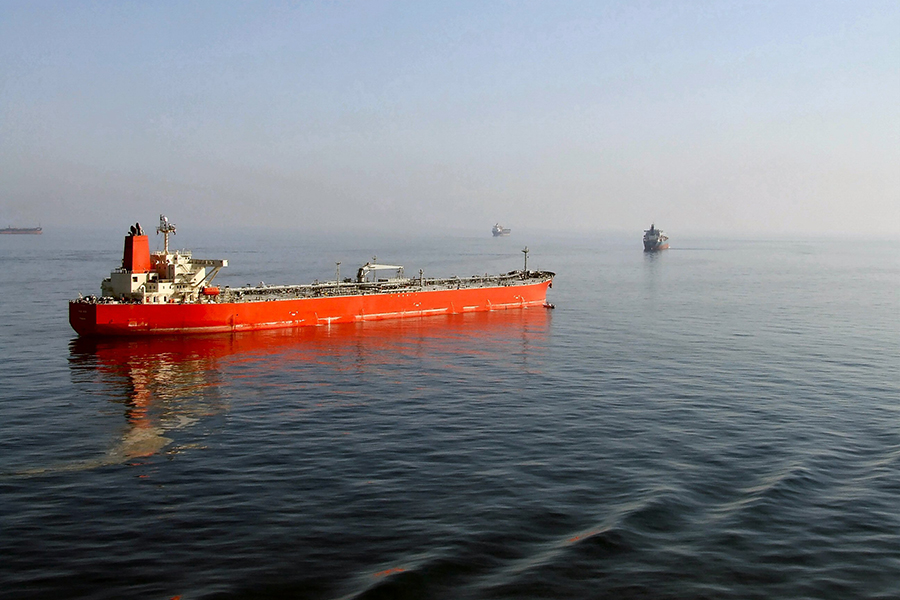
A container ship is pictured in the Strait of Hormuz in 2010.
Photo/Michael Gaylard


By Caleb Hampton
The U.S.-Israeli war with Iran, now in its third week, is taking a toll on California’s high-value agriculture sector.
In addition to causing sharp increases in fuel and fertilizer costs, the war has disrupted access to key export markets.
“As the largest exporting state, California and our exporters and producers are bearing the brunt of these market and export impacts,” Jay Van Rein, acting director of public affairs at the California Department of Food and Agriculture, said in a statement.
Van Rein said growers and handlers had reported canceled shipments and orders, delayed or diverted deliveries, and skyrocketing shipping costs.
“We are in our peak shipping period for commodities like tree nuts going to this growing market region,” he said.
Since the war began on Feb. 28, Iran has responded to U.S. attacks by effectively closing the Strait of Hormuz, a narrow waterway through which about a fifth of the world’s oil is normally transported. The Middle Eastern nation has also used missiles to paralyze commercial ports in nearby countries that host U.S. military bases.
“Everybody is afraid of going through the Persian Gulf,” said Jock O’Connell, international trade adviser at Beacon Economics. “It’s going to be more difficult to get goods to markets.”
Nut exports
The disruption has been especially painful for exporters of California almonds, walnuts and pistachios. All three crops rank among the state’s top agricultural export commodities, and in the past decade an increasing share of them have been purchased by buyers in the Gulf.
Robert Verloop, CEO of the California Walnut Board and Commission, said the trade group was in the midst of a Middle East advertising blitz, marketing the nutrient-rich nuts to observers of Ramadan, which began Feb. 19, when the war broke out.
“Ramadan is a is a very key consumption time for California walnuts,” Verloop said. “When the conflict started, we knew there were a lot of loads on the water.”
Last week, the walnut commission estimated 70,000 tons of walnuts, or about 10% of the billion-dollar sector’s yearly production, were either en route to the Middle East or scheduled to be shipped there this month.
“That certainly is at risk,” Verloop said. “It is possible that the impact of this will be negligible, but the short-term numbers are such that it is very concerning to us.”
He said the walnut commission halted its monthlong promotion in the region because the nuts were stuck at sea or being rerouted to ports around the world.
“Any ships that were on the water have been held to the east of the Strait of Hormuz, just like you see on the news with oil tankers being held,” Verloop said. “Everyone in the freight-forwarding business is scrambling to figure out what product is on the water and where we can take it.”
Bikram Hundal, vice president of operations for Earlimart-based Sequoia Nut Company/Custom Almonds LLC in Tulare County, said the company had about 300 tons of almonds, walnuts and pistachios that departed the Port of Long Beach a few weeks ago and were bound for the United Arab Emirates in 15 different shipping containers on various vessels.
“They will not get there,” Hundal said. “That’s for sure.”
With cargo ships unable to reach Dubai’s Port of Jebel Ali, a major regional hub, one of Hundal’s nut shipments was diverted to the Netherlands; another was rerouted to Algeria. His only realistic option, he said, is to find new buyers for the nuts and most likely sell them at a discount.
“It’s going to be a loss,” Hundal said.
Matthew Viohl, federal policy director for the California Farm Bureau, said trade disruptions often highlight how intertwined supply chains have become.
“California agriculture relies heavily on international markets, and increased volatility makes planning and contracting much more difficult in both the short and long term,” Viohl said.
Meanwhile, costs have mounted for exporters as shipping companies began imposing surcharges to cover increased fuel prices and added risks, in some cases more than doubling container rates.
Verloop said that in the event port access is restored in the Gulf, the extra charges could cost the walnut sector an additional $15 million next month to deliver its products to the region.
“It’s expected this would have some kind of downward pressure on the final payments that growers could receive,” Verloop said. “It’s a devastating situation.”
Hundal said the added cost and risk of shipping cargo, and the cancellation of new shipments from California to the Middle East, was causing inventory to build up and overall nut prices to drop.
“Now, we have all this extra product,” he said. “It puts pressure on other markets.”
Verloop said the walnut commission was appealing to the state and federal governments for “some kind of restitution or way to cover some of those costs.”
In addition to tree nut exports, Van Rein said CDFA had gathered information on impacts to growers and handlers of olives, wild rice, blueberries and other commodities.
“We have heard from many segments of the industry,” he said.
Air cargo
The war has also impacted air freight routes that bring fresh produce from California to markets in the Middle East and beyond.
In 2024, California exported billions of dollars’ worth of fresh fruits and vegetables, with premium products and highly perishable crops such as cherries and strawberries shipped by air freight.
“Many agricultural products by their nature have to fly on air cargo, and a lot of them transit through that region,” said Brandon Fried, executive director of the Airforwarders Association. “There’s bound to be an adverse transportation impact.”
Fried said the presence of major airline hubs in Doha, Dubai and Abu Dhabi means the Gulf plays an outsized role in the transport of air cargo. According to a recent analysis by WorldACD, about 21% of all air cargo flows through the Middle East.
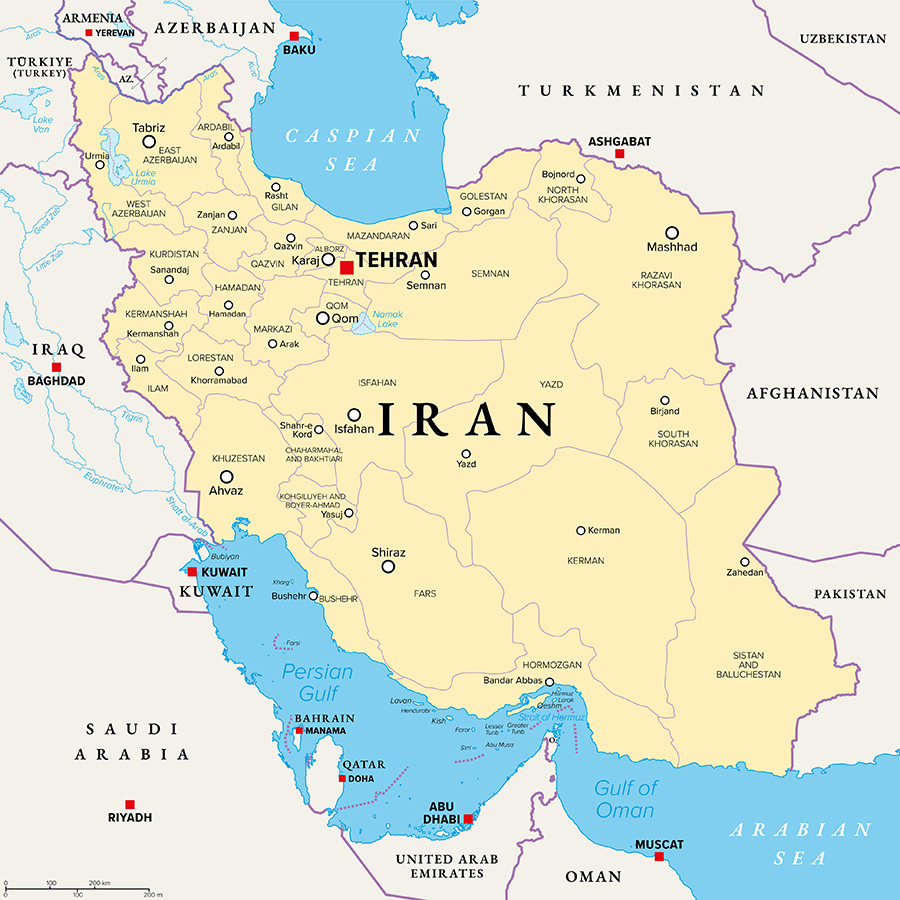
“Planes are just avoiding that area completely,” Fried said, adding that shipping capacity at some airports in the Gulf dropped by as much as 45% since the war began.
He said California exporters may be unable to reach markets in the Middle East, and they face higher air freight rates no matter the destination of their cargo.
On top of surcharges for increased jet fuel costs and war risks, Fried said demand for air freight space has increased as cargo owners facing disrupted ocean routes seek alternative shipping options.
“Rates are increasing as a result of this because, obviously, capacity is at a premium,” he said.
Fuel and fertilizer
O’Connell, the Beacon Economics trade adviser, said that while export market disruptions are significant, the most direct impact of the war for farmers has likely been the soaring cost of essential inputs.
About half the global supply of urea, the most common nitrogen fertilizer used on farms, is shipped through the Strait of Hormuz. Since the war started, prices had increased 25%, according to an analysis by the American Farm Bureau Federation.
AFBF economist Faith Parum said shocks to the fertilizer supply chain could impact planted acreage and crop yields.
Meanwhile, as of Monday, U.S. gasoline prices had risen more than 25% from a month prior, according to data from the AAA motor club.
Tulare County farmer Tom Barcellos, who owns a dairy, a trucking company and an excavator company, said increased fuel costs were an almost immediate financial hit for farmers.
“It’s not fun,” Barcellos said.
The Tipton-based farmer uses his heavy equipment to haul feed, clean irrigation reservoirs and provide other services for farms in the nation’s top dairy-producing county. He said the moment he needs to refill his tanks at a higher price—likely sometime this week—the cost of those services will increase.
“Of course, on the farming operation, I can’t pass anything on,” Barcellos said. “I’ve got to eat that just like every other farmer does.”
Caleb Hampton is an editor at Ag Alert. He can be reached at champton@cfbf.com.





.svg.png)
