


From the Fields - Paul Sanguinetti


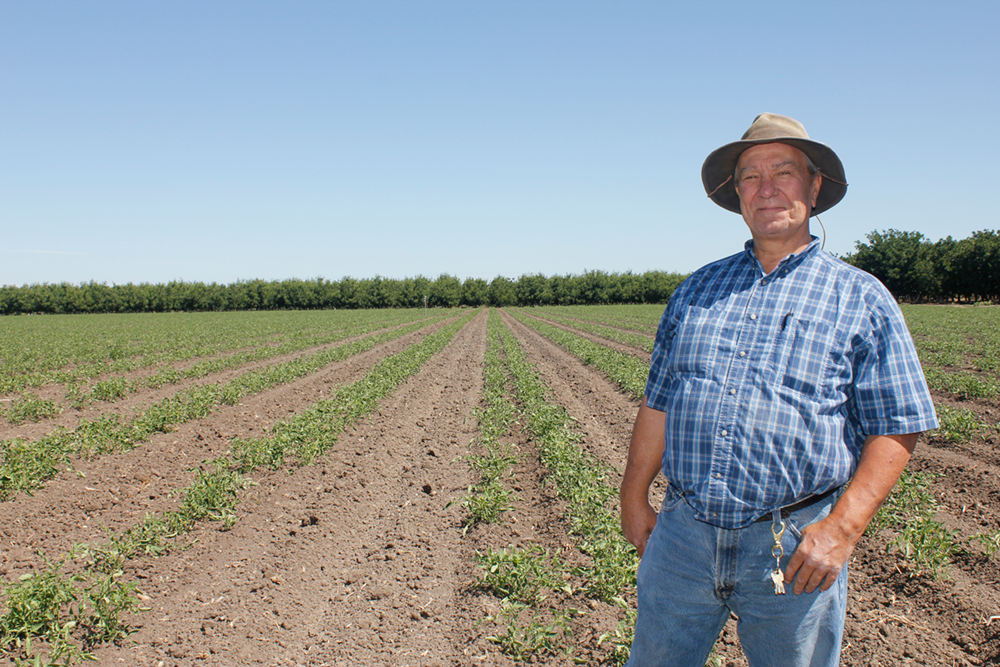
Photo/Ching Lee
By Paul Sanguinetti, San Joaquin County farmer
I planted barley last year but decided to plant it again this year because the input costs are less. It is a crop that we don’t have to irrigate, so we save money. It yields about as good as wheat and brings in about the same amount of money. It’s one of the crops I can produce a little cheaper.
We’ve got some corn planted. We don’t know if we’re going to harvest it or chop it. If we can’t get $50 to cut it for silage, we’ll probably harvest it. My boys are growing processing tomatoes. Farmers have cut back on acreage because canneries have cut back.
One bright area is we planted some large lima beans. The price per sack is pretty good, so if we get a halfway decent crop, they’ll make some money. There are a lot of crops that make money, but you’ve got to have a contract, and there’s only so much of that out there.
Walnuts are not very good, and I don’t see a very big crop this year. Last year, there was a nice, big crop. Last fall, I removed some walnut trees. I might take more out this fall if things don’t improve. The almond crop looks good. The talk is that the almond price may be a little stronger, so almond growers are in a little better position than walnut growers.
Our input costs went up about three or four years ago. It was higher two years ago. Our labor costs are up because of the minimum wage increase. Fertilizers and chemical costs are about like they were last year, which was already twice what I was paying five or six years ago. People don’t realize that when you raise the minimum wage, you raise the cost of everything, and all those costs, such as for fuel and chemicals, are passed on. I’m not in the kind of business where I can pass it on.





.svg.png)
