


California grazing sector threatened as goat herder wage soars to $240K
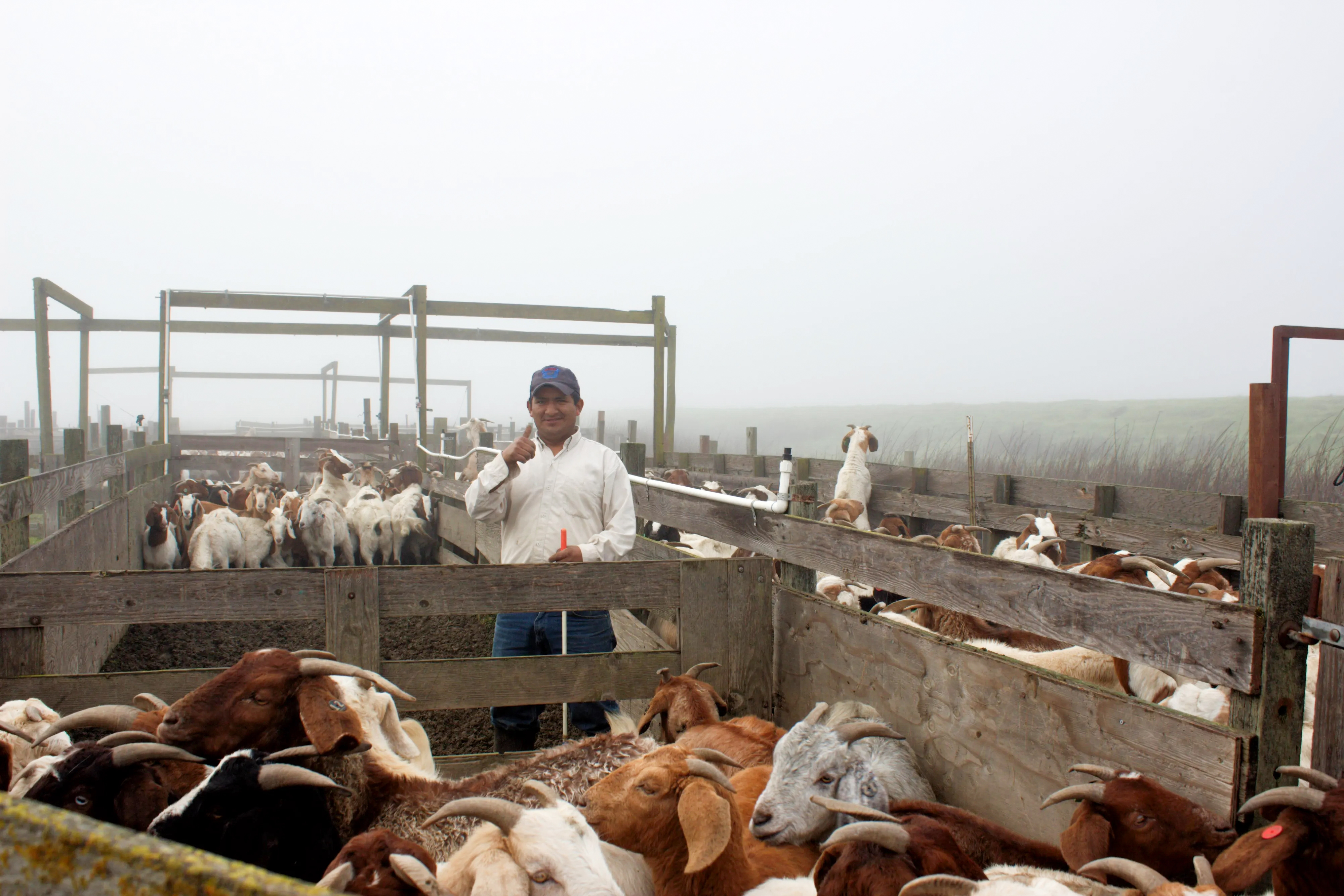
A herder works with goats at the Dixon headquarters of vegetation management company Ecosystem Concepts Inc. in Solano County.
Photo/Courtesy of Ecosystem Concepts Inc.


By Caleb Hampton
It’s not a typo. Herders employed to graze goats in fire-prone landscapes across California are now entitled to roughly the same pay as the state’s governor.
This month, California’s minimum wage for goat herders quadrupled due to a shift in the state’s interpretation of its labor code and the expiration of a temporary solution. As of July 1, ranchers must pay employees who watch over goats about $240,000 a year, according to an estimate by the California Farm Bureau.
The regulatory accident, which unintentionally differentiated sheepherders from goat herders, could soon have real consequences.
If the mistake is not fixed, ranchers said that within weeks they will be forced to shut down their businesses and sell off tens of thousands of animals. They said the loss of goats could result in hundreds of herders losing their jobs, and it could cripple one of the primary tools California uses to control wildfire fuels.
“We will ship all the goats out of California and have them slaughtered,” said Robert McGrew, vice president and CEO of Dixon-based vegetation management company Ecosystem Concepts Inc. in Solano County.
Range herders typically live in furnished campers or mobile trailers while tending to animals that move around the state grazing open rangeland or providing vegetation management. They move fences, provide sheep and goats with water, look out for predators and take care of guard dogs, but otherwise spend much of their time on standby.
In California, their wage requirements have been subject to a shifting maze of regulations.
The minimum wage for herders in the state was initially set by federal regulations as California exempted herders from its minimum wage provisions.
In 2001, state regulators amended California’s labor code to remove that exemption. At the same time, they established a monthly minimum wage—similar to that of in-home caregivers—that employers could opt to pay “sheepherders” rather than paying them hourly to be on call around the clock.
For more than two decades, “it was assumed that goat herders were also subject to the same alternative monthly minimum,” said Brian Uhler, deputy legislative analyst for the state Legislature.
Then, in 2022, the California Labor Commissioner’s Office reportedly determined the labor code section establishing a monthly minimum wage for sheepherders did not apply to goat herders because the latter were not explicitly included. As a result, herders working with goats were entitled to hourly pay around the clock, including large amounts of overtime and double time that added up to a minimum wage widely considered to be economically impracticable.
To temporarily address the problem, state lawmakers passed a law that year adding a section to the labor code that extended the monthly sheepherder wage to goat herders until July 1, 2024.
In 2023, lawmakers introduced a bill to make that provision permanent, but the bill was not given a hearing. Instead, the Legislature passed a law extending the sunset clause for the monthly goat herder wage to July 1 of this year. The law also allocated $1 million for researchers to produce a study on sheepherders and goat herders in California.
The study, which was published in March, found that stakeholders all agreed sheepherders and goat herders should be paid the same because their work is similar and often overlaps.
“No one objected to equal wages for sheepherders and goat herders,” said Philip Martin, professor emeritus of agricultural and resource economics at the University of California, Davis, who co-authored the study.
Regardless, following years of warnings from agricultural and environmental advocates, the law extending a monthly wage alternative to goat herders was allowed to expire this month as the Legislature went on recess without taking action.
As a result, the minimum wage for goat herders catapulted from the monthly minimum—set this year at $4,938—to hourly wages estimated to equal about $20,000 a month, or $240,000 a year.
“It is kind of nuts that we’ve got to this point,” said Bryan Little, senior director of policy advocacy for the California Farm Bureau, which has advocated for permanent wage parity for sheepherders and goat herders in the state. “If we can’t get out of our own way, we will have no goats for wildfire fuel control.”
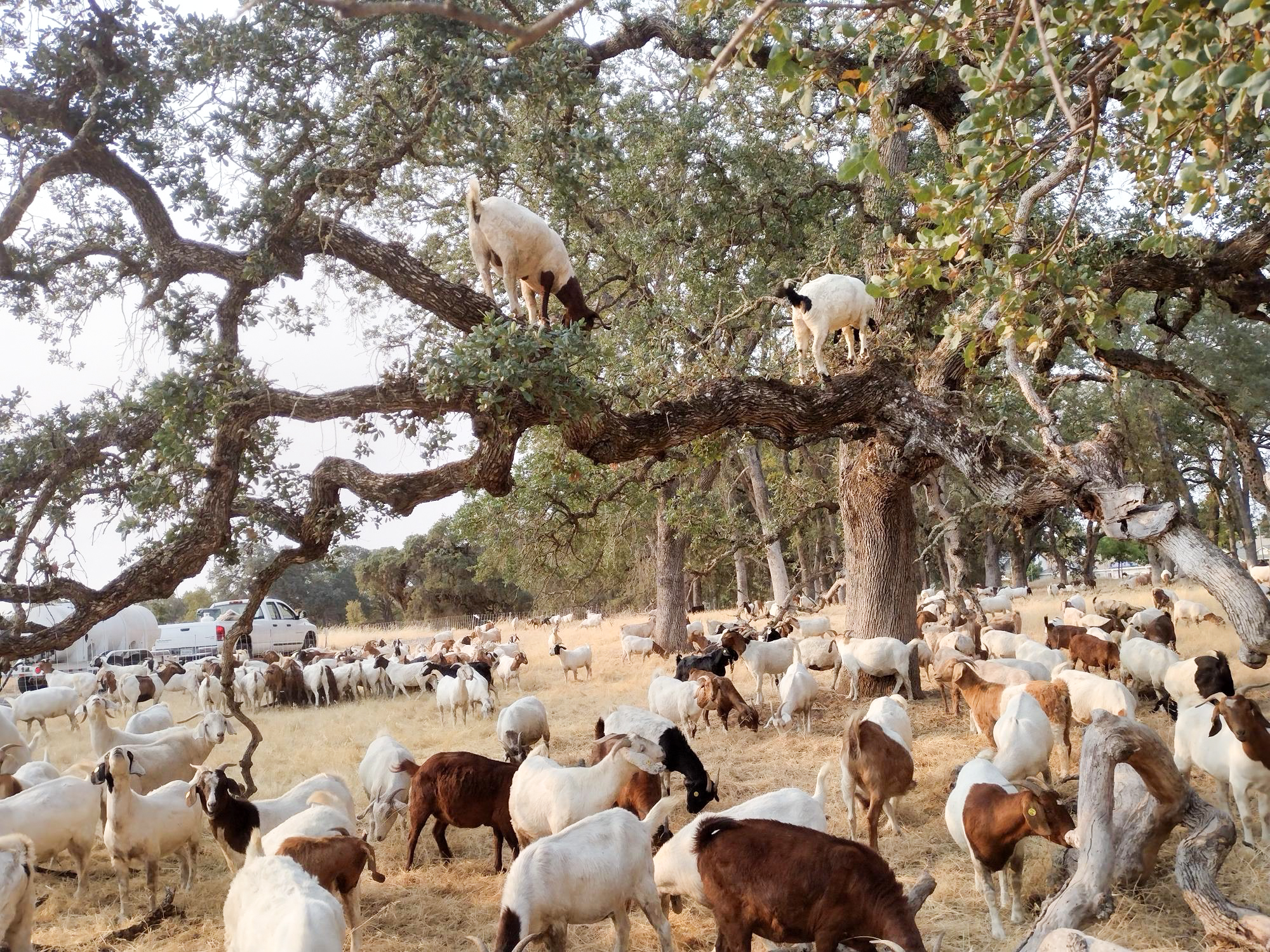
Photo courtesy of Ecosystem Concepts Inc.
California’s sheep and goat sectors represent a small fraction of the state’s agriculture industry. But the animals, deployed to graze flammable vegetation, have become a key tool in the state’s efforts to reduce wildfire risks. By acreage, targeted grazing ranks third in the state’s wildfire resilience activities, trailing only mechanical fuels reduction and prescribed fire, according to the California Wildfire and Forest Resilience Task Force.
Goats are critical for targeted grazing because they consume ladder fuels such as shrubs and low-hanging branches that enable manageable ground fires to leap into tree canopies and become dangerous wildfires, according to experts. They are often used together with sheep in mixed herds as sheep are more efficient at eating fine grasses.
There were about 533,000 sheep and 127,000 goats in California as of the most recent Census of Agriculture, which was conducted in 2022. Only some are used to graze wildfire fuels.
Advocates said they were surprised by the state’s inaction on the issue considering its own reliance on the sector. In recent years, state agencies have spent millions of dollars on targeted grazing projects.
Tim Arrowsmith, managing partner of Red Bluff-based Blue Tent Farms in Tehama County, said the California High-Speed Rail Authority invited him this month to bid on a goat grazing contract just days after the state made his workforce unaffordable.
“On this hand, they’re putting out a contract, and on this hand over here, they’re putting the goats out of business,” Arrowsmith said.
Without legislative action, he said, he will soon need to shut down his business, sell thousands of goats and lay off seven herders.
McGrew, who employs 15 herders, said the possible decimation of California’s goat sector will also come as a financial blow for herders who have spent years protecting California residents from wildfires.
“It’s a huge economic hardship,” he said.
As of 2023, there were a total of 354 herders employed by 82 sheep and goat operations in California, according to the U.S. Bureau of Labor Statistics.
California lawmakers are scheduled to return to the state Capitol early next month. Ranchers and advocates said they were pinning their hopes on the Legislature resolving the issue before this year’s legislative session ends Aug. 31.
“One word is all that has to be changed,” McGrew said. Otherwise, he said, “fire prevention work with goats is finished in California.”
Caleb Hampton is an editor at Ag Alert. He can be reached at champton@cfbf.com.
In this edition…
• Researchers study potential of agave crop
• Investigadores estudian el potencial del cultivo de agave
• California grazing sector threatened as goat herder wage soars to $240K
• California's pest prevention system needs an update
• Mechanical harvest research bolsters table olive prospects
• Overnight guests add key revenue stream for farms
• Advocacy in Action: Grazing, wild horses and the Endangered Species Act
• Smart sprayers slash farm labor and herbicide costs
• How will early blooms and light crop affect navel orangeworms?
• Finding her second act: Former dancer builds new life with U-pick raspberry farm
• Bountiful Finds: A curated collection of goods made by Farm Bureau members
• Now in season: You can grill just about anything
• The scenic route: Pit stops at California farms and ranches
• Grape expectations: Sweet flavor with healthy twist
• A life in motion: Avocado farmer helped revolutionize the modern skateboard
• Imagine this: Students tell stories about agriculture
• AI in agriculture: Balancing innovation and new risk
• Workforce training program seeks input from employers






.svg.png)
