


On the Record: Ricardo Lara discusses California's insurance crisis
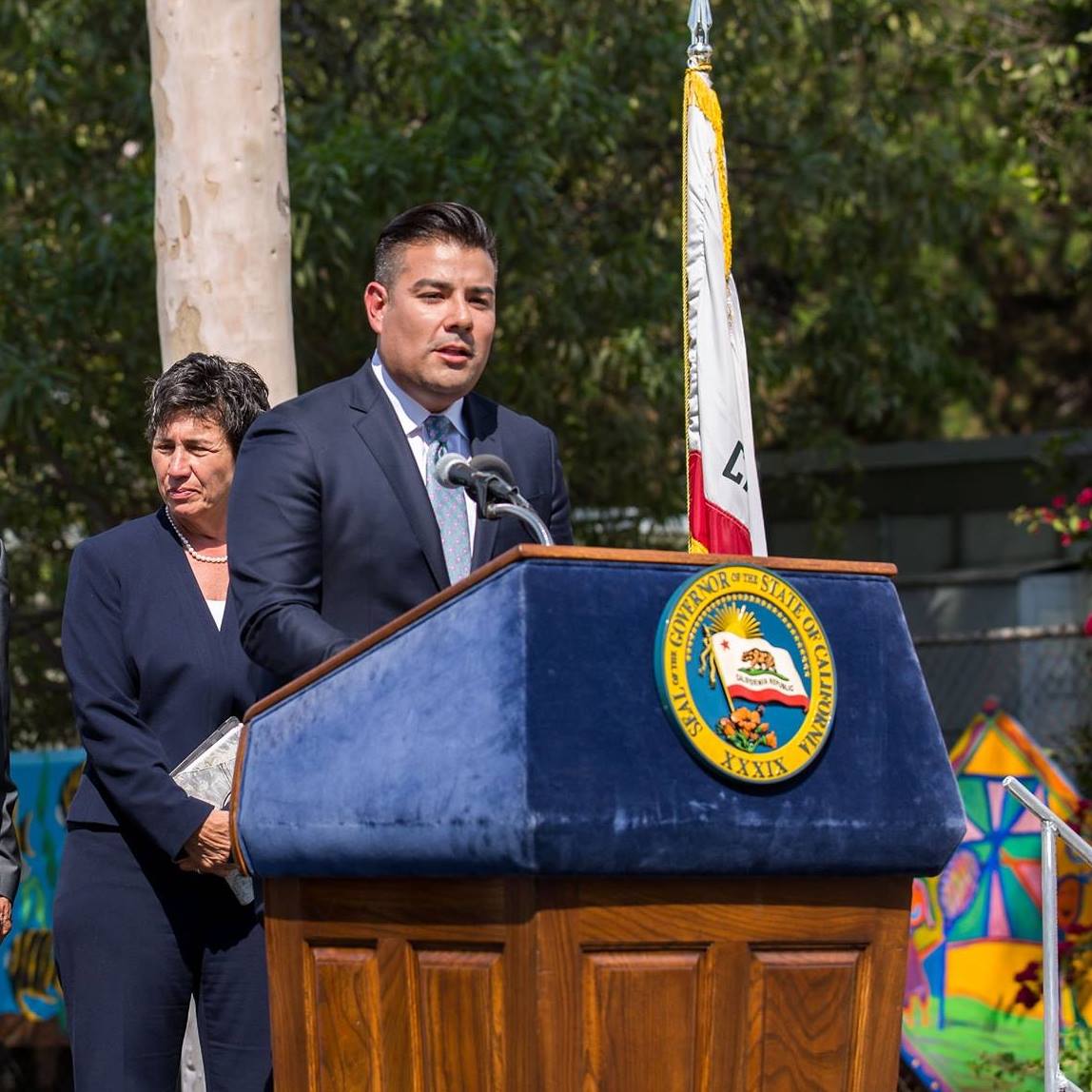
After destructive wildfires, major insurance companies stopped writing policies in California. Ricardo Lara, the state’s insurance commissioner, has led efforts to restore access to insurance.
Photo/Courtesy of California Department of Insurance



Ricardo Lara has served as California insurance commissioner since 2019. He spoke with Ag Alert® about the state’s insurance crisis and his strategy to halt an exodus of insurance companies from California and restore access to property insurance for farmers and rural communities. The below conversation was edited for length and clarity.
What is the Sustainable Insurance Strategy? How is implementation going?
Thank you for the opportunity to speak directly to California’s farmers and ranchers. I know many of them are living through the consequences of our state’s insurance crisis. Our job is to make insurance more available, reliable and fair, especially for those in high-risk, rural areas. I want farmers to know that we are fighting for them and that we’re not going to stop until we fix this crisis. The Sustainable Insurance Strategy is the largest transformation of our insurance market in 30 years.
What are the core tenets of the strategy?
The core tenets of the strategy really rely on these tools that insurance companies needed to continue to stay in California and not exit the state. The strategy is essentially allowing insurance companies to use catastrophe modeling—one that rewards mitigation like home hardening—and then be able to use and take into account the realization that reinsurance costs are quadrupling now globally because of these catastrophes. But then what do consumers get? What do farmers get? They get a guarantee that insurance companies are not going to abandon their communities, that insurance companies are going to come back to their neighborhoods. That is the crux of our Sustainable Insurance Strategy.
You’re talking about the state’s agreement with insurance companies that they will write policies in high-risk areas at 85% of the statewide average.
Correct. And that is where this negotiation is critical, because not only do they agree to write their new business in these communities, but that stabilizes the market by having them reenter these wildfire-distressed areas. Then we get competition back into these communities, bringing down the cost eventually. We are already seeing insurance companies coming back to California and expanding their markets.
Have efforts to address the insurance crisis been affected by the Palisades and Eaton fires?
After the fires, the governor and I met with the CEOs of the largest companies. What was reassuring was they said, “We would have been in a much murkier place if we wouldn’t have done any of the work that we did last year.” And so, they all recommitted to not only staying in California but to working with us to grow in the state.
The FAIR Plan is the state’s insurer of last resort. What pressures is that system facing? What is being done to depopulate the FAIR Plan and move policies back into the admitted market?
The FAIR Plan was never meant to be a long-term solution. Many farmers and rural homeowners are stuck with the FAIR Plan, which means high premiums, minimal coverage and no liability protections. That’s not sustainable. That’s why we’ve been requiring insurers to include commitments to write new policies in the wildfire-distressed and rural areas. They’re going to take those homes out of the FAIR Plan. I’ve already approved an expanded high value for FAIR Plan coverage of up to $20 million per building to meet the urgent needs of our farm operations and ag businesses and our HOAs (homeowners associations), which is something that we worked on with the Farm Bureau to get accomplished.
What is catastrophe modeling? How do you expect it will impact policy holders?
For decades, insurance companies have relied only on outdated historical data. My reforms now allow for smarter, fair, catastrophe modeling using the latest technology, rewarding prevention and reducing blind spots. Every state uses it, by the way, but California didn’t allow for this use of technology. With our sustainable insurance reforms, insurance companies must use publicly reviewed models and justify how mitigation factors like defensible space—a Class A roof, for example—reduce risks and have reduced rates. For the first time, we’re seeing insurers really consider real, on-the-ground resilience that farm and ranch communities have been doing for generations. All of this has to be taken into account and hopefully get farmers a discount because of all the work that’s being done on that land.
Are there specific regulations or mechanisms in place so that property owners who take steps to mitigate wildfire risks would regain access to insurance coverage if they had had their policies nonrenewed?
That’s the whole point of this—to bring insurers back into these communities. We’ve worked on “Safer from Wildfires” to guarantee that insurance companies have to give you a discount for home hardening. We see that those discounts are developing over time and becoming greater.
Insurance companies also want—they would probably argue they need—catastrophe modeling so that they can raise premiums in certain areas to the point where it makes business sense for them to provide coverage. Is that correct?
Correct. The discussions have always been, “OK, we understand that you need this. So, if I give you this, what do consumers get? What do businesses get? What does the ag industry get?”
California is developing a publicly accessible catastrophe model through Cal Poly Humboldt. Why is that needed? How will it work?
It’s important because all of these models are private modeling companies. You always want to have a public model that is open to universities and researchers to use as a benchmark so that we’re not just trusting the insurance company models or these private models around rate making. It is important to have a public model to check the private models—to make sure we’re keeping everybody honest.
Farmers and ranchers face unique challenges when it comes to insurance. Many rely on access to loans to purchase farm properties, equipment and infrastructure, and lenders typically require they have insurance coverage. Is there an awareness in Sacramento that the insurance crisis is a food security issue? What ideas do you have to provide targeted solutions for farmers and ranchers?
Absolutely. I think Sacramento understands. Not only is it a food security issue, but it’s a critical component of our economy. I have many family members that are either farmers or ranchers or work in the industry up and down the Central Valley. Understanding those unique components of not having access to insurance means you can’t open your business. Ag lands should be treated as mitigated lands against wildfires because they are. These lands could be used as staging areas for firefighters. They’re well irrigated and could be used as defensible spaces and firebreaks. They should be given discounts for that and should be recognized for that. They should be seen as mitigated properties, and we’re moving in that direction—hopefully this year. We’ve been working on regulations for that.





.svg.png)
