


From the Fields - Greg Gatto


Photo/Fred Greaves
By Greg Gatto, Plumas County rancher
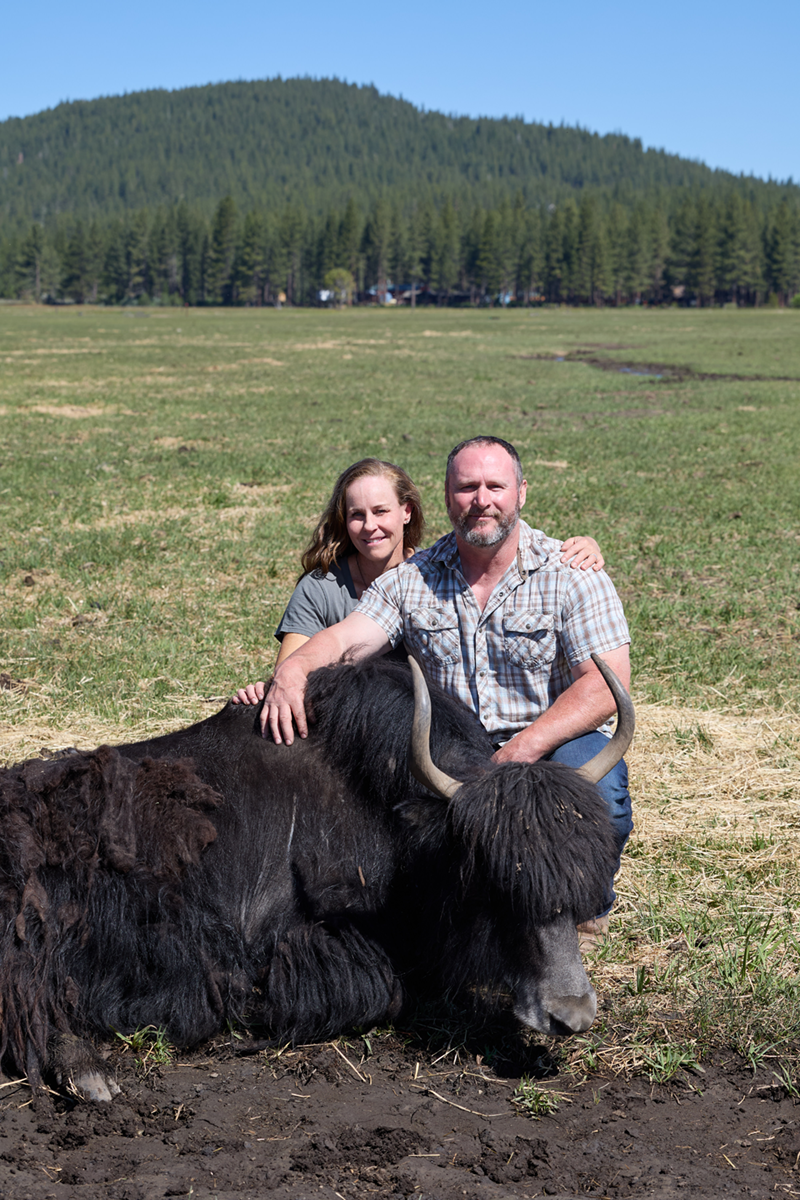
We have a herd of about 200 Tibetan yaks. We are on the tail end of our calving season. Most of our animals have calved. The calving season has gone well.
We have in Sierra Valley a pretty bad grasshopper infestation. That has affected a lot of the range, a lot of pasture. We are supplementing our cow-calf herd with hay because of the lack of pasture. We’re looking closely at potential hay supplies for this winter because it also has affected a lot of the hay producers up here. We’re certainly keeping an eye on herd size, whether people are going to be selling off herds, whether there’s going to be sufficient hay and sufficient pasture to get people through the late summer and early fall.
Yaks are high-elevation, cold-hardy animals, and Northern California has experienced a heat wave the last two weeks. We do have irrigation channels that we will fill up, and we will plug up some of our channels to allow them to cool off through their hooves. They have a lot of blood vessels in their hooves, so that allows them to cool off by standing in water. We’ll fill up depressions and ponds in the fields with irrigation water to allow them to cool off during the really hot days.
One of the blessings this year is we’ve got plenty of water, so no problems there. The older animals seem to do fine in the heat. Sometimes some of the newborn calves do have a little bit of heat stress. We had one mom with twins, which is a pretty rare occurrence in the yaks. We did have to bring in one of the twins to treat for heat and dehydration. But otherwise, they’ve all been doing generally well. The heat does affect the gains because they’re not eating as much during the day. They’re loping around during the day and eating when it gets cooler.





.svg.png)
