


California dairy looks to worms to treat wastewater
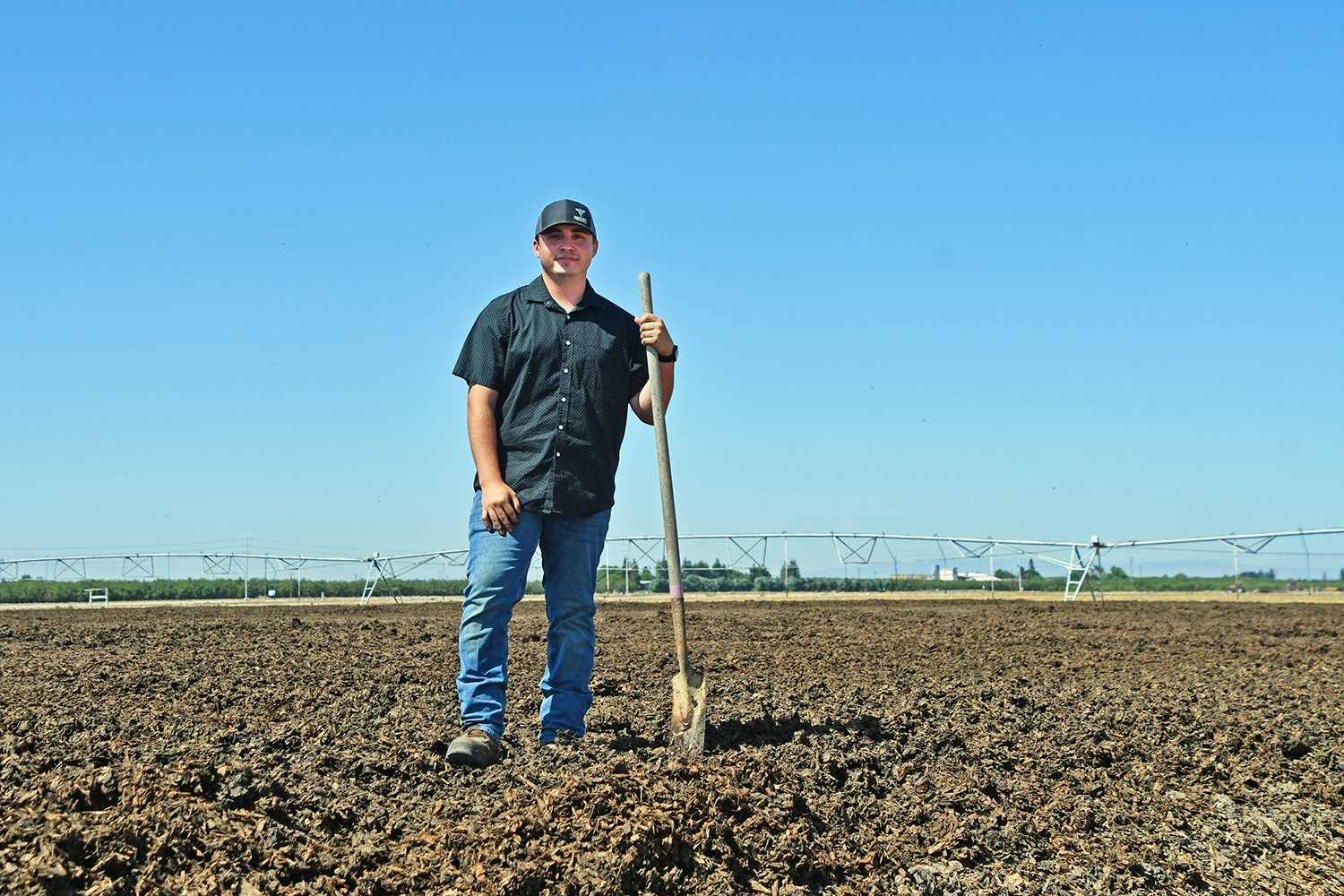
Stanislaus County dairy farmer Anthony Agueda digs into a bed of wood chips in search of red wiggler worms.
Photo/Vicky Boyd


By Vicky Boyd
Alberto Dairy near Hickman in Stanislaus County has enlisted millions of red wiggler worms to treat its wastewater, reduce its carbon footprint and improve its sustainability efforts.
Commonly known for their composting prowess, red wigglers also can treat wastewater and are the workhorses behind BioFiltro’s patented Biodynamic Aerobic system, or BIDA.
Although the Davis-based company has installed a handful of commercial-sized systems on Washington state dairies, Alberto Dairy marks the first one of its size in California, said Sarah Ploss, the company’s senior vice president of agriculture.
BioFiltro had previously built pilot systems at Fanelli Dairy in Hilmar in 2014 and the California State University, Fresno, dairy farm in 2015. The company also has a few other commercial-scale dairy systems under construction in the southern San Joaquin Valley and has installed several commercial systems at food processors and wineries.
Anthony Agueda of Alberto Dairy said his family learned of the worm-based system through a dairy industry contact, who suggested they explore it because of its sustainability benefits.
“We saw its value, and the sustainability, especially in the dairy industry, is something that we need to do,” Agueda, a third-generation dairy farmer, said.
What attracted the family to vermifiltration, as the worm-based water-treatment system is called, is its simplicity, Agueda said. It is gravity fed for the most part, and even his grandfather, who founded the dairy in 1981, can understand it.
Because it’s a relatively new concept, Agueda and other family members visited an existing system at Royal Dairy in Royal City, Washington, and met with owner Austin Allred. Built in 2017, the system has 7 acres of worm beds that treat more than 500,000 gallons of wastewater daily.
Photo/Vicky Boyd
Agueda said it didn’t take long to see the benefits. While the family was sold on the system itself, he said one of the biggest discussions revolved around giving up 8 acres of cropland for worm beds, additional manure composting space and a new wastewater pond.
Because the technology is still relatively new to the dairy industry, Agueda, family members and industry partners hosted members of the Central Valley Regional Water Quality Board so they could learn firsthand about the system’s attributes.
Each system is designed and engineered specifically for an individual operation, taking into account peak wastewater production, Ploss said. Alberto Dairy’s will allow it to recycle more than 1.7 million gallons of manure water daily.
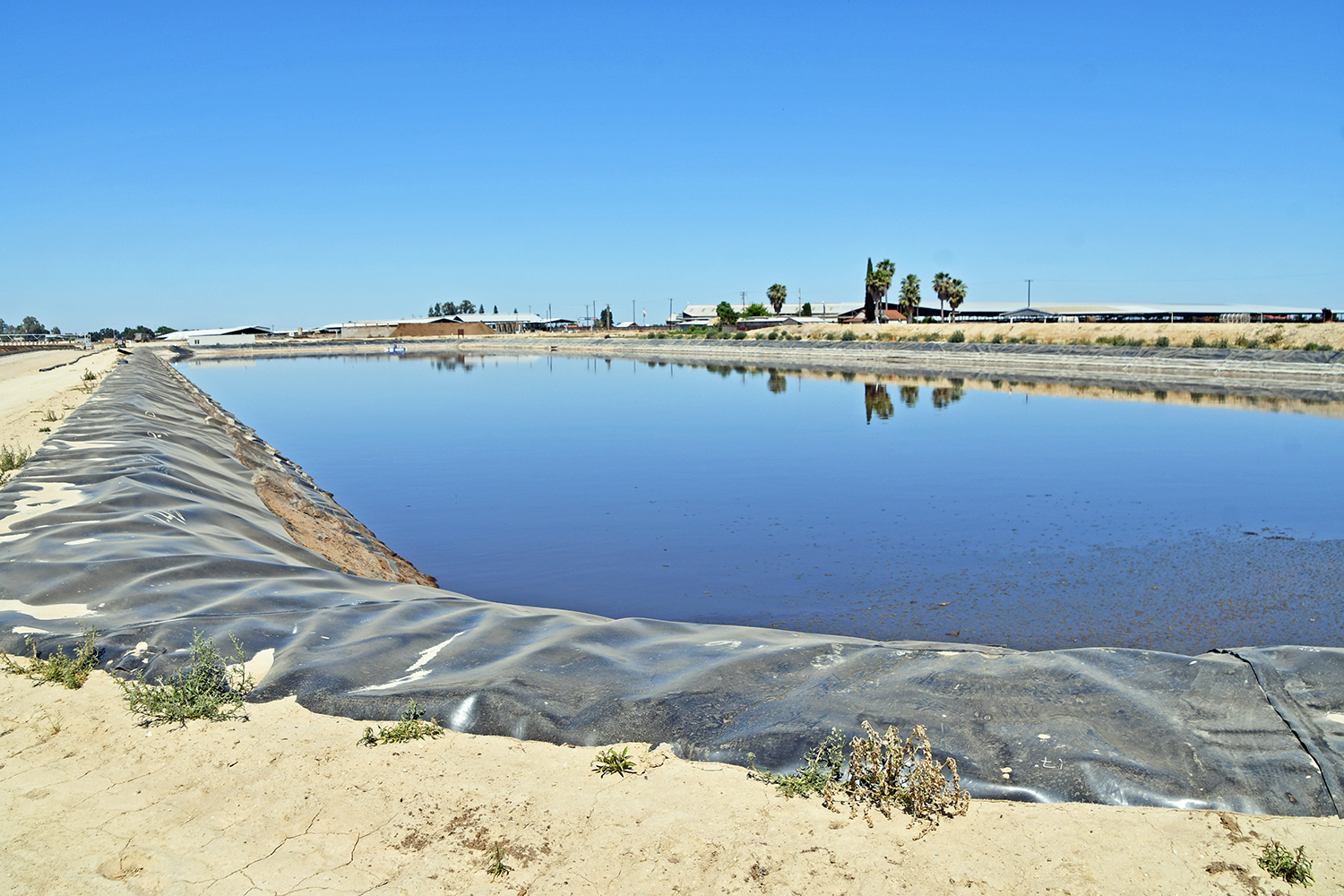
Originally, wastewater from the animals, flushing barns, the milking parlor and other uses went through a solids separator where large particles were removed. The water then went into a large holding lagoon.
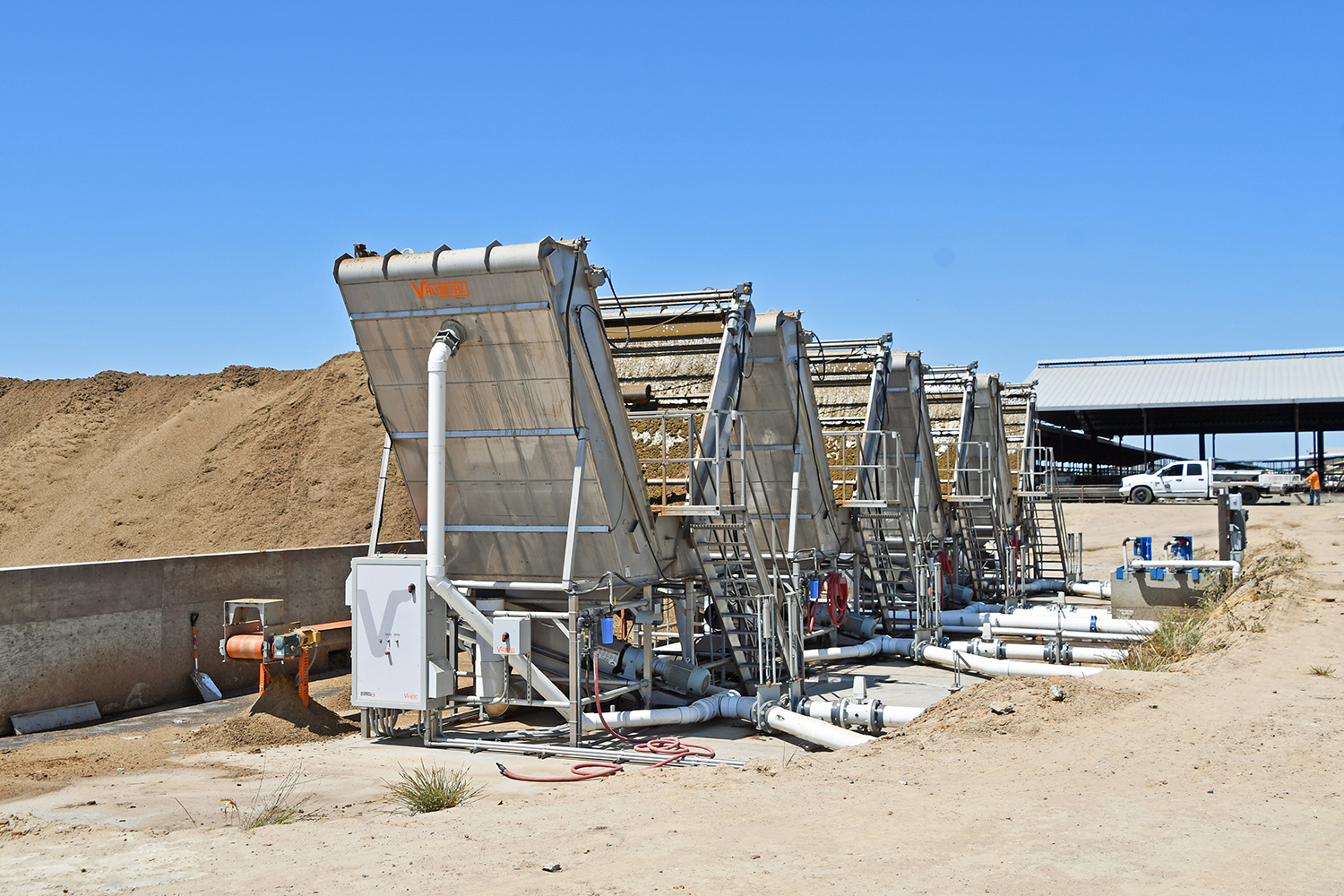
Adding the worm beds meant the dairy had to enhance its solids separation by adding a four-stage system to further remove particles that could clog the worm bed wastewater application system. With improved solids separation, the dairy also increased the space allotted to manure composting.
Photo/Vicky Boyd
In addition, the dairy added two more settling lagoons that supply water to the worm beds.
Construction began last summer on the six worm beds totaling 360,000 square feet. Ploss considered Alberto Dairy to be BIDA 3.0 because of its updated design. Rather than 4- to 7-foot-high concrete walls surrounding each bed, it now has only a small lip.
Once the appropriate-sized area was excavated, an impermeable liner was installed on the bottom. Each bed is crowned in the middle to promote water movement to the drains on the sides that feed into a collection system at the bottom and eventually into the clean-water lagoon.
Atop the liner are layers of pallets, screening and 3 to 4 feet of wood chips, or as BioFiltro calls it, “filter substrate.” Ploss said the system was built to provide passive aeration, and the design takes advantage of natural airflow through the layers.
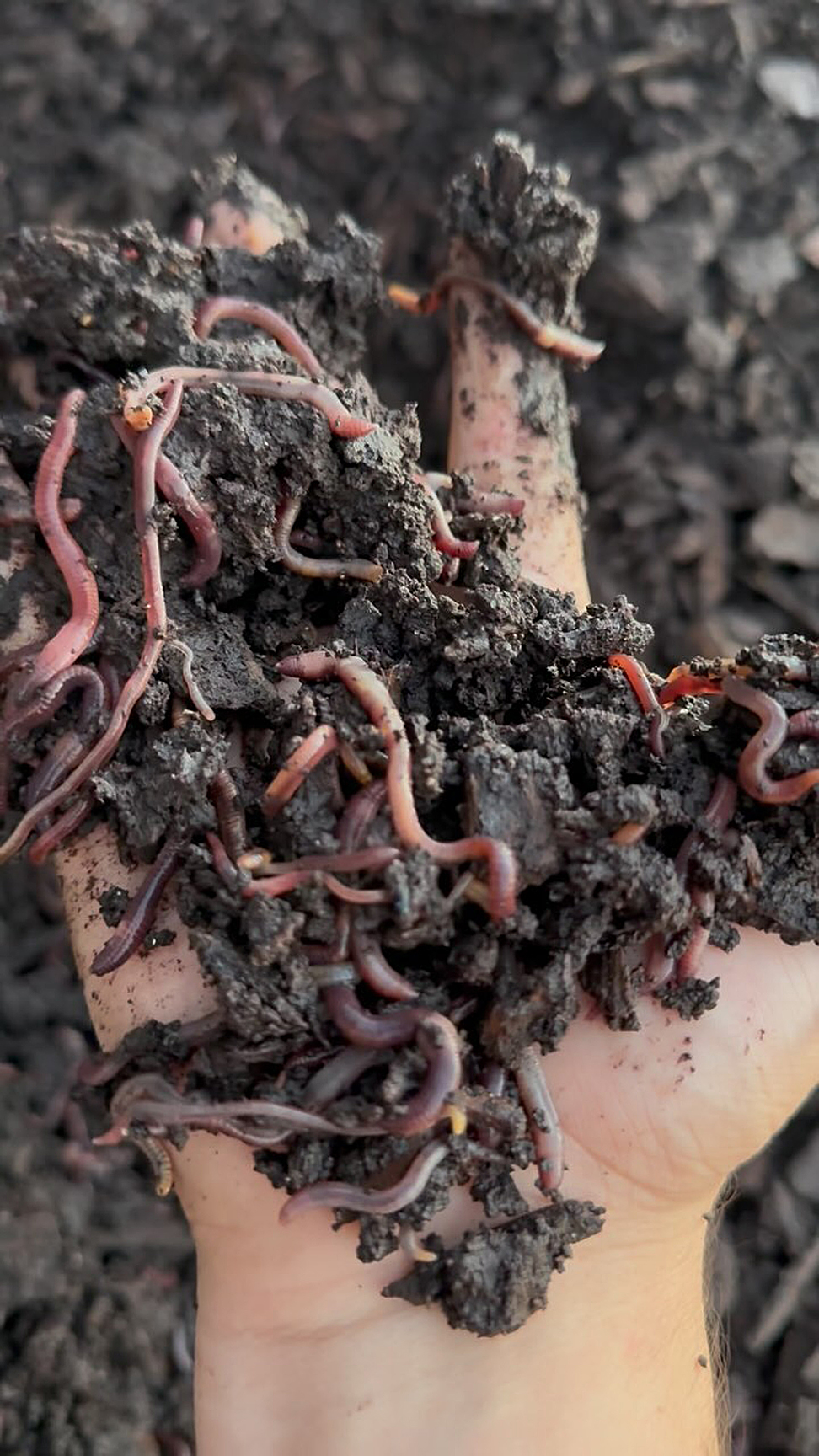
Once the filter substrate was established, the system was inoculated with worms from a similar nearby system. BioFiltro uses Eisenia andrei, a red wiggler species closely related to the common vermicomposting worm, E. fetida. Both are epigeic, meaning they prefer compost, leaf litter or manure-related environments to mineral soils.
At Alberto Dairy, BioFiltro owns and operates the vermifiltration system, which took about five weeks to get up and running and commissioned.
Photo/Vicky Boyd
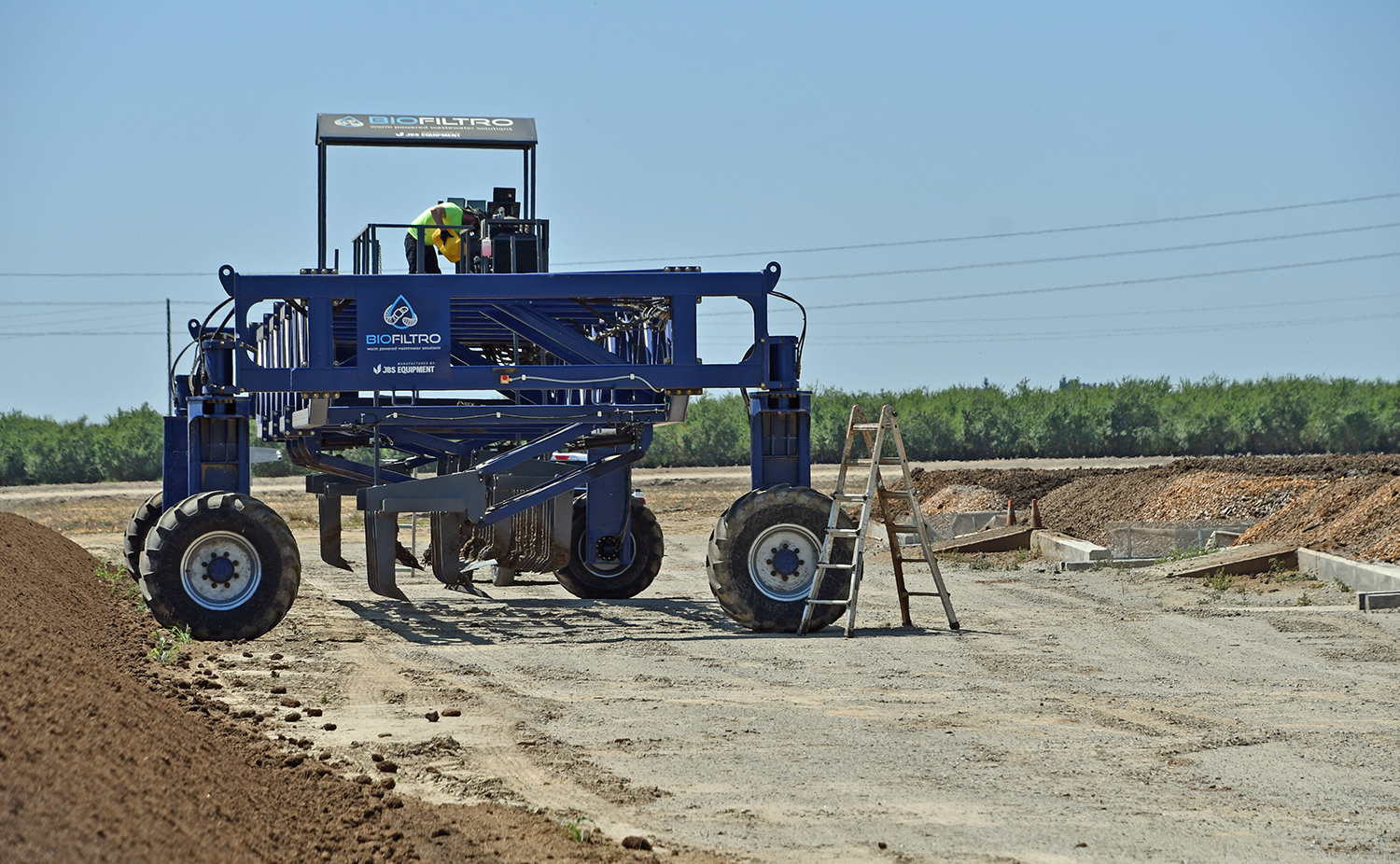
Wastewater is applied to the top of the wood-chip beds, and millions of worms and beneficial microbes remove nutrients and volatile organic compounds as it percolates down. The entire process takes about four hours to produce clean water.
While Royal Dairy used a solid-set sprinkler system to apply the wastewater to the top of the beds, Agueda said his family went with a linear-move sprinkler. This easily allows them to retract the sprinkler system and use a specially designed machine to till the worm beds every one to two weeks.
Tilling adds oxygen and helps reduce crusting and compaction to maintain a healthy environment for worms and microbes, Ploss said.
Every 18 months to two years, the dairy will need to replace the filter beds as the organic substrate has decomposed past its useful life. The rich organic matter can be composted and spread on nearby cropland or further processed into other soil amendments, Ploss said.
Alberto Dairy reuses much of the treated water for flushing barns or in the milking parlor. Agueda said he has already seen improved herd health with reduced mastitis because the cows are exposed to significantly lower microbial loads.
Based on water test results, Agueda said the system removes 77% of the nitrogen and 63% of the phosphorus. When the dairy uses the treated water on crops, it will account for the remaining nutrients in its nutrient management plan.
In a year-long study conducted on the Fanelli Dairy’s pilot system, Davis-based hydrologic- and water-consulting firm HydroLogic found vermifiltration reduced methane by 97% to 98% compared to an anaerobic lagoon, according to research published in a 2022 issue of Biotechnology Resource Reports.
Photo/Vicky Boyd
“Vermifiltration of dairy wastewater demonstrated to be a useful tool to mitigate methane emissions, regulate excess nutrients and improve water quality at dairy farms,” HydroLogic researchers wrote.
One of the benefits that many producers don’t consider is carbon credits generated from reduced greenhouse gas production, Ploss said.
“The biggest driver we’re seeing from the farm is cleaner water and the soil health,” she said. “But carbon credits help pay for some portion of the system.”
Vicky Boyd is a reporter in Modesto. She can be reached at agalert@cfbf.com.





.svg.png)
