


Weed control is key to protecting lettuce from virus
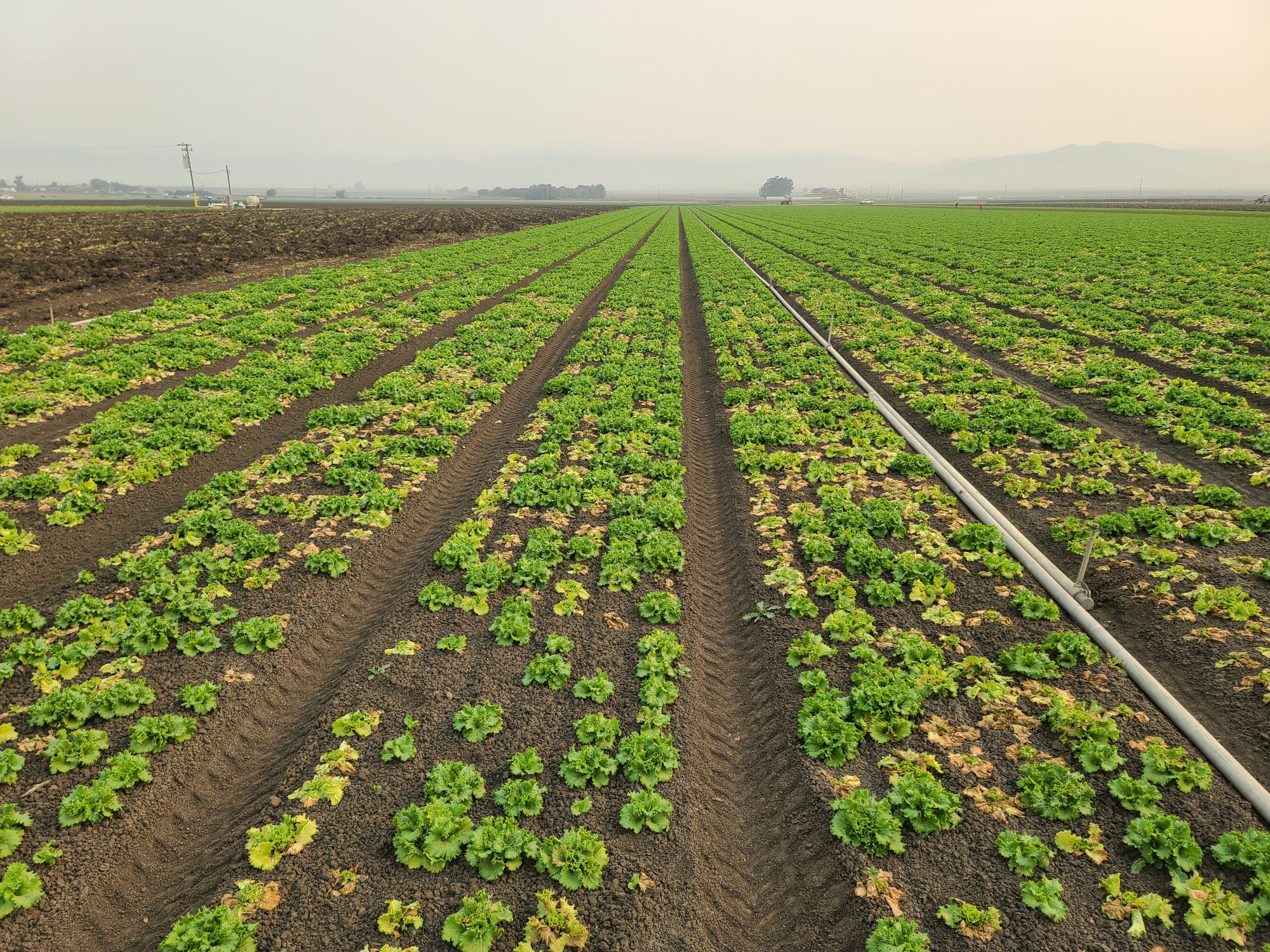


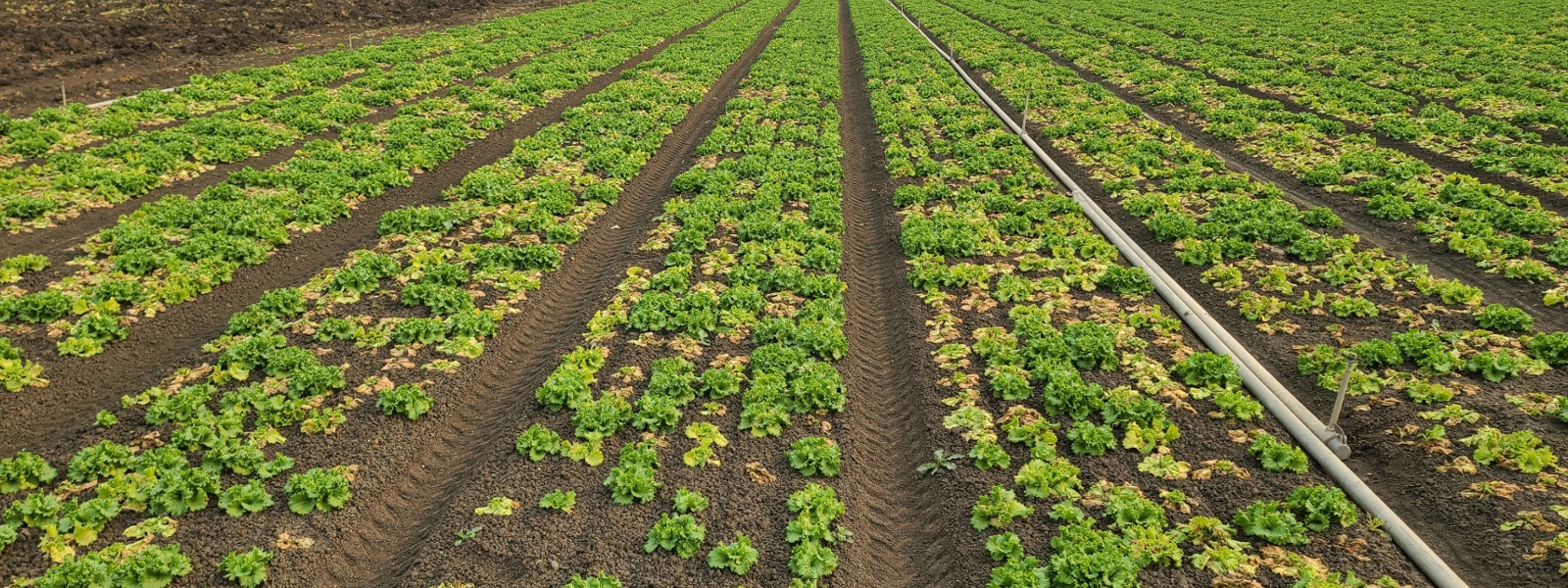
This lettuce field is impacted by the impatiens necrotic spot virus, which has wreaked havoc in Salinas Valley fields. Weed control measures during winter are critical for removing potential hosts of the virus.
By Bob Johnson
Monterey County growers are mounting a full-court press on winter weed hosts to manage impatiens necrotic spot virus, or INSV, which has devastated Salinas Valley lettuce two of the last three years.
There is already a three-week period every December when no one can grow lettuce anywhere in the county, a strategy adopted decades ago to control lettuce mosaic virus.
But INSV finds refuge during this lettuce-free period in winter weeds and is carried in the spring to the lettuce fields by western flower thrips. The insects can transmit the disease for a lifetime once they feed on a plant with the virus.
Growers try to manage the disease by controlling thrips near the borders of lettuce fields and planting more tolerant varieties if they can find seeds. They can also look for new planting areas where INSV is less of a problem. But that is challenging as the disease spreads.
“It’s predominantly been around Salinas, Chualar and Soledad, but it’s moving to most of the growing areas of the Central Coast,” said Richard Bianchi, director of farm operations for Sabor Farms, which grows specialty green vegetables in Monterey and San Benito counties. “We’re trying to control pests near the borders and control the host plants.”
Once the lettuce season progresses in the Salinas Valley, thrips populations and infected fields steadily increase until the disease spins out of control in the summer.
“The damage was extensive this year; it was anywhere from 1% to 60%, depending on the field,” said Mark Mason, manager of Huntington Farms. “The loss was an average of 10% for the year, but it was extremely bad near the end of the season.”
In September, the Grower-Shipper Association of Central California created an INSV and Pythium Task Force because these two related disease pests are best managed regionwide rather than by individual farmers.
The current priority is to manage important weed virus hosts throughout the county, according to task force facilitator Mary Zischke.
Winter weed hosts might be the vulnerable point in the disease life cycle.
U.S. Department of Agriculture research entomologist Daniel Hasegawa has identified the most important winter weed INSV hosts as little mallow, annual sow thistle, shepherd’s purse and burning nettle.
The four weeds are joined in the spring by additional weed hosts. But by then, the virus is usually up and running in the lettuce fields that dominate the Salinas Valley landscape.
Richard Smith, a University of California Cooperative Extension farm advisor based in Salinas, wrote in an online blog post that “INSV is at its most vulnerable state during the winter, and efforts that we take to control them can help reduce problems later.”
“For the most part, INSV is surviving in the winter weeds, and efforts to control the weeds can go a long way to reduce the loads of the virus for the start of the 2023 lettuce production season,” Smith wrote in the Dec. 16 edition of the UC’s Salinas Valley Agriculture newsletter.
Many growers already practice weed control in and near their lettuce fields to reduce INSV pressure.
“We’re doing a lot of weed control; we’ve done more every year since this started,” Mason said.
Even when a grower controls the important winter weeds in or near their own fields, the virus can still find refuge in weeds growing in nearby fields. It is not even enough to manage the weeds near the fields because the virus can survive the winter on weeds in ground that has nothing to do with agriculture.
One INSV infestation in 2022 was traced back to weeds on an industrial site as far as 100 yards away from nearby fields.
The grower-shipper association has to develop a process expediting weed abatement on public rights of way and industrial or commercial properties. Growers concerned about weeds near farm properties may call the association at 831-422-8844 or email contact @growershipper.com.
(Bob Johnson is a reporter in Monterey County. He may be contacted at bjohn11135@gmail.com.)





.svg.png)
