


From the Fields: Alexis Harvey, Solano County beekeeper
Photo/Christine Souza


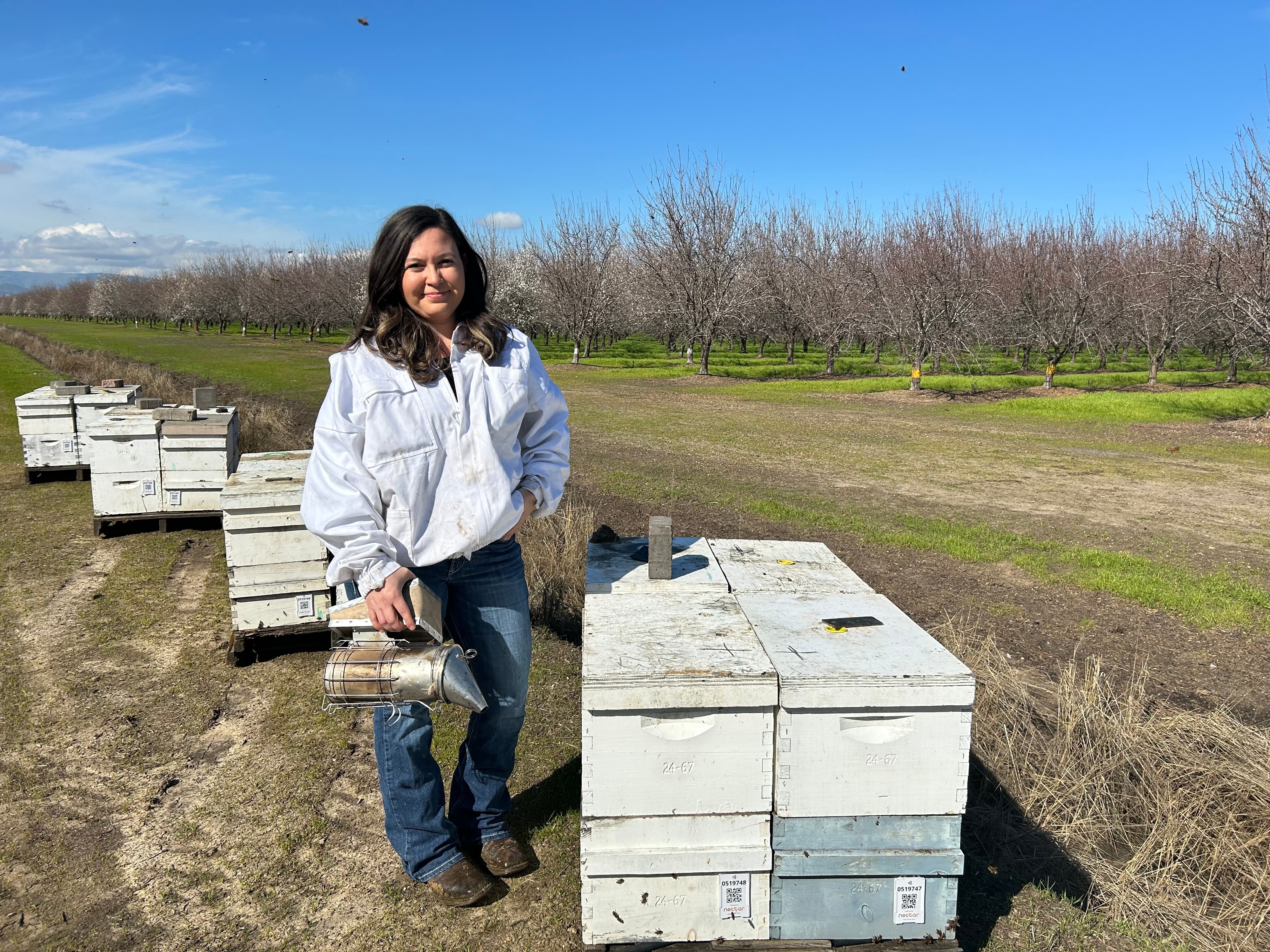
Almond bloom looks to be coming a bit earlier. We already have signs of bloom. Some of the earlier varieties are starting to show pink bud. It is happening more at the edges of orchards where we’re seeing stuff start to pop. The Sonora is an earlier variety, and those are pushing hard. Cool days help slow the trees down, but when it heats up during the afternoons, it moves the trees along faster than we’d like.
With rain in the forecast, everybody is pushing—at least for these northern orchards—to get bees into orchards as soon as possible. With the amount of rain that forecasters are saying, it’s going to be difficult to get (beehives) in once this rain comes. We’ll try to be completely moved into almond orchards in this area by the end of this week before storms arrive.
It seems the industry in general is a little short on hives this year. The quality seems to be down. A lot of beekeepers haven’t been able to hit the numbers they were expecting. A lot of different things are affecting bee numbers, but mites are the biggest problem. Mite populations are very high, and people are having trouble fighting them. There aren’t very many options for treating mites. There’s Mite Away strips that you could buy. They are very expensive, and they don’t always do a great job. There are other assets beekeepers can use, but we must rotate them to get good treatment. A lot of people become dependent on one treatment and overuse it, and the mites build up resistance. Mite populations are so high and there’s so many hives that are so close in proximity that they end up spreading a lot of diseases.
For the bees, we’re going to continue to need water. Fortunately, where we keep our bees, we have access to a great source of water. As long as nothing changes there, we should be OK.





.svg.png)
