


How can growers identify and prevent bacterial blast?
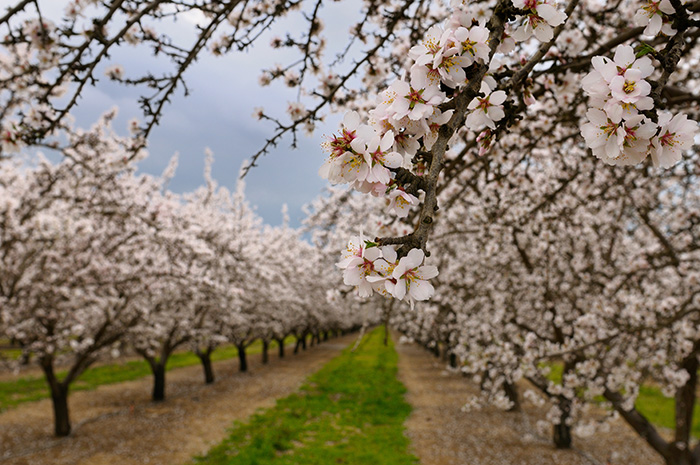
Photo/Licensed image


By Justin Nay
Integral Ag Services, Durham
Pseudomonas syringae pv. syringae is a bacterial plant pathogen that infects almond trees. When leaves, flowers or spurs become infected, it can lead to bacterial blast. Because Pseudomonas is widespread in orchards, the disease often develops whenever cold, wet conditions favor infection.

Pseudomonas spreads through water striking the tree, whether from rainfall or sprinkler irrigation. When wet conditions coincide with frost damage, the bacterium can enter through tissue injured by freezing. Trees are especially vulnerable during bloom and leaf-out, when tender new growth is most exposed to cold temperatures.
Symptoms appear only after infection has occurred. Then the damage is irreversible. They may include dead leaf bundles, distorted or spotted leaves, dead flowers and aborted nuts.
In severe cases, trees may develop sour sap, a condition that can lead to systemic infection and even tree death. Sour sap tends to be more common in low-lying areas or blocks with standing water or poor drainage.
Bacterial blast is found throughout the state, depending on weather patterns and local microhabitats. Some varieties are more susceptible than others. For example, the Independence almond variety has shown higher bacterial blast incidence. If trees have green buds and frost conditions occur, blast is likely to be a problem.
Copper and oil sprays have traditionally been used for prevention, but the antibiotic kasugamycin (Kasumin®) has more consistently reduced bacterial blast when applied up to seven days before cold, wet weather. While copper and oil are less expensive, Kasumin® is often preferred because it delivers more reliable results.
Bacterial blast should remain top of mind for growers who have experienced it in recent years or who have had issues with sour sap. The disease can cause significant crop loss and, in severe situations, tree death.
Weather patterns are unpredictable, but blast issues have become more frequent across parts of the state during the past decade.
See related news stories...
- What are some tips for managing Asian citrus psyllid?
- What are important winter sanitation steps for tree nuts?
- What progress has been made to eradicate citrus greening?





.svg.png)
