


Pear farmers seek to limit Argentine fruit in US market
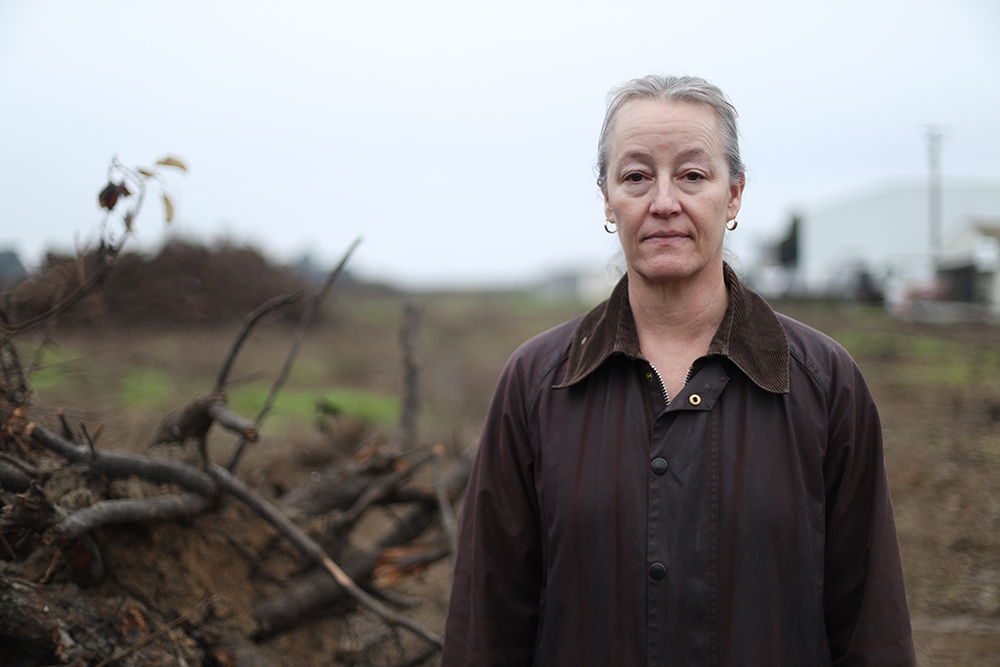
Virginia Hemly Chhabra of the Sacramento County pear farm Greene and Hemly stands in front of discarded trees Dec. 12 in Courtland. The farm, established in 1850, removed most of its acreage.
Photo/California Pear Advisory Board


By Caleb Hampton
California pear growers are seeking relief from Argentine imports that they say have displaced their fruit in U.S. markets and driven down prices for growers in the state.
“It’s one of the biggest headwinds that the California pear industry has faced,” said Ryan Elliot, a sixth-generation pear grower and operational manager at Courtland-based Stillwater Orchards in Sacramento County. “If we don’t figure something out soon, we won’t be around.”
During the past decade, the volume of Argentine pears sold in the U.S. more than doubled, last year rising to 1.3 million boxes and for the first time surpassing the amount of California-grown Bartlett pears—the most common variety—sold to the fresh market, according to the California Pear Advisory Board.
Last month, the statewide marketing group said in a press release that industry leaders were “in discussions” with the Office of the U.S. Trade Representative about limiting imports of Argentine pears.
“We believe there is room to negotiate a fair deal that prevents Argentine imports from undercutting U.S. farmers in their own market,” Chris Zanobini, executive director of the pear board, said of trade negotiations following the Trump administration’s recent $20 billion bailout of the South American nation.
Zanobini said industry leaders were not advocating for tariffs but were asking for either a cap on Argentine pear imports or limits on when pears could be shipped from Argentina to the U.S.
“We just want a level playing field,” said Alex Wilson, farm manager at Lodi-based Rivermaid in San Joaquin County, California’s largest pear grower and shipper.
Wilson said challenges such as rising input costs have made it difficult for pear growers in the state to compete with imported fruit.
Most U.S. pears are grown in Washington state and Oregon, with California ranking third in production of the fruit.
The staggered harvest seasons between the three states typically give growers in each region a window to sell their fruit without too much competition.
But growers said imports from Argentina have disrupted that balance, especially impacting California’s peak market window, which comes in July and August before harvest begins in the Pacific Northwest.
Argentine pears are harvested during the U.S. winter, and historically they supplied North American stores when domestic pears were out of season. In recent years, however, Argentine imports not only increased but arrived later in the year, encroaching on California’s season.
Last year, most Argentine pear imports were shipped after being stored for months, arriving in the U.S. in April and May, according to the pear board. Because Argentine pears are treated with 1-methylcyclopropene, or 1-MCP, an ethylene inhibitor that extends the fruit’s storage life by up to several months, they remained in stores through summer.
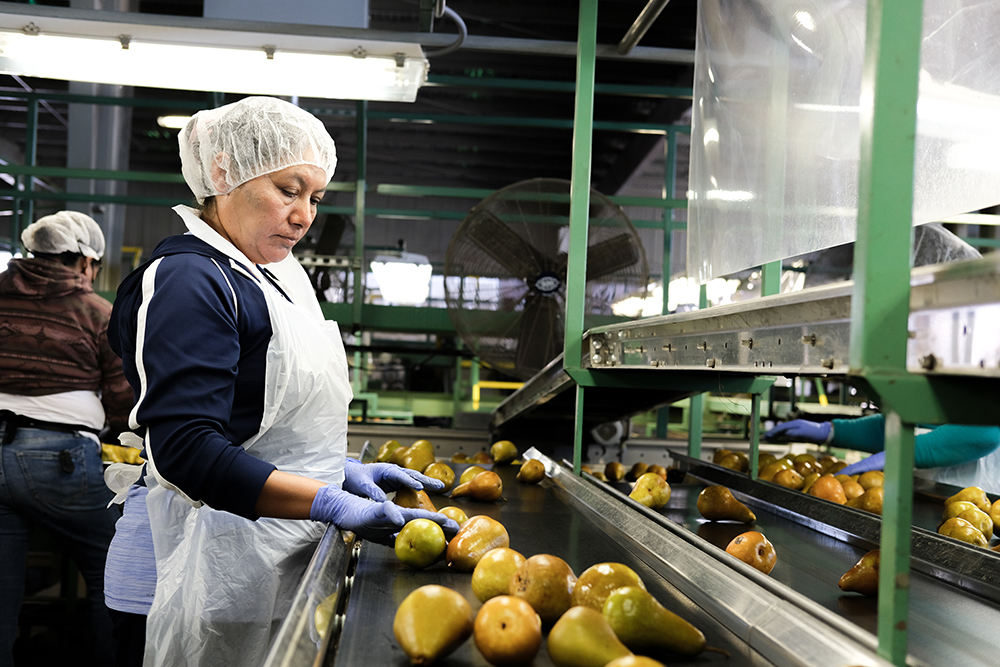
Photo/Caleb Hampton
“The Argentine fruit is narrowing the window we have to sell our crop,” Elliot said. “It changes the market dynamics significantly.”
This past summer, on behalf of California’s pear shippers, the pear board negotiated a promotion of the state’s early-season pears with a major grocery store chain. The promotion included a price premium for growers, but the retailer canceled the deal because it had an excess of Argentine pears, according to the pear board.
“That really hurt us,” said Elliot, whose family’s operation is one of California’s three pear shippers, along with Rivermaid and Finley-based Scully Packing Co. in Lake County.
When a retailer backs out, “we have to resort to other methods of selling the crop, and typically that’s lowering the price,” he said. “It makes it very difficult to make a profit on the fresh market.”
The pear board, which highlighted the canceled promotion in its press release, declined to name the retailer to protect a long-term business relationship, Zanobini said.
In addition to direct market impacts, growers said they feared the prevalence of 1-MCP-treated pears in U.S. stores could dampen enthusiasm for their fruit.
“It creates a very bad eating experience,” Elliot said. “If someone had a bad Bartlett in May or June, it might turn them off from purchasing Bartletts for that season.”
Researchers at the University of California, Davis, found that pears treated with 1-MCP may never fully ripen or become juicy.
While some pears from Washington and Oregon are treated with 1-MCP, California growers have pledged not to use the chemical as part of an industrywide commitment to ensure the quality of their pears.
“We pride ourselves on having the freshest pears you can get,” Elliot said.
Pressure from imports has already contributed to a decline in California’s pear acreage, some of which was farmed by families who began growing the fruit during the Gold Rush.
During the past 25 years, California lost more than half its European pear trees, with acreage declining from 10,610 in 2000 to 4,500 in 2024, according to data from the pear board. The U.S. Department of Agriculture put California’s pear acreage at 8,300 in 2024, but Zanobini said the figure includes Asian pears, which are grown in other parts of the state and marketed separately.
Last month, Greene and Hemly, a Courtland-based pear farm established in 1850, removed 500 acres of pear trees, some more than 100 years old and still bearing fruit. Growers familiar with the family farm’s operations said Greene and Hemly pulled out most of its pear acreage but planned to continue growing pears on a smaller scale.
“This one really hurts,” Zanobini said of seeing the century-old orchard demolished. “These are exactly the types of farmers U.S. trade policy should protect.”
Caleb Hampton is editor of Ag Alert. He can be reached at champton@cfbf.com.
See related news stories...
- Del Monte troubles shake up pear season
- Researcher: Overtime law costing farmworkers $100 per week
- Borer pest in Lake County pear fruit 'mind-boggling'






.svg.png)
