


Lettuce virus cases creeping back up after reprieve
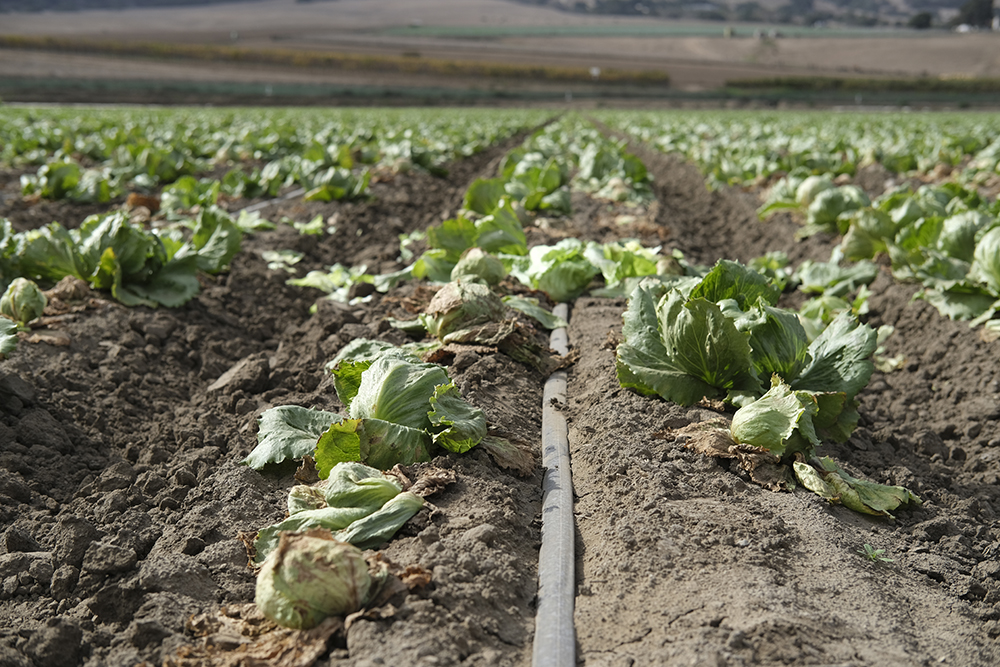
This Monterey County lettuce field fell victim to impatiens necrotic spot virus in 2022, when severe widespread outbreaks of the virus led to substantial economic losses for Salinas Valley lettuce growers, short supplies of the crop and soaring prices for restaurants and consumers.
Photo/Caleb Hampton


By Mark Billingsley
After two years of lower levels of impatiens necrotic spot virus in the Salinas Valley, researchers have recorded a higher number of cases during the 2025 season, though they say INSV did not reach the widespread levels seen in 2022, when the virus led to substantial yield losses, short supplies of lettuce and record-high prices.
Daniel Hasegawa, a research entomologist for the U.S. Department of Agriculture, said he and two University of California Cooperative Extension farm advisers observed a few localized outbreaks of INSV early in the 2025 season and a spike in cases later in the summer.
“I think we’ve been dodging the bullet the past few years, but it looks like whatever guardrails that existed are breaking down,” said Richard Smith, a retired UCCE vegetable crops adviser who has studied INSV extensively.
INSV is spread primarily by western flower thrips. Because there’s no cure, controlling the virus relies on managing the tiny insects, which acquire the virus by feeding on infected plants and then transmitting it to healthy ones.
Managing thrips populations has been challenging, however, because the bugs occupy hundreds of plants, including vegetables, fruit, flowers and numerous weeds in the Salinas Valley. The pest reproduces rapidly and can move quickly between plants, traveling more than 25 feet by wind. Farmers also have very limited chemical options for knocking down their numbers.
“You can’t spray your way out of this one, which makes it so complicated,” Smith said.
Hasegawa said recent rains will help suppress thrips populations, although he stopped short of making that part of a forecast for the 2026 season.
Late-season flareups are concerning because they bring back memories of harder-hit years from 2019 to 2022, when the state’s coastal lettuce growers saw severe outbreaks with up to 100% crop losses.
“(Hasegawa) and I saw 40-acre fields just wiped out,” Smith recalled. “The whole thing was gone.”
Mark Mason, manager of Huntington Farms in Soledad, said his 2025 harvest of more than 4,000 acres of head, romaine and leaf lettuce and endive was decent, despite INSV showing up late in the season.
“(2025) was a good year until September into October,” Mason said. “We caught the symptoms at the end of the harvest, but overall, it was OK. We had some fields that were clean and some that were 40% losses.”
In lettuce, INSV causes stunting, yellowing, wilting, distorted leaves and unmarketable heads. Once plants are infected, they must be destroyed, as infected plants become a source of infection for other plants.
INSV was described as early as the 1980s in the Netherlands in ornamental crops. In California, it was first documented in Monterey County lettuce in 2006, with minor to severe isolated outbreaks in the ensuing years for more than a decade. By 2021, INSV was reported in desert lettuce-growing regions, including Imperial and Riverside counties and Arizona.
The growing seasons from 2018 through 2022 were brutal, Smith said, though there was a reprieve the next two years. That’s because extensive rains, flooding and cold weather in the winter and early spring of 2023 and 2024 helped keep early-season thrips populations down, Hasegawa said.
But thrips numbers and infections appear to be higher in 2025, especially this past fall, said Yu-Chen Wang, UCCE plant pathology adviser for Monterey, Santa Cruz and San Benito counties. Virus levels accumulated last year, though not as bad as in 2018-2022, she added.
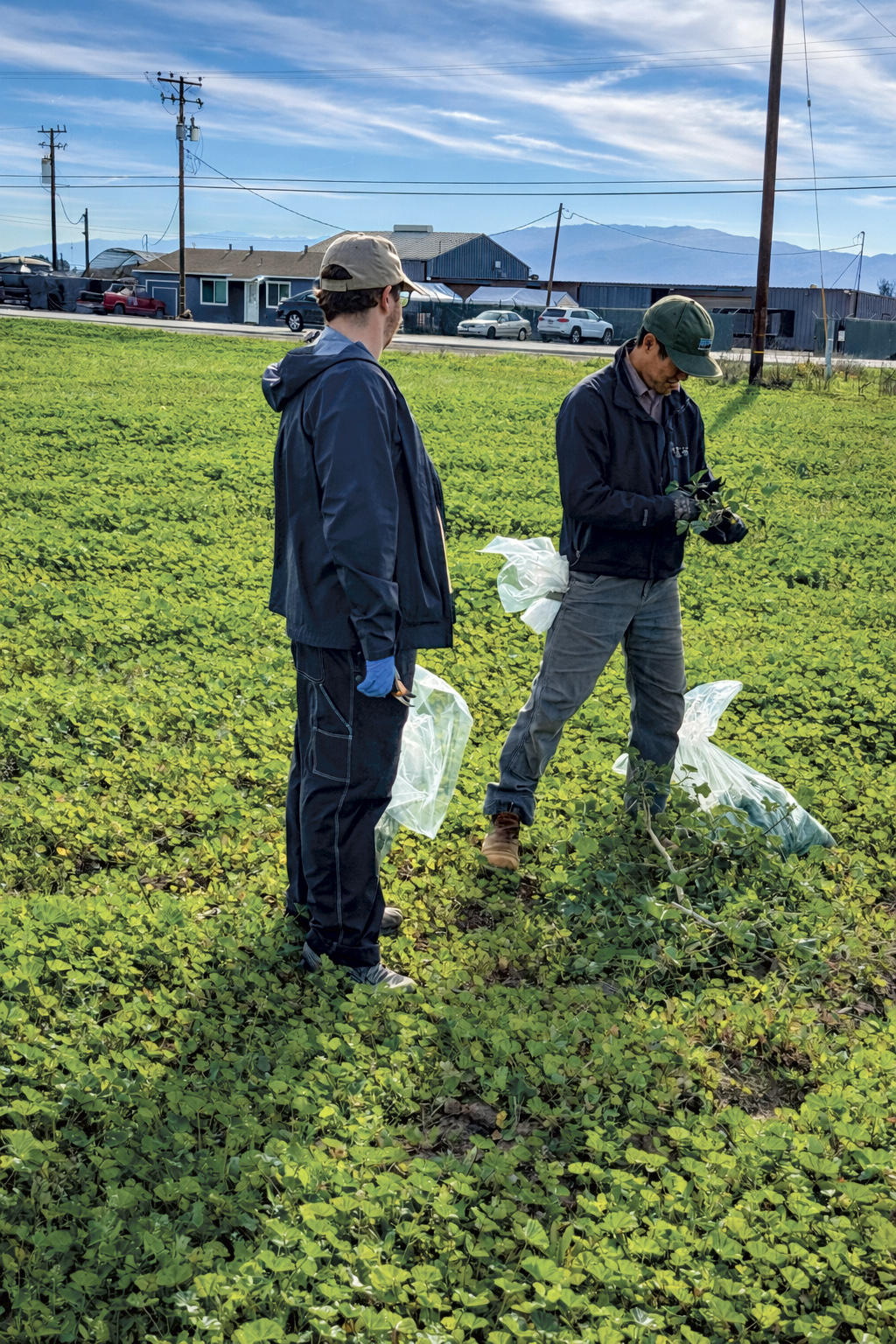
Photo/Richard Smith
“There’s always a little carryover between seasons,” Wang said. “People really have to be diligent and clear out weeds.”
During summer and fall, crops such as lettuce become the primary hosts for the virus, with thrips populations hitting their peak as heat and dry conditions accelerate their reproduction and development. In late fall, as crops are harvested and fields go fallow, the virus survives in perennial and cool-season annual weeds.
For this reason, scientists and farmers agree that managing weeds is crucial to reducing INSV reservoirs, and Monterey County has enacted a mandatory abatement program for select weeds as part of an effort to contain INSV.
A lettuce-free period from Dec. 7-21, when no lettuce can be aboveground in Monterey County—a mandate enacted years ago to break the life cycle of the lettuce mosaic virus—also helps. But it’s not a complete solution because the virus persists in weeds during the winter, particularly from November through March, serving as a “green bridge” to the next growing season.
Officials continue to urge residents who notice weed growth near lettuce production areas to report the sighting to the county agricultural commissioner, who then will investigate. If inspectors find one of the 10 suspect weeds that host INSV and the insects that vector it, they will serve the property owner with a notice to abate the nuisance.
In addition to weed abatement, grower Mason said he hopes scientists will develop lettuce varieties with resistance to INSV or a “designer pesticide,” though he acknowledged there may be regulatory restrictions for the latter.
Jennifer Clarke, executive director of the California Leafy Greens Research Board, said the group will likely focus more of its research on INSV.
“The 2025 harvest is not as bad, but that’s a matter of perspective,” Clarke said. “The last few years haven’t been as disastrous. Maybe the shock factor is no longer there.”
Wang, the UCCE plant pathologist, said there are no game changers on the horizon, and genetics will still be the key. Red leaf lettuces have some genetic resistance to INSV, whereas romaine, iceberg and green leaf are the most susceptible, she said.
“There’s also a breeding component, and seed companies are working on it, too, so it’s not just public but private investment in dealing with (INSV),” Wang said.
She noted she and her team participate in field days every year with UC Davis and others and search for mutations and ways to improve crops’ immune systems.
“There are some new products being tested, but I don’t see any promise in the fields yet,” she added.
Mark Billingsley is a reporter in Carmichael. He can be reached at agalert@cfbf.com.






.svg.png)
