


Fall rains, later harvests reduced rice quality, yields
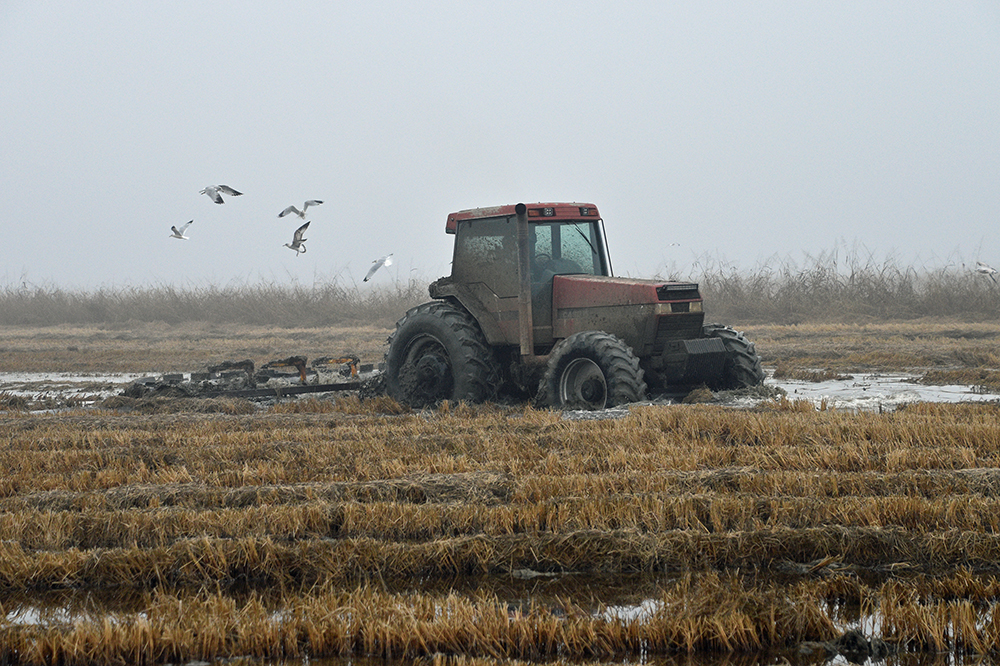
To help decomposition, rice straw is incorporated into the soil after harvest in a flooded field near Williams in Colusa County last month. Later harvests this past fall hurt rice quality and yields as farmers struggled with rainy conditions and muddy fields.
Photo/Vicky Boyd


By Vicky Boyd
Fall rainstorms dampened many rice farmers’ expectations of a good crop this past fall by delaying harvest, reducing grain quality and increasing ruts in fields.
While final yield figures haven’t yet been tabulated, University of California Cooperative Extension rice specialist Bruce Linquist said they’re trending toward an industry average. The 2025 crop saw a lot of late-planted and -harvested rice, he said, noting some growers harvested rice as late as the first week of December.
“Yields early on looked very good, and there was a lot of optimism,” Linquist said. “But as the season progressed and you got later and later harvests, the yields started to drop, and you had pretty low quality and overall low head rice.”
Historically, most rice growers try to finish harvest by Halloween. Linquist estimated 2025 yields will be about 86 hundredweight per acre, about 100 pounds more than 2024. This season, the state’s growers planted about 533,000 acres of rice, according to the U.S. Department of Agriculture.
Linquist blamed much of this season’s reduced grain quality on the fall rains, which repeatedly wetted kernels, followed by fast drying. This created minute grain fissures that typically result in more broken grains during milling.
J.R. Gallagher, a pest control adviser for the Butte County Rice Growers Association in Richvale, said he saw yields and milling quality “all over the board.” But he said much of the yield variability was due to planting dates.
“If the majority of your acres were planted in early May, you yielded really well,” Gallagher said. “But when you start getting close to the 15th of May (planting date), you have things start to drop off.”
He said he was still perplexed by the milling quality issue and wondered if the two weeks of unseasonably cool nighttime temperatures in late July affected grain formation. That is one factor he said he planned to further evaluate by comparing crop development, water sensor temperature readings and fertilizer applications.
George Tibbitts, who farms near Arbuckle, harvested two fields before the early October rains and had a forage chopper cut up the straw before flooding. He ended up harvesting his other two fields after the first rain and rutted up the fields. The forage chopper couldn’t navigate the mud and ruts, either.
Tibbitts eventually got a third field swathed and flooded in early December. He burned half the fourth field under an exemption that allows growers to burn 25% of their acreage annually for disease management. But the other portion remained a muddy mess in mid-December, prompting him to consider being put on a stomper’s waiting list.
“We’ll just do what we can in the spring and disk the heck out of it,” Tibbitts said. “I don’t know what we’re going to find. We’re in uncharted territory for me. This year for us has been the toughest one I can remember for getting things done during fall harvest.”
Although he said his overall yield was about average—103 hundredweight per acre—milling yield was “disappointing.” And with the mild growing conditions throughout the season, Tibbitts said he had had high hopes for the crop.
Charley Mathews, who farms near Marysville, said his yields were a bit lower than normal but not by much. He harvested his long-season premium M-401 medium grain after the first rain and just beat the second storm.
“The hardest part was the 401 because you drain later to begin with, so it wasn’t fully dry,” he said. “Then it rained, and it wouldn’t dry.”
Because Mathews harvested in the mud, he rutted up his fields. After harvest, he typically chops the straw, disks the fields and then floods them.
But the ruts forced him to stomp the fields twice, “which was no fun,” he said. Mathews said he remains optimistic the straw will decompose before spring field preparation, but it “really depends on the winter bird activity, which really helps.”
Colusa County farmer Gordon Wylie saw good yields of more than 105 hundredweight per acre from his early-planted M-105 field near Williams that was harvested in late September. But he wasn’t as lucky with the M-401 fields near Maxwell.
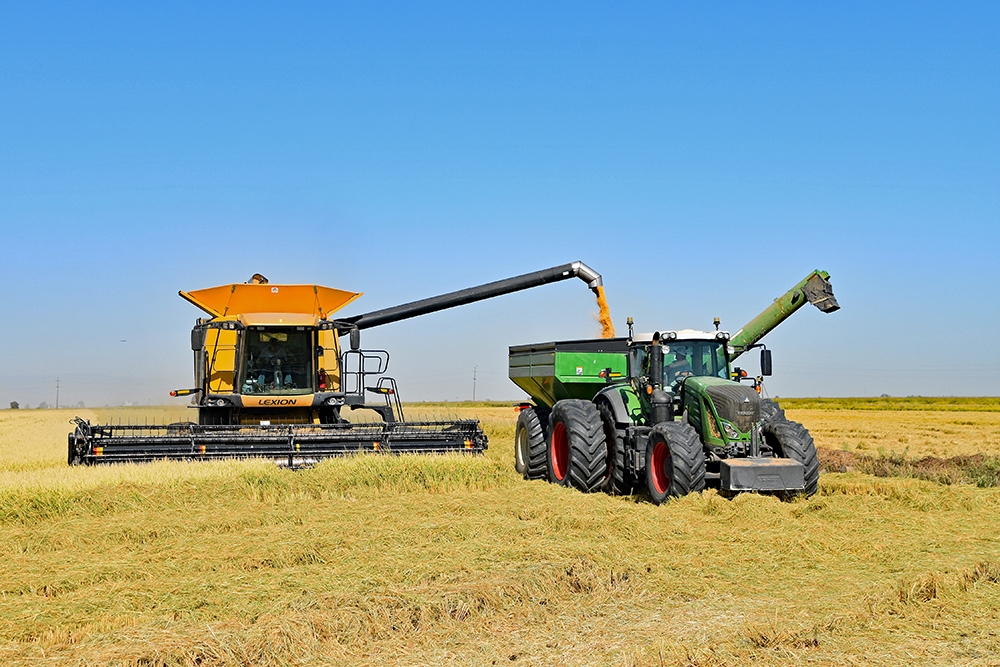
Photo/Vicky Boyd
Delays in planting meant M-401 was still in the field during the fall rains. The heavy soil also was slow to dry enough to support heavy harvesting equipment.
“It was a bear to get out,” Wylie said of the crop. If it weren’t for a fellow grower who had a steel-tracked combine and helped cut the rice, he wouldn’t have finished harvest, he added.
Wylie’s M-401 produced only about 88 hundredweight per acre this season compared to his usual 100 hundredweight per acre. Worse yet, his M-401 milling yield was only 43% head rice, and the co-op to which he belongs pays based on head rice for that variety.
Last year, the average milling yield statewide for medium-grain varieties combined was 57:71, or 57% head rice and 71% total rice, including brokens, according to the California Agri Inspection Co.
The late harvest also delayed Wylie’s straw management program, which involved stomping the straw using heavy rollers to mash the leftover material into flooded rice field soil to decompose.
“We tore the ground up, so we had to stomp it,” he said of the ruts. “If we get it stomped, that fills in the ruts where we tore things up.”
The increased rutting also meant custom stomping services were in high demand, and many had waiting lists of growers, Linquist said.
Like many other growers who receive federal irrigation water, Wylie said they didn’t have as much as he would have liked to flood the fields and create a thin mud slurry for stomping. With less water, the rollers had to fight thick, sticky mud that clogged up parts and caused frequent breakdowns.
What concerns Gallagher is whether the large buried mats of straw will have enough time to decompose before spring field preparation. Typically, his growers chop the straw first before disking and stomping. But the wet ground prevented that.
The large amount of leftover organic matter also may tie up nitrogen, at least early in the 2026 growing season, making it less available to the rice plants, he said.
Vicky Boyd is a reporter in Modesto. She can be reached at agalert@cfbf.com.
See related news stories...
- Organic rice sector suffers growing pains
- Rice farmers put dry-seeding techniques to the test
- Higher inventories cramp medium-grain rice prices






.svg.png)
