


Peach growers seek relief following cannery closure
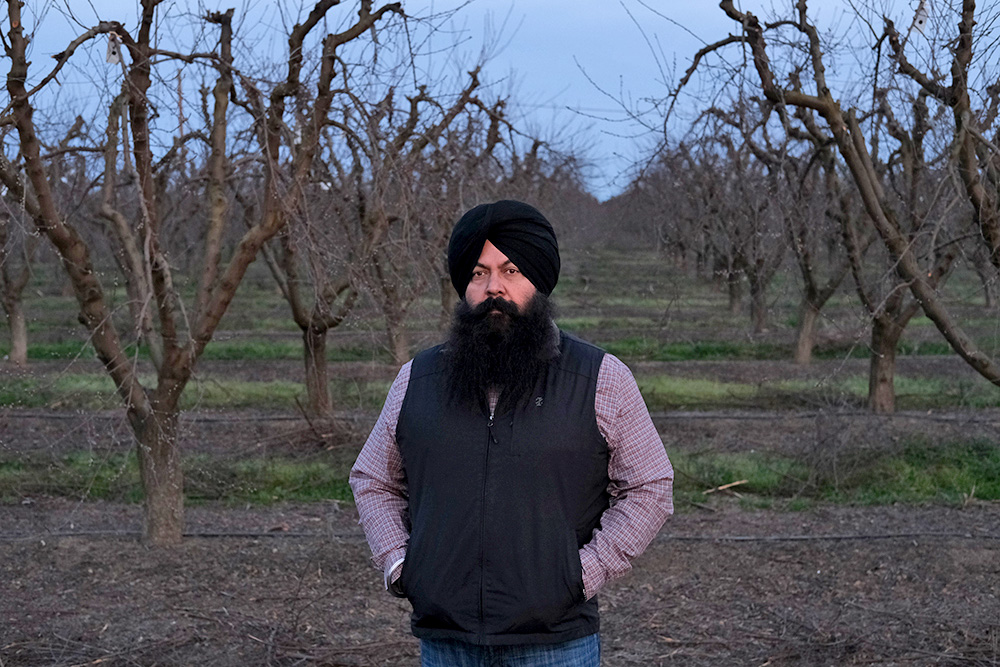
Sutter County Supervisor Karm Bains, a fourth-generation cling peach grower, stands in a peach orchard behind his district office in Yuba City. Bains, whose family has grown peaches in the area since the 1960s, worked with County Supervisor Jeff Stephens, who also grows cling peaches, to organize an informational meeting for growers and state and federal lawmakers Feb. 13 in Yuba City.
Photo/Caleb Hampton


By Christine Souza
With the collapse of Del Monte Foods’ U.S. canned fruit business following the company’s bankruptcy last year and subsequent cannery closure, affected clingstone peach growers are seeking financial relief to help recover from the loss of one of the sector’s biggest buyers.
Rich Hudgins, president and CEO of the California Canning Peach Association, said the association has been communicating with federal officials at the U.S. Department of Agriculture to identify forms of financial assistance and programs to aid growers.
In the past, the department funded voluntary tree-pull programs to address industry oversupply, for example. It also provided $20 million in direct payments to growers affected by the Tri-Valley Growers bankruptcy in 2000, Hudgins noted.
Identifying relief for affected growers was central to a Feb. 13 meeting in Yuba City that was organized by Sutter County Supervisors Jeff Stephens and Karm Bains, both of whom also grow peaches. Sutter County is the state’s top cling peach region, producing 106,000 tons of the crop in 2024 at a value of $66 million.
Dozens of growers at the packed meeting signaled overwhelming support for a federal tree-removal program to recoup a portion of their investment in planting new cling peach orchards.
Those growers learned this past August that their long-term contracts with Del Monte were canceled due to the company’s bankruptcy. The peach association filed a claim with the bankruptcy court for the fruit value of the rejected contracts, which amounted to more than a half-billion dollars for peach contracts set to expire between 2026 and 2044.
As one of about 70 growers affected by Del Monte’s exit from the business, Sutter County farmer Ranjit Davit of Live Oak no longer has a buyer for about 30% of his peach crop. He said he planted new peach trees in 2023 under a 20-year contract with the longtime processor. Planting a new orchard could cost growers up to $8,000 an acre, he said.
“This is devastating to growers and to this industry,” said Davit, who chairs the peach association’s board of directors. He noted Del Monte had approached growers two years ago to encourage them to plant more peaches, and now, “the growers got the shaft.”
U.S. Rep. Mike Thompson, D-St. Helena, said he is working to identify relief for growers through existing federal programs or by crafting new legislation.
“We’re looking at every possible specialty crop support program that could come into play,” he said.
Chris Reardon, vice president of the policy advocacy division at the California Farm Bureau, said the organization reached out to state Sen. Anna Caballero, D-Merced, who chairs the Senate Agriculture Committee, and Assemblywoman Esmeralda Soria, D-Merced, who chairs the Assembly Agriculture Committee, as well as the California Department of Food and Agriculture to discuss what can be done to help growers at the state level.
California cling peach acreage has declined through the years due to reduced consumer demand, rising production costs, competition from imports and growers replacing peach orchards with higher-value crops such as nuts. Bearing acreage peaked this century at 32,000 in 2004 but fell to less than 14,000 in 2024, according to USDA.
Speakers at the Yuba City meeting noted that under earlier tree-removal programs, growers were eligible for funding if trees were pulled only after the program’s announcement.
The dilemma for growers is that delaying removal could cost them an entire year that they might otherwise use to transition to a different crop.
Growers were also reminded that property taxes are calculated based on the value of orchards with trees still in the ground. Removing the trees now could jeopardize their eligibility for relief funds.
For growers who removed trees after the loss of their Del Monte contracts, Hudgins said he intends to request that they be eligible for payments for any potential tree-pull program.
Merced County farmer Jeff Strom, whose crops include 40% cling peaches and 60% almonds, no longer has a home for all 40 acres of his peaches that were under contract with Del Monte. He said he hopes growers will get some federal assistance from USDA to help cover the cost of pulling out their peach trees and replanting their orchards to other crops.
In business for 139 years, Walnut Creek-based Del Monte Foods contracted about 35% of the state’s cling peaches last year, while Pacific Coast Producers, a grower-owned cooperative based in Lodi, contracted about 60% of the crop, with the rest purchased by a few smaller processors.
“There’s no one to pick up the pieces except for PCP, and they’re maxed out on their capacity to purchase more fruit,” Davit said. “People don’t know where to turn or what to do. It’s a shock.”
PCP, which has canneries in Oroville and Lodi, purchased some assets from Del Monte during the bankruptcy sale, including unsold canned fruit inventory.
For 2026, Hudgins said PCP entered one-year contracts with growers for an additional 24,000 tons of cling peaches. That leaves no known market for the remaining 50,000 tons previously under contract with Del Monte.
“PCP has finite plant capacity, so they picked up varieties where they had gaps in their daily throughput capacity vs. their existing contractual arrangements,” Hudgins said. “They were unable to pick up tons during the middle of harvest season because they were already at capacity.”
To identify more markets for unsold fruit, the peach association continues to support the Buy American provision, which requires the purchase of domestic commodities by participants in the National School Lunch Program. The association is part of a coalition of more than 60 organizations from 21 states calling for strengthening the Buy American provision, Hudgins said.
The downsizing of the cling peach sector leaves the future of the California Cling Peach Growers Marketing Order uncertain because PCP, the only remaining peach canner in the state, is a cooperative, Hudgins said. The California Cling Peach Growers Advisory Board was set to meet Feb. 24 to discuss the future of the marketing order.
With the state’s canned peach sector facing a flood of canned peach imports, particularly from China and Greece, Hudgins said growers may decide to focus on trade and research. Even though 50,000 tons of California-grown cling peaches will be without a home this year, some 100,000 tons of foreign fruit continues to pour in, he noted.
“If we cut the imports in half, this picture looks a lot different,” he said. “I have no doubt we will find our path. It will result in a different-looking industry going forward, but there will be a future for our industry in the state of California.”
Christine Souza is a reporter in Turlock. She can be reached at agalert@cfbf.com.






.svg.png)
