


Strong demand for all meat lifts lamb prices higher
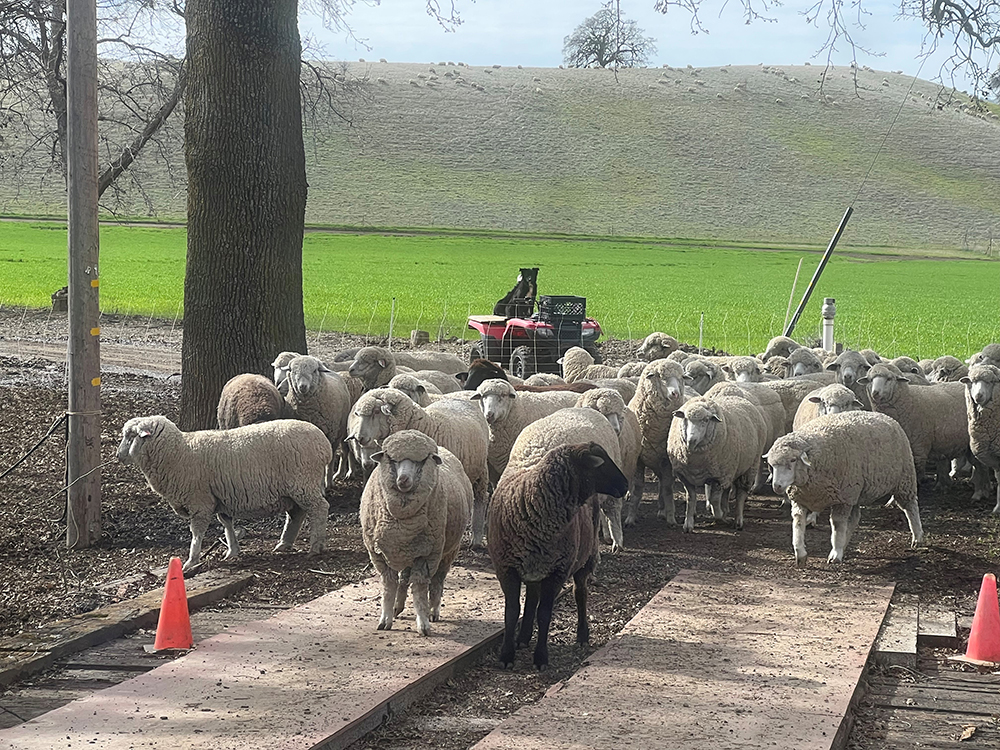
Demand for lamb has grown thanks to consumers with disposable income eating more of it, although there is speculation some U.S. consumers are turning to lamb due to record-high beef prices.
Photo/Robyn Rominger


By Robyn Rominger
Increasing demand for lamb by an affluent U.S. market segment and speculation that some domestic consumers seek alternatives to record-high beef prices have led to higher farm-gate prices for lamb producers.
“Maybe the consumers are eating more lamb because beef prices are high,” said lamb producer John Olagaray of Five-O Ranch in Lodi, who serves on the board of the California Wool Growers Association.
Tyler Cozzens, an agricultural economist and director of the Colorado-based Livestock Marketing Information Center, said demand remains strong for all meat, including lamb, prices of which have increased “quite a bit” during the third quarter of 2025.
He noted that the national lamb-slaughter value—or the price that producers receive for a live lamb or carcass before processing—topped $2.25 per pound for slaughter lambs in the third quarter compared to about $1.70 in the first half of 2025.
The national lamb cutout value, which refers to the price of individual cuts such as lamb chops and roasts that retailers pay packers, topped $5 per pound, up from about $4.60 per pound in the first half of 2025, Cozzens said.
“Demand is stepping up,” he added. “Consumers are purchasing lamb in the meat case, and that demand for lamb is factoring into higher prices for slaughter lambs and feeders.”
Feeders, or young lambs typically weighing 60-90 pounds, are sold to be further raised and fattened on feedlots or pasture before being slaughtered. Slaughter lambs, or finished lambs, are those that are ready for immediate processing. They usually weigh 90-150 pounds, though some ethnic markets may prefer lighter, leaner animals.
Lamb is more price-sensitive than other proteins such as beef, pork and chicken, but there is increasing demand by consumers with disposable income, including those in urban areas who are educated and earn more than $100,000 a year, Cozzens said.
Photo/Robyn Rominger
“Some of that price sensitivity has gone down because you’re getting a consumer base that wants lamb,” he said.
But there is some market seasonality to lamb, with demand stronger leading up to Easter, Cozzens noted.
Dressed weight—which refers to how much the lamb weighs after it has been slaughtered and butchered—is up about 4% compared to a year ago, Cozzens said. He noted that dressed weights in the first half of the year were up slightly from a year ago, but they have dropped 3-5 pounds every week during the third quarter. If this continues, he said, “we may actually see total lamb production for 2025 at about the same level as last year.”
The main ethnic markets for lamb include Middle Eastern, Jewish and Caribbean communities, with demand concentrated in metropolitan areas such as Los Angeles. These markets often purchase specific cuts for religious holidays such as Eid al-Fitr and Rosh Hashanah, which can be targeted by lamb producers for price advantages.
“There has been a growing market opportunity for ethnic markets, but the overall opportunity can be regionalized, depending on if you’re near a major metropolitan area or not,” Cozzens said.
Due to demand, supplies could tighten as producers sell their lambs younger and smaller to get product to market, leading to lighter dressed weights, he noted.
“The market is saying we need these lambs, so we’re going to bid up the price to try and pull these lambs through the supply chain,” Cozzens said. “The market is trying to provide an economic incentive to the producer to sell their lambs and move them down the road.
Megan Wortman, executive director of the Colorado-based American Lamb Board, confirmed that the U.S. lamb market has experienced growth, with increasing sales and consistent demand. During the past year, sales and lamb volume sold have seen “significant growth,” she said, with increases of 10.9% and 11.2%, respectively. Sales jumped despite higher prices, she noted. This suggests “resilient demand for American lamb,” she added.
“When beef becomes expensive, some consumers switch to lamb, boosting its demand and, in turn, its price,” Wortman said. “However, lamb prices are more directly influenced by factors like its own supply and demand dynamics, the higher cost of production and seasonal patterns.”
With protein consumption continuing to trend—in large part due to social media, influencers and doctors promoting it—Wortman said “lamb has a great opportunity to shine.”
Despite bright spots in the market, lamb producers continue to face challenges. Cozzens said imports of lamb and mutton, mostly from Australia and New Zealand, have increased in the past decade due to growing U.S. demand and the higher value of the dollar, which makes imports more price competitive.
Producer Olagaray noted about 75% of lamb consumed in the U.S. comes from abroad.
Last month, the U.S. sheep industry asked the Office of the U.S. Trade Representative to launch an investigation into what it contends is a surge of lamb imports that hurt domestic producers. The American Sheep Industry Association called for immediate federal action, saying imports—which grew by nearly 45% between 2020 and 2024—undercut domestic producers and erode their market share.
At the same time, labor costs have soared in California, especially compared to other states, said John Olagaray, who rotates his sheep from Lodi and Winters to Nevada’s Humboldt Range. Sheep ranchers also face significant threats from predators.
“This summer in Northern Nevada, we had more loss of lambs from coyotes,” Olagaray said. “We have guard dogs that protect the sheep from predators, but they can only do so much.”
Solano County sheep rancher Richard Hamilton, who serves as chairman of the California Sheep Commission, said another challenge is a lack of price transparency, which he called “a hindrance” for the industry. Unlike cattle, which has a futures market, there is no price discovery for lamb.
He said there is also a need for consistent product quality, such as providing a standard amount of marbling in the meat. Livestock breeding significantly influences meat marbling, as certain breeds are genetically predisposed to develop more intramuscular fat, which is a key factor.
“It starts with the seed-stock producers,” Hamilton said.
He emphasized the need for the sector to focus on producing high-quality, consistent products to meet consumer expectations and ensure sustainability.
“I think when you have quality parameters, it gives everybody in the marketing chain a goal to shoot for,” Hamilton said.
Robyn Rominger is a reporter in Winters. She can be reached at agalert@cfbf.com.







.svg.png)
