


From the Fields: Daniel Bays, Stanislaus County tree crop farmer
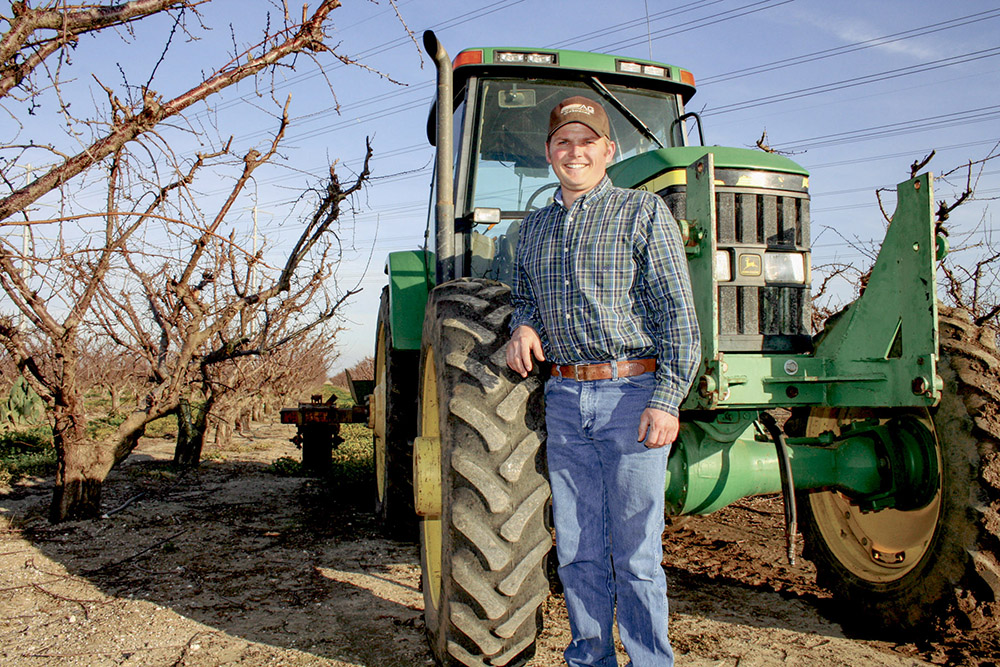
Daniel Bays
Photo/Christine Bays


By Daniel Bays
Stanislaus County tree crop farmer
We’re getting a lot of the winter maintenance on the orchards completed—pruning, replanting dead trees, maintaining the irrigation systems on the open ground and row crops, getting the fields worked and prepped.
Crop quality overall was pretty good. It seemed like worm damage on the almonds was low. Some later stuff that we’re picking up that got rained on, I’m anticipating probably a little more worm damage from being out in the field longer. That’s probably not going to help our quality.
Walnuts yields were up a little bit, and quality looked pretty good. They’re probably going to be hurt on some of the later varieties that we picked up after the rain because they sat out there in the field, and we couldn’t continue harvesting for several days until things dried.
The prices on nuts and the market look better. We’ve cut back quite a bit the past few years on the almonds and walnuts, going into survival mode like most people. As budgets allow, we’re trying to put a little more back into the crops, putting potash fertilizer and gypsum back out. Growers in our area are struggling with similar market forces as far as trying to find crops that are profitable to grow and what contracts we can get.
Everyone’s starting to become more familiar with some of the impacts that the Sustainable Groundwater Management Act and our water systems are going to have. A lot of our area has water in a water district. What we farm is in five different districts, and how they interact and the water rights vary between those. The groundwater region that we’re in is the Delta-Mendota subbasin, and it runs from Tracy to Firebaugh and covers over four different counties. There’s a lot of variability from one end to the other, and the impact that that’s going to have on the region is going to vary a lot, even though it’s all considered one basin.





.svg.png)
