


Autumn rains hasten persimmon harvest
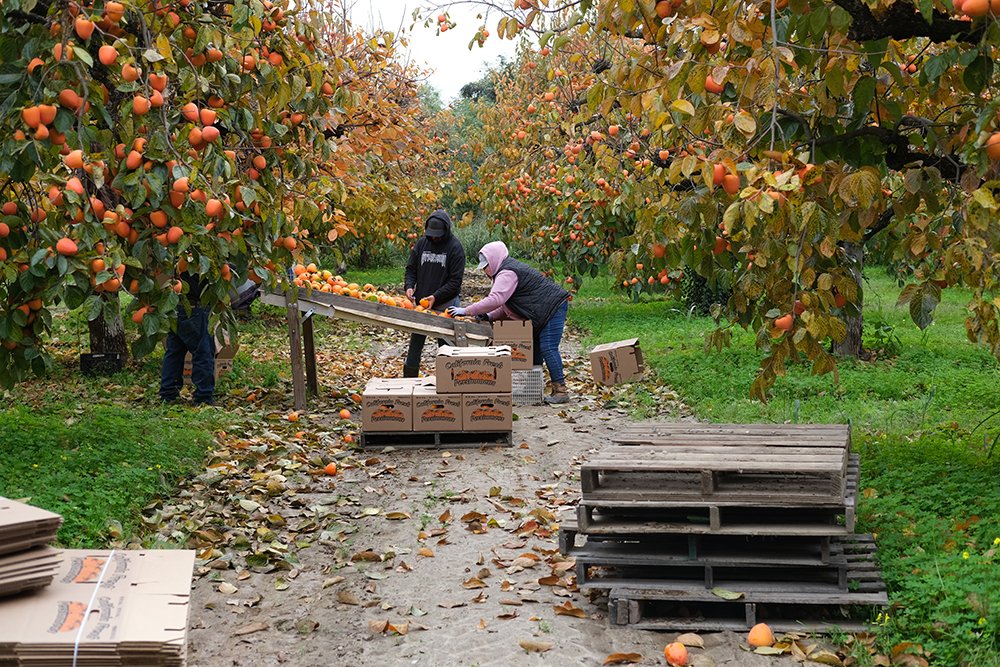
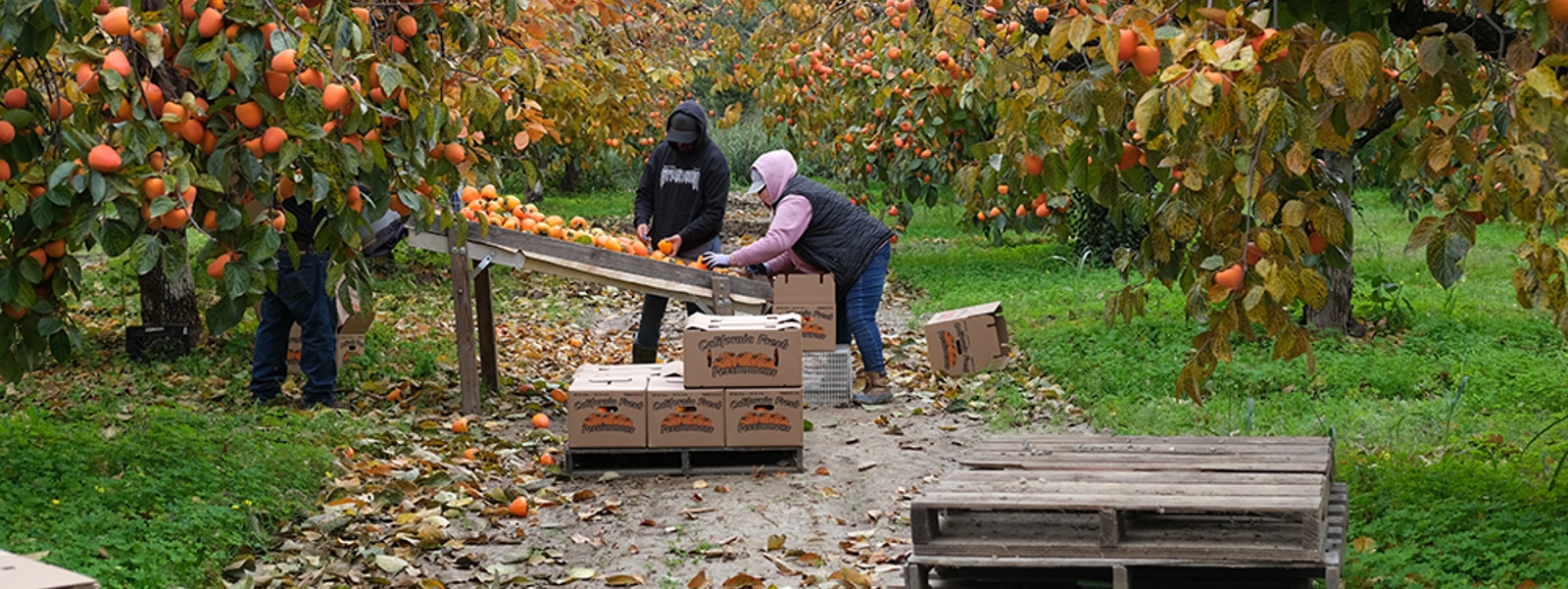
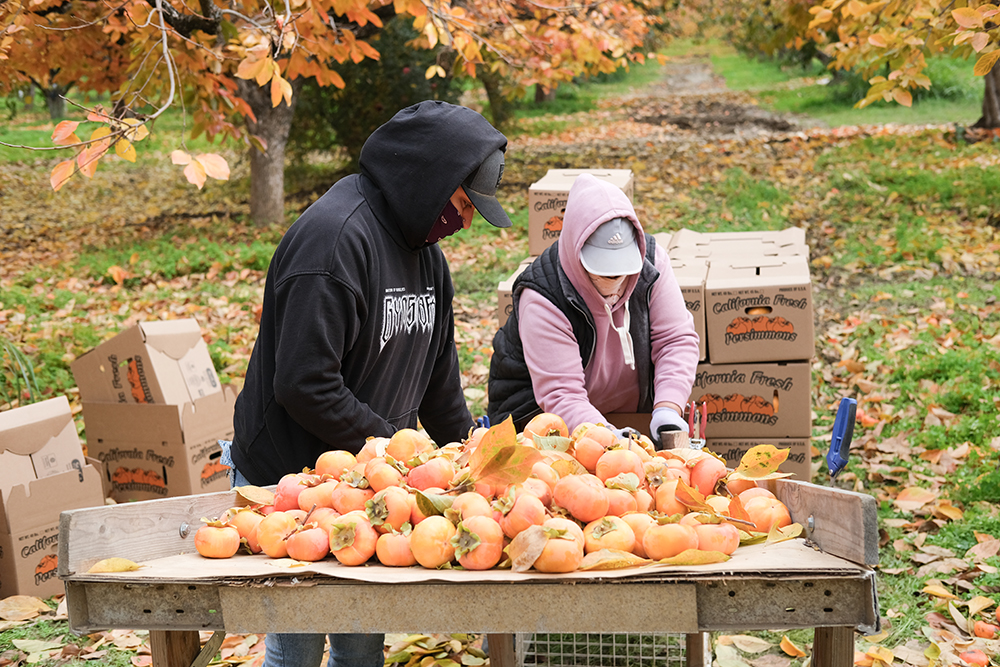
Rosa Ruiz, right, and Rosario Luna clip persimmon stems before placing the fruit in boxes Nov. 12 in Marysville. Growers across California ramped up picking ahead of mid-November rains that drenched most growing regions. The state’s persimmon harvest was expected to wrap up early this month.
Photo/Caleb Hampton


By Caleb Hampton
California’s persimmon harvest accelerated last month as crews worked to pick fruit ahead of rainstorms that threatened to affect crop quality in orchards across the state.
In mid-November, workers stripped the fruit off trees and packed it onto pallets in farmer Steven Springer’s 24-acre orchard in Yuba County.
Persimmons withstand rain better than some fruits, Springer said. But after multiple storms, the weather takes a toll, “and the fruit gets riper and breaks down faster,” he said.
The third-generation grower sells persimmons in 40-pound boxes from a shop at his Marysville orchard, supplying local families and out-of-state retailers alike. Last month, with heavy rain on its way, he said he was building up inventory to stay ahead of demand.
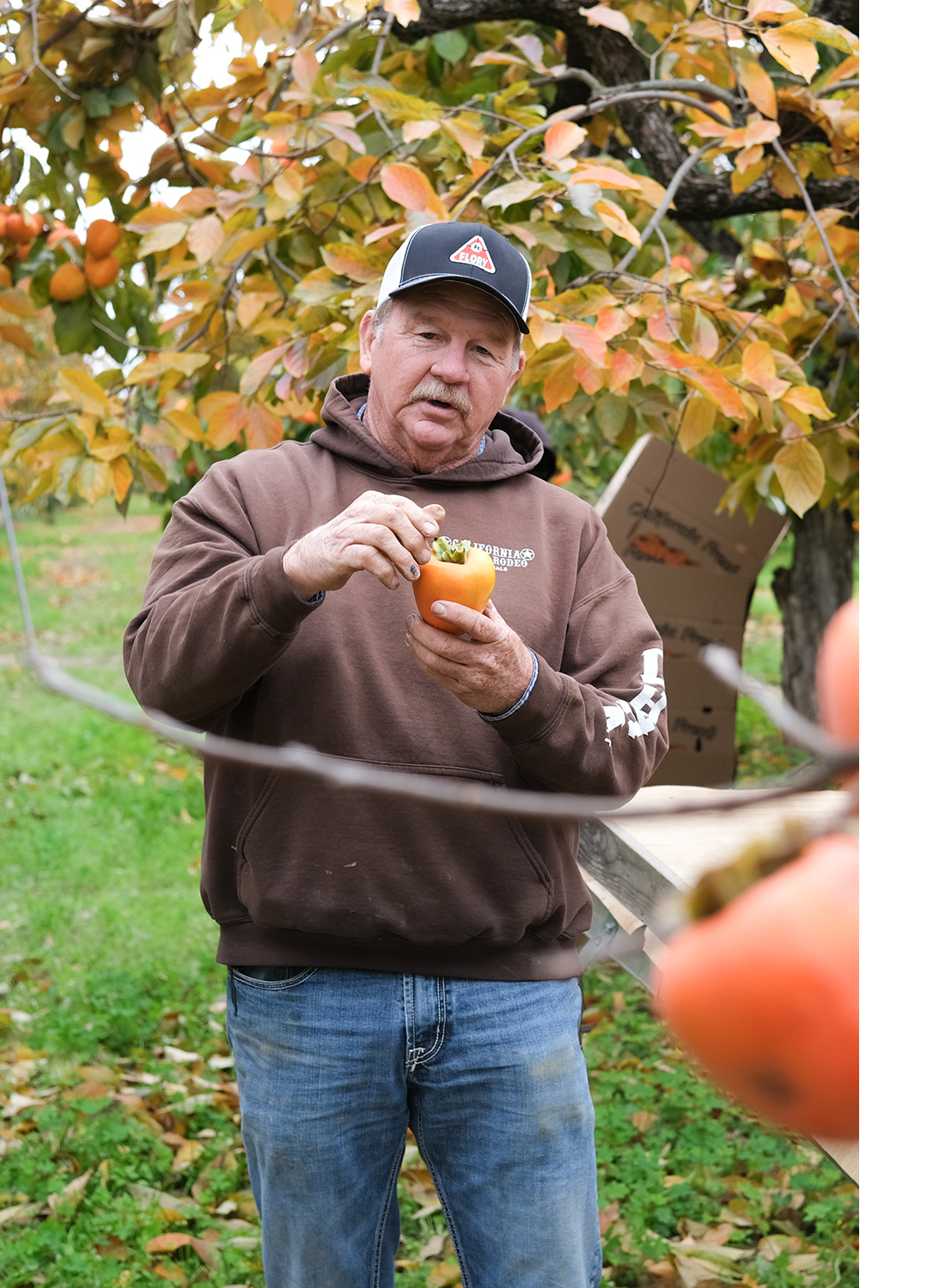
a hachiya persimmon.
Photo/Caleb Hampton
“We sell to people who want a truckload and people who want one box,” Springer said.
In the San Joaquin Valley, growers also ramped up picking before storms swept through the region last month, bringing above-average rainfall.
Dillon Luallen, sales representative at Sierra Sun Fruit Marketing in Fresno County, said this year’s harvest, which began in late September, started out light but picked up in November.
“Before the last rain, people wanted to harvest, so there’s a lot of persimmons on the market now,” Luallen said, adding that the Sanger-based packer and shipper dropped its prices because of the increased volume it was handling.
The company, which primarily supplies retailers, was selling a 25-pound box of persimmons for around $25, about 20% higher than last year.
“Prices have been strong this year,” Luallen said, adding that demand from local school districts had boosted sales. “That gets passed on to growers.”
Persimmon yields varied across the state, with handlers reporting the overall crop appeared to be down this year.
Steve Matych, owner of Grover Beach-based distributor Regatta Tropicals Ltd. in San Luis Obispo County, which sources persimmons from the San Joaquin Valley, estimated yields were 20% below average.
“Some areas are better than others,” said Matych, who ships the fruit to retailers across the United States and Canada.
California grows most of the persimmons in the U.S., though the fruit’s footprint in the state is smaller than other relatively niche crops such as pomegranates and kiwifruits.
In 2015, roughly a quarter of the U.S. persimmon crop was exported, primarily to Canada, while a slightly smaller volume of persimmons was imported, mostly from Spain, according to the most recent data on imports and exports from the U.S. Department of Agriculture.
Farmers in the Golden State grow both hachiya and fuyu persimmons, the former an acorn-shaped variety often used for baking, the latter a squat variety typically eaten fresh while the fruit is crunchy.
California’s persimmon production is concentrated in the San Joaquin Valley, though the fall-ripening fruit is also grown in the Sacramento Valley and in central and southern coastal areas.
Roughly a decade ago, the state’s persimmon acreage saw a steep drop, declining from more than 4,000 in 2013 to less than 2,000 in 2014, according to USDA.
Chris Tantau, who grows persimmons in Tulare County and co-owns Exeter-based Venida Packing Co., which handles persimmons and other fruit, said overproduction and weak pricing at the time likely led some growers to abandon the crop for “something more profitable.”
The decline coincided with a major expansion of almond acreage in the San Joaquin Valley, though Tantau said he did not know which crops replaced persimmon orchards.
Since then, California’s persimmon acreage gradually climbed, with more than 3,000 acres harvested last year. In 2022, the state’s crop was valued at $35 million, according to the most recent USDA data.
“It’s a growing commodity,” Luallen said. “It’s relatively easy to farm, and it seems like consumption of persimmons has been going up year after year.”
Recent plantings leaned heavily toward fuyu persimmons as growers responded to consumer demand for “something that’s ready to eat,” he said.
Tantau, who grows primarily hachiya persimmons, said he may take out some of his trees—his 80 total acres are “pretty sizable in the world of persimmons”—and replace them with fuyu cultivars.
“We see that market dwindling,” he said of hachiya persimmons. “People want consumer-ready products, and no one is baking as much.”
Harvest and pruning of persimmon trees is costly and labor-intensive, growers said, but the crop is self-fertile and relatively immune to pests, allowing farmers to save on other inputs such as pesticides and pollination.
Tantau, who also grows citrus fruits, almonds, plums and avocados, said he had no plans to stop growing persimmons.
“We’ve just been doing it a long time, and they’re still profitable—slightly,” he said. “If you’re still making a little money, it’s painful to make that call and change to something else.”
Persimmon trees can take longer than some fruit trees to bear fruit—eight years, according to a Japanese proverb, though some growers said they pick sooner—and can remain productive for more than 100 years.
Springer, whose family has grown persimmons for more than a century, said the crop’s “sentimental value” kept it in production from one generation to the next.
“It’s one of the first crops my grandfather planted, so nobody has ever been willing to give them up,” the Marysville grower said.
Photo/Caleb Hampton
Farmer Tosh Kuratomi, who grows 5 acres of persimmons in Placer County, said he was also motivated by noncommercial factors to grow the fruit.
Each year, a portion of Kuratomi’s hachiya crop is used to make Japanese dried persimmons called hoshigaki, which he sells by mail order to customers in more than 40 states.
“It’s driven by tradition,” Kuratomi said, adding he was pulling late nights this fall making the hoshigaki, likely for little to no profit. “It’s like, if you give up, is part of the culture gone?”
The Granite Bay-based grower said he was set to pick the last of this year’s persimmons this week or next.
“The end of harvest is marked by the cold front that comes in pushing the starlings,” Kuratomi said, with the birds flocking to his orchard each December and picking the branches clean.
Caleb Hampton is editor of Ag Alert. He can be reached at champton@cfbf.com.
See related news stories...
• Aaron Fukuda talks SGMA in the Kaweah Subbasin
• Agencies identify organized farm equipment theft ring
• Fruit fly findings, quarantines deal blow to farmers






.svg.png)
