


Prevention steps help curb threat of citrus disease


By Caleb Hampton
Huanglongbing, commonly called HLB or citrus greening, is a lethal plant disease that has devastated commercial citrus production in parts of Brazil, China and India, as well as in Florida. It has no known cure.
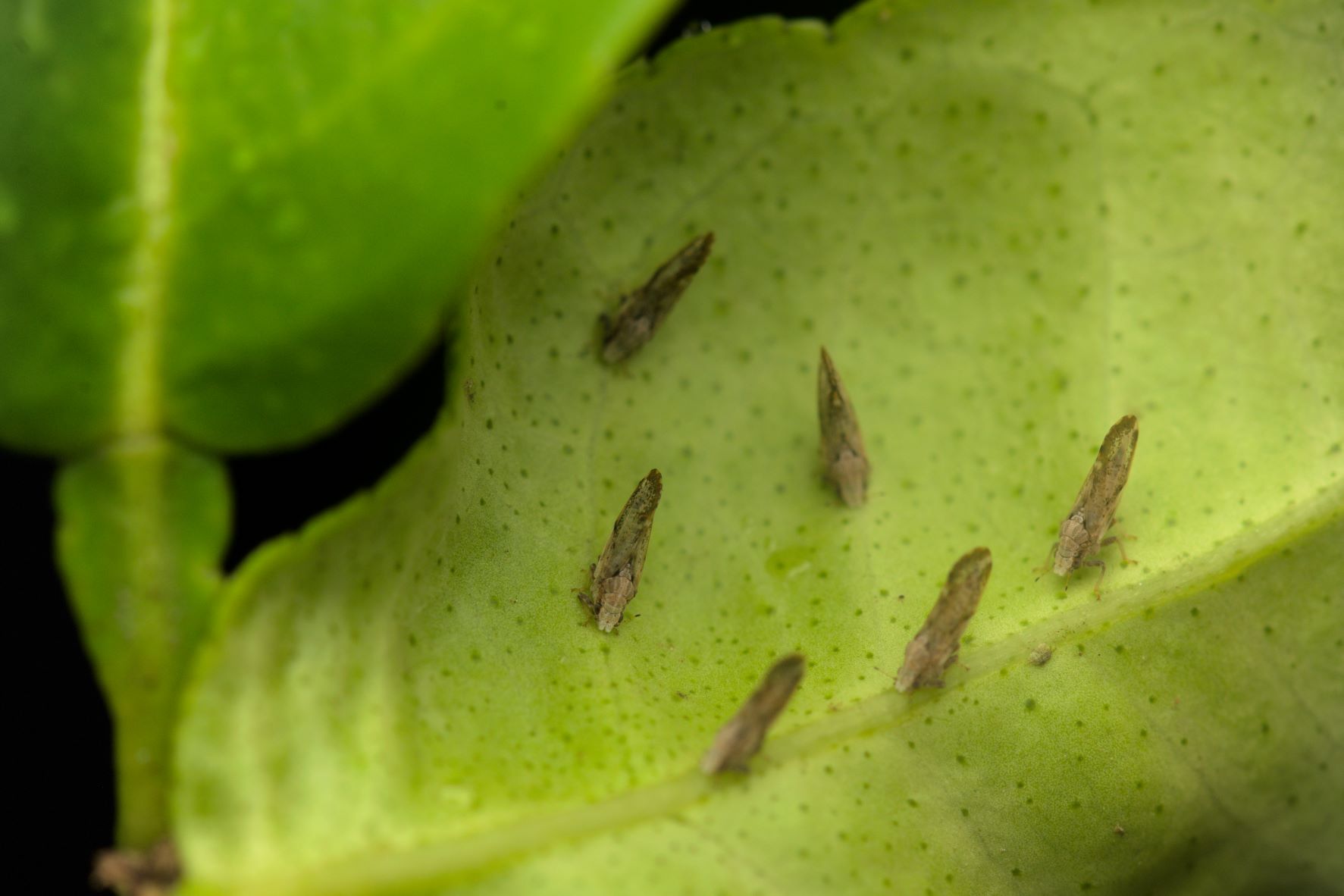
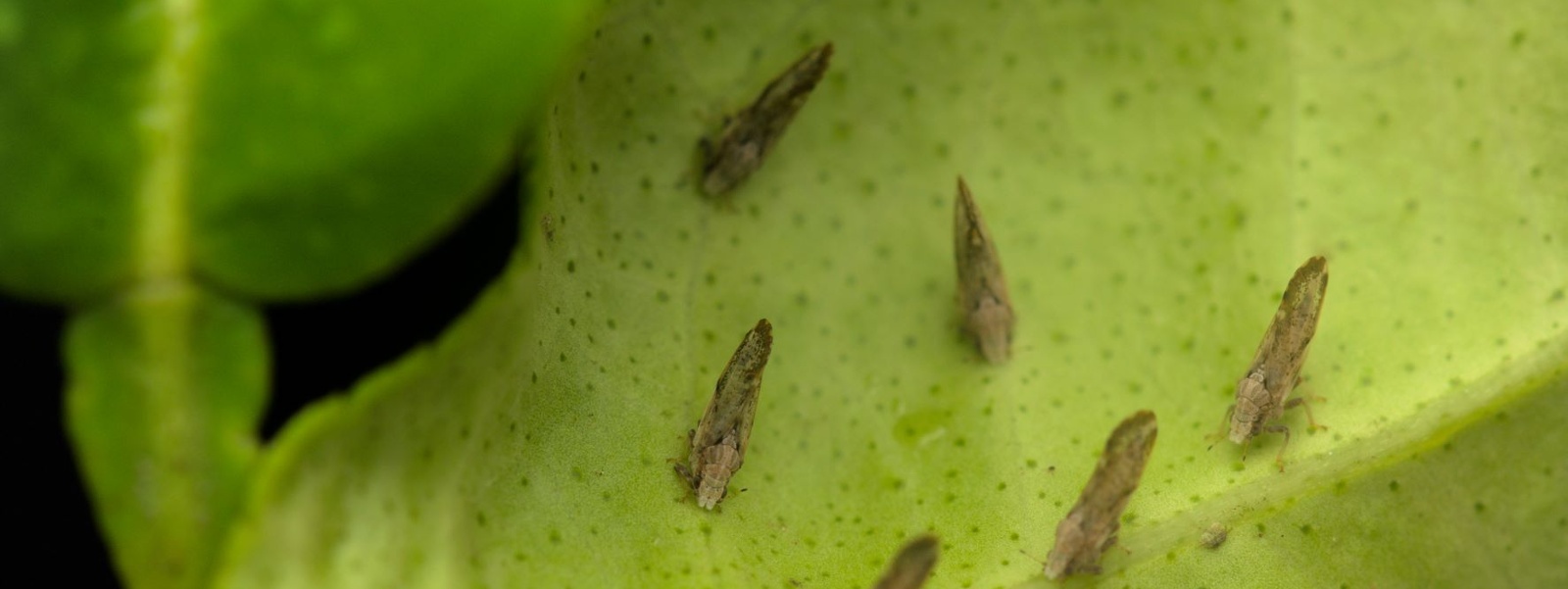
The bacterium that causes the disease, which affects all varieties of citrus fruit, is spread by the Asian citrus psyllid, or ACP, a small, brown insect about the size of an aphid.
This past June, an HLB-positive psyllid was found in a commercial grove in Pauma Valley, the heart of San Diego County’s citrus-growing region. But no trees in the grove were found to have been infected.
So far, yearly surveys of commercial citrus in California have not detected any trees positive for HLB. Researchers suspect the state’s climate, with drier summers and colder winters than Florida, may be less hospitable to the disease.
The success in keeping HLB out of commercial citrus in California, they emphasized, is also due to robust prevention efforts by growers.
“The citrus industry in California did a fabulous job of organizing itself,” said Cressida Silvers, a grower liaison for the California Citrus Pest and Disease Prevention Program.
Citrus growers across Southern California formed task forces and pest control districts in collaboration with county governments. The groups coordinate with growers to conduct simultaneous area-wide treatments, spraying pesticide multiple times a year to eliminate ACP.
“That’s our first line of defense,” said Warren Lyall, a Pauma Valley citrus grower and chair of the San Diego County Citrus Pest Control District. “If we can stop the ACP, then we can stop the spread of the disease.”
When a tree is infected with citrus greening, the disease attacks its vascular system, damaging the roots and causing the tree to produce bitter and lopsided fruit. Within five to 10 years, badly infected trees “just get thinner and more yellow-looking and then eventually die off completely,” said Neil McRoberts, UC Davis professor and plant pathologist.
To date, California’s aggressive efforts have succeeded in neutralizing the threat of citrus greening, which has caused massive losses for commerical farmers elsewhere.
HLB was first detected in Florida in 2005. Roughly a decade later, it had cost the state’s citrus industry more than $4 billion and eliminated 30,000 jobs in the sector. As of 2021, Florida’s citrus production had fallen by 80%.
When the disease was found in California a decade ago, growers and researchers braced for a similar impact. With the state producing most of the country’s fresh citrus fruit—Florida mainly produces citrus for juice—California citrus growers could be especially vulnerable if HLB got a foothold in the region.
“In a juice market, they can do certain things at the processing plant to blend the fruit juice with juice from elsewhere and get a decent flavor in the final product,” McRoberts said. “But here, the fruit wouldn’t be sellable on the fresh market. It’s an additional concern.”
ACP, the insects that can carry HLB, were first found in California in 2008, and HLB was detected in residential citrus in the state in 2012. As of this month, the California Department of Food and Agriculture had identified more than 4,000 trees positive for HLB, all of which were residential.
With an estimated 60% of California residences having at least one citrus tree, CDFA has worked with owners and managers of residential citrus to find infected trees and remove them. “The program to find infected trees and take them out is constantly chipping away at the amount of pathogen that’s out there in the environment,” McRoberts said.
Prevention efforts related to commercial citrus, such as additional spraying, often result in higher input costs for growers. Will Pidduck, a Ventura County farmer with roughly 500 acres of citrus, said he spends about $90 per acre two to three times a year to treat his groves for ACP. “It costs money, and when lemon prices are down, it makes it harder to think about having to do that, but the threat of HLB is worse,” he said.
When CDFA finds a tree that is positive for HLB, it draws a 5-mile radius around the location and imposes a citrus fruit quarantine, which can impact growers whose groves are within the area.
“The focus is making sure we’re not moving psyllids that could be carrying the bacteria around the state,” said Victoria Hornbaker, director of the state Citrus Pest and Disease Prevention Division.
If a grower has a packing facility that is also in the quarantine zone, they must cover their fruit with a tarp when transporting it from the grove to the packer, where the fruit can be cleaned. However, if there is no packinghouse inside the quarantine area, the fruit must be field-cleaned and washed before being packed.
The labor-intensive process can damage the fruit and is “very, very costly,” Lyall said.
Despite the costs, growers emphasized the need to participate in HLB prevention measures. “We’ve got to stop this thing from spreading,” Lyall said.
Since 2009, CDFA has tested more than 600,000 ACP for HLB, with less than 0.1% of the insects testing positive. Hornbaker said pandemic-related disruptions to the department’s collection work make it hard to discern a trend, but added that the numbers were “encouraging” compared to Florida, where more than half the ACP carry the HLB bacterium.
A similar study, which was conducted over the past two years in commercial citrus groves in coastal Southern California by researchers from the University of California Agriculture and Natural Resources, discovered around 3.5% of ACP were positive for HLB.
“Nobody in the industry is shocked, but it’s definitely a wake-up call,” McRoberts, the UC Davis professor who worked on the study, said. “The industry can’t afford to be complacent.”
(Caleb Hampton is an assistant editor of Ag Alert. He may be contacted at champton@cfbf.com.)





.svg.png)
