


Aphids that attack early challenge alfalfa cultivation
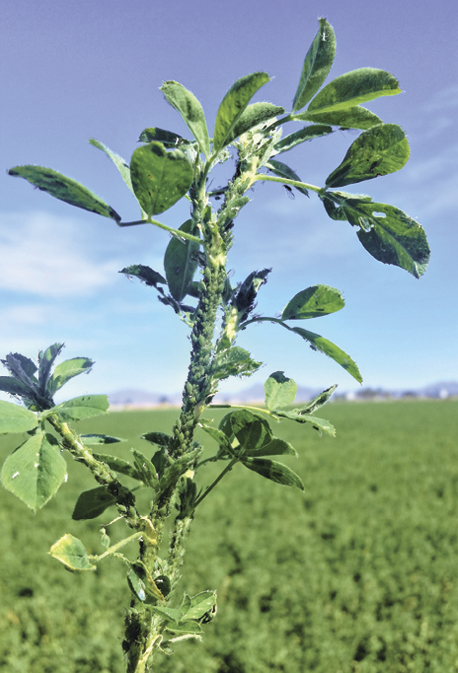


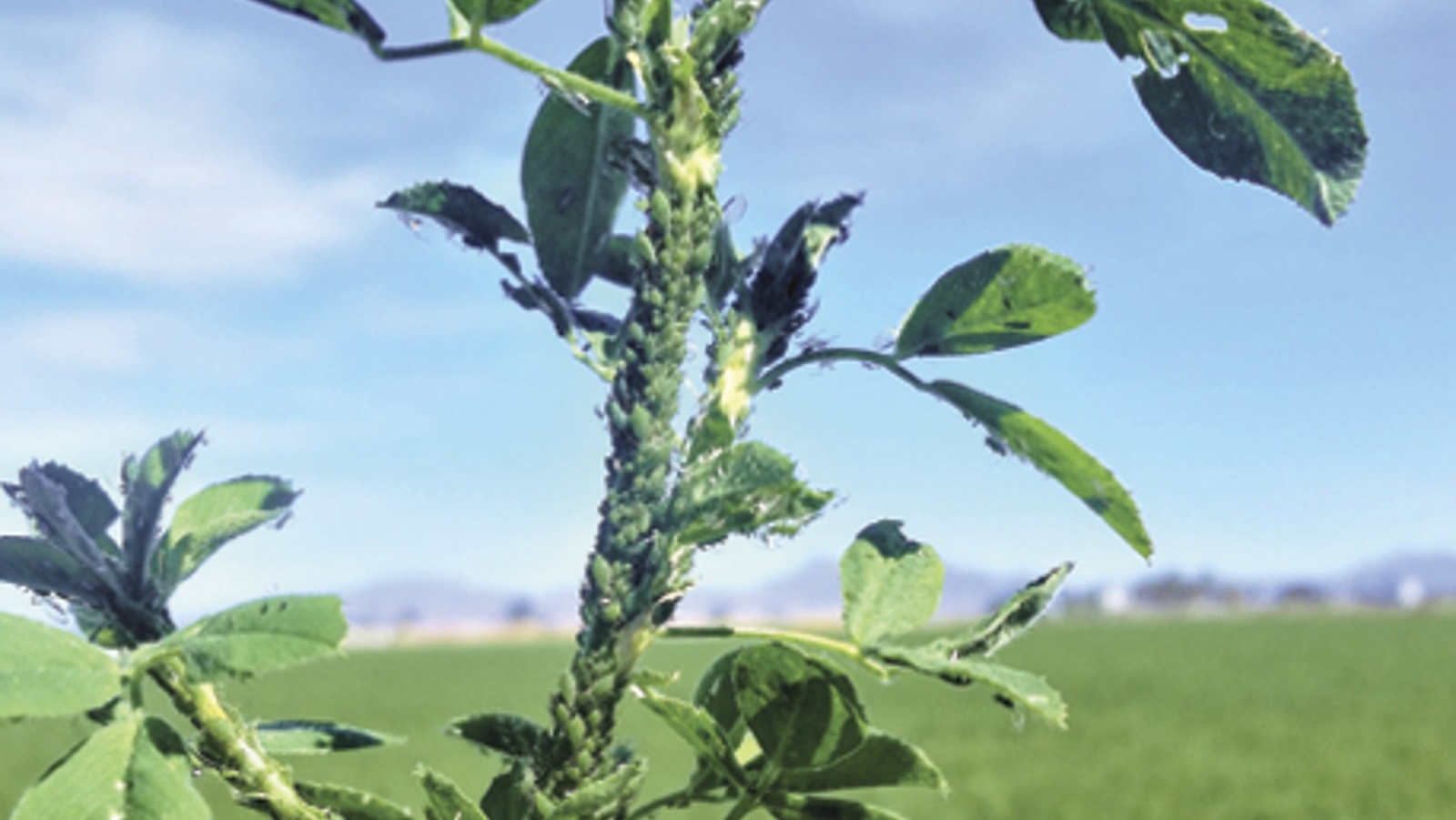
An alfalfa plant is shown infected with blue alfalfa aphids. In cooler regions, the pest often gets to the crop before beneficial predatory insects.
Photo/Suzi Tippet
By Bob Johnson
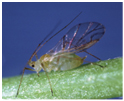
Photo/Courtesy Jack Kelly Clark
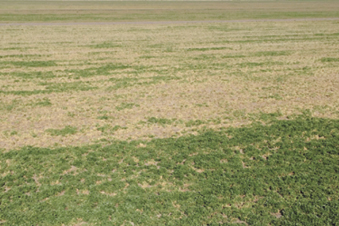
Photo/Courtesy Jack Kelly Clark
The pressure alfalfa growers face from aphids varies widely. Where the crop is grown may significantly impact whether beneficial insects are available to help keep pest threats down.
While weevils are showing varying degrees of pyrethroid resistance in much of the Western region, blue alfalfa aphid control in some areas is taken care of by ladybugs. But in cooler regions, these helpful beetles arrive too late.
"The blue alfalfa aphid has developed into a major pest in the intermountain areas and is reported to be seen though much of the area," said University of California Cooperative Extension farm advisor Michael Rethwisch.
Rethwisch made his remarks as researchers presented their strategies for managing alfalfa insect pests during the 2021 Western Alfalfa & Forage Symposium sponsored by Cooperative Extension in California and nine other Western states in Reno last month.
"Control of blue alfalfa aphids in intermountain areas is challenging, as beneficial insects are not necessarily prevalent early in the year when aphids begin attacking alfalfa," he said. "Intermountain alfalfa is usually growing at a slower rate than low desert alfalfa in mid-March due to cooler temperatures, and due to this slower growth, it is more susceptible to damage by blue alfalfa aphid feeding."
Blue alfalfa aphids are a significant problem in cooler growing areas throughout the Western region, where the pest beats the beneficials to the crop. Its early arrival undercuts the effectiveness of other insects or pathogens that are useful in killing crop pests.
"In Utah, issues were at first isolated to the southern counties, but is now a problem throughout the region," Rethwisch reported. "Yield losses of over 1.2 tons per acre have been reported in some instances in Utah."
In the desert region, recent studies show some materials are more effective in controlling winged aphids while others do a better job with stationary aphids, Rethwisch said.
He said data from 2020 trials indicate distinct differences exist between insecticides for repulsion and "quick knock down" of migrating adult blue alfalfa aphids into plots. He said, "These insecticides do not necessarily have the same results for efficacy of stationary nonwinged aphids."
Rethwisch said insecticides that resulted in the fewest number of winged blue alfalfa aphids were Sefina® and Dimethoate.
In the heart of the Central Valley, growers can usually manage these aphids if they avoid disrupting their ladybug population.
"Ladybeetles and other beneficial insects are more prominent in the Central Valley, reducing dependency entirely upon insecticides for control," Rethwisch said. "Disruption of beneficials by the broader-spectrum insecticides—dimethoate and pyrethroids—have been noted to result in reduced yields by as much as 0.62 tons per acre compared to untreated alfalfa."
While aphid control depends on where growers farm, weevils are a significant issue in alfalfa fields throughout the West. This pest shows signs of widespread resistance to pyrethroids, which are widely used because they are inexpensive and some of the alternatives are heavily regulated.
A team of researchers from Montana and California, led by Montana State University entomologist Kevin Wanner, recently reported that it documented "numerous cases of pyrethroid resistance in alfalfa weevil populations, as well as populations that continue to be susceptible."
The team's report concluded: "These results suggest that the genetic basis for pyrethroid resistance is established and widespread in the Western U.S. region, and pockets of highly resistant alfalfa weevils may result in areas that frequently apply pyrethroid insecticides."
While pyrethroids are losing effectiveness in some areas, growers may be able to take advantage of drones to control pests in hot spots, or where field access or labor availability are challenges.
"Drone technology potentially provides an additional tool for growers to control pests on farms, supplementing traditional ground and aerial spraying practices," said UCCE farm advisor Rachael Long, who compared drone, airplane and ground application of worm control material. "This could be especially helpful where there's a shortage of farm labor for applying pesticides or for small, tough-to-reach places that require spot treatments."
In these early trials, the drones already matched coverage of ground or airplane application of worm control material.
"The spray cards revealed that the drone and airplane insecticide application methods had equivalent spray coverage," Long reported.
There was a difference in consistency, however, and Long said she believes it has to do with the need for more detailed research on drone application techniques.
"Drones are new, and there's a bit more work that needs to be done to fine-tune them for optimum pest control in crops, such as exploring different nozzle types for maximum coverage," Long explained. "While more research is underway, our results show that effective drone applications can be made now with commercial equipment."
Even as research continues, however, the drones already look to be a viable alternative for worm control in alfalfa.
"Drones are a promising and viable option for aerial application of insecticides for pest control in alfalfa fields," Long said.
Overall, she said summer worms were controlled equally well with Prevathon® and Vantacor™ using drone, ground sprayer rig and manned airplane insecticide application methods.
California has a specific unmanned aerial vehicle agricultural pilot license category. That means for most commercial applications, the pilot of the drone is not required to have a commercial pilot certificate. Only a Federal Aviation Agency unmanned aerial vehicle certificate and the California Department of Pesticide Regulation license are needed.
(Bob Johnson is a reporter in Monterey County. He may be contacted at bjohn11135@gmail.com.)
Permission for use is granted, however, credit must be made to the California Farm Bureau Federation when reprinting this item.





.svg.png)
