


From the Fields - Jeff Quiter


Photo/Fred Greaves
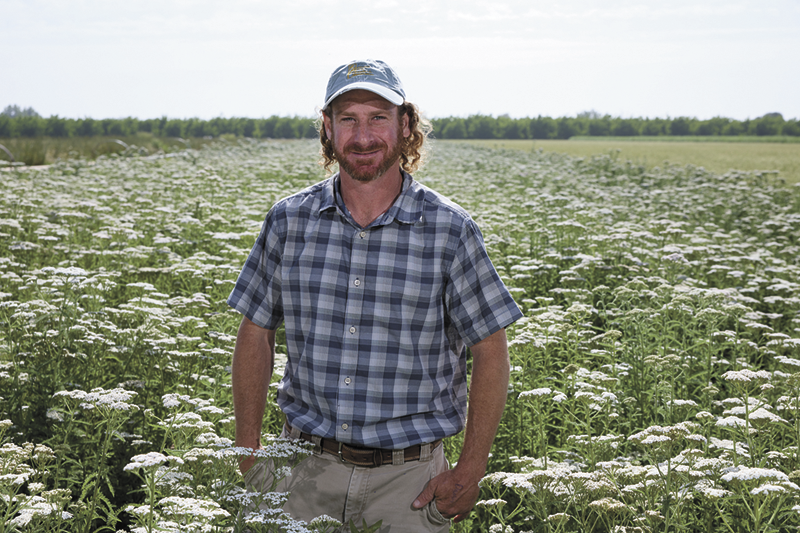
By Jeff Quiter, Yolo County native seed farm manager
We are irrigating our milkweed fields right now. Hedgerow Farms grows milkweed for seed and supplies it to land managers for restoration projects and to seed-packet companies for home gardeners and small-scale projects. Milkweed is important for ecological restoration because it is the only host plant for the Monarch butterfly.
We’ve got two milkweed species from four different locations across the state. Some of it is being used to restore the Klamath watershed after the dam removals. They are using rhizomes—big tubers that grow in the milkweed’s root system—for that project.
For all the native species we grow, we collect the seed from the wild and bring it back to the farm. Then we clean it and test it. We plant milkweed in the spring either by direct seeding it mechanically using a seed drill or by growing out plugs in a nursery greenhouse. Then we irrigate and fertilize the plants. We use healthy-soil practices and hedgerows that provide habitat for beneficial insects to keep the fields pest-free.
We usually harvest milkweed in August or September, either by hand, which is very expensive, or mechanically, which has a much lower yield. We planted late this year, so we will probably start harvesting in September. We’re going to harvest mechanically.
After harvest, we bring the seed back to our cleaning plant and separate the seeds by weight, size, length and density, getting rid of any undesirable material. Then we bag it and ship it to our warehouse in Tracy.
Milkweed is sold in seed packets for home gardeners and small-scale land restoration or pollinator plots. It also goes to large-scale restoration projects like after a fire. That kind of project might use hundreds of pounds of seed to restore hundreds of acres of land.
We are getting ready to harvest California rose mallow, a native hibiscus plant, and purple three-awn, which is a native grass. We are growing a lot of new species this year, including more from the desert, Great Basin and southern San Joaquin Valley.





.svg.png)
