


California Farm Bureau News Briefs
Photo/Licensed image


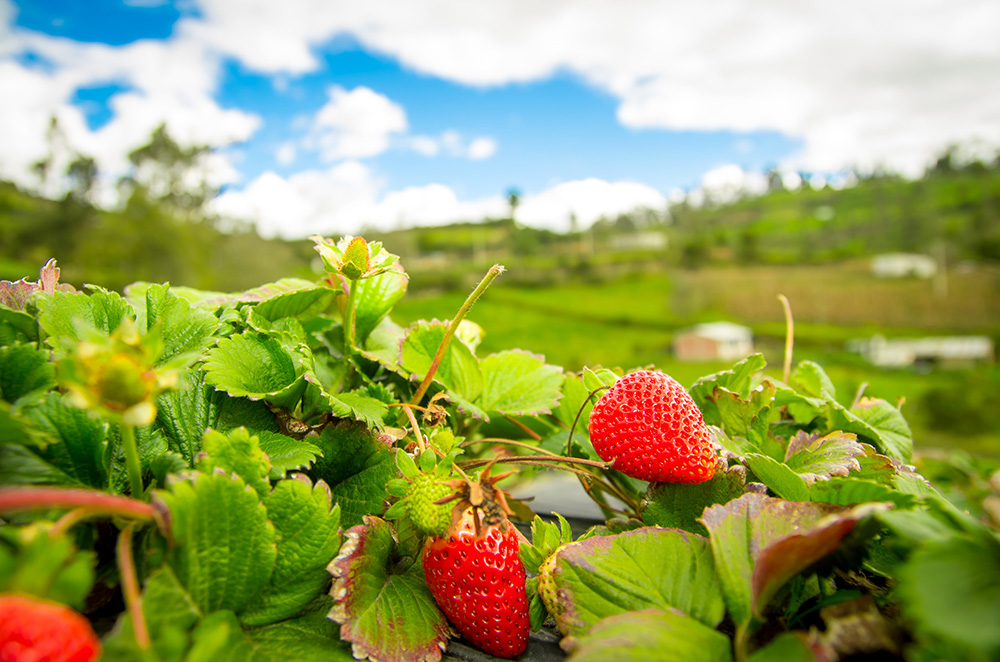
Strawberries
California summer strawberry plantings, which produce fruit in the fall and early winter, have reached a new record of 11,503 acres, up 2.6% from last year, according to the California Strawberry Commission.
The 2025 summer acreage represents nearly 27% of total strawberry acreage, which stands at 42,885, an increase of 1.3% from last year.
The upward trend in fall-producing acreage reflects strong demand from September to November, the commission said.
Meanwhile, fall-planted acres, which are harvested in the spring and summer, are expected to rise 0.9%. They include new plantings of 30,252 acres—up 104 acres from 2024—and second-year plantings of 1,129 acres—an increase of 166 acres from last year.
Second-year acres have increased nearly every year since 2021, the commission reported. Between 2021 and 2025, second-year acres rose by more than 50%. The increase is driven by the need to reduce operating costs, the commission said. Since 2018, second-year acres have increased 600%, or by 968 acres.
Medfly quarantine
A portion of Santa Clara County has been placed under quarantine for the Mediterranean fruit fly following the detection of two wild female flies in the city of San Jose, the California Department of Food and Agriculture said last week.
The quarantine area measures about 109 square miles covering parts of San Jose, Santa Clara, Campbell and Los Gatos.
For a map of the quarantine, visit www.cdfa.ca.gov/plant/medfly/regulation.html.
As part of the standard Medfly eradication effort, the state will release 250,000 sterile male Medflies per square mile per week in an 84.76 square-mile area around the infestation.
In addition, properties within 200 meters of the detection sites are treated with an organic formulation of Spinosad to eliminate any mated females and reduce the density of the population, CDFA said.
To further reduce the population, the department said properties within 100 meters of infested properties must remove host plants and fruit to eliminate eggs and larvae.
Meanwhile, a Medfly infestation centered in and around the city of Fremont in Alameda County has been eradicated, ending a 213 square-mile quarantine that began Sept. 6, CDFA said earlier this month.
Releasing sterile Medflies has proven successful in eradicating the pest in California, the department noted. Sterile male flies mate with fertile female flies but produce no offspring. The fly population decreases as the wild flies reach the end of their natural life span with no offspring to replace them, ultimately resulting in the eradication of the pest.
Pesticides
About 97% of fruits and vegetables sold in California had either no detectable pesticide residues or had residues below federal health-protective limits, according to an annual produce monitoring report released last month by the California Department of Pesticide Regulation.
The results are based on 3,544 produce samples collected in 2023 by DPR staff from more than 500 locations statewide. The unpeeled, unwashed samples were tested for 500 types of pesticides and related compounds. Samples are considered illegal when detections exceed health-protective “tolerances” set by the U.S. Environmental Protection Agency.
The report shows 39% of samples had no detectable pesticide residues; 58% had no pesticide residues above EPA tolerances; and 3% had illegal residues.
Of 379 samples labeled as organic, 2% had illegal residues.
Of the 1,059 produce samples labeled as “grown in California,” less than 1% had pesticide residues above EPA tolerances.
U.S.-grown produce continues to have significantly fewer illegal pesticide residues than imported produce, DPR said. Of the 96 samples with illegal pesticide detections, 83% involved imported produce, the report said.
Fruits and vegetables from Mexico continued to show high percentages of illegal residues, or 6% of the 1,132 samples taken. Ecuador had the highest percentage of violations, with 23% of the 13 samples taken, followed by Guatemala, with 10% of 21 samples, and China, with 9% of 11 samples, according to DPR.
In 2023, DPR issued 103 quarantine notices for more than 154,000 pounds of produce carrying illegal pesticide residues. DPR referred nine cases of illegal California-grown samples to county agricultural commissioners in Fresno, Imperial, Monterey, San Luis Obispo, Stanislaus and Ventura counties for further investigation.
Some produce with high percentages of violations included: yard-long beans, with four of four samples; cactus pear, with three of five samples; guava, with three of seven samples; dragon fruit, with three of four samples; chayote, with two of 14 samples; cilantro, with two of 14 samples; and pineapple, with four of 32 samples.
Meanwhile, DPR is accepting applications for more than $3.6 million in funding for projects to support research, development and implementation of integrated pest management systems and practices; sustainable pest management demonstration projects; and efforts to mitigate the impacts of extreme heat.
DPR will award projects up to three years in length that develop more sustainable pest management tools and practices to reduce the use of pesticides. The department is particularly seeking proposals to address fungicide use, rodenticide use and weed management.
Project budgets may range from $50,000 to $1 million. Applications will be accepted through Oct. 14. For more information, visit www.cdpr.ca.gov/spm-grants/.
For 2025, DPR chose to fund 12 projects from a pool of more than 50 proposals. The selections amounted to more than $1.9 million in Alliance and Research Grants and $1.7 million in contract funding for extreme heat mitigation and sustainable pest management demonstration projects.
During the past 20-plus years, DPR has awarded about $28 million for more than 110 projects.
Glassy-winged sharpshooter
Adult glassy-winged sharpshooters were found during routine trapping in Hanford last month, according to CDFA.
The department said its Pierce’s Disease Control Program is working with Kings County’s agriculture department to determine the size of the infestation and an action plan.
Sharpshooters were found in traps on 18 properties in the region. In response, the state released 1,970 parasitic wasps at two sites in Hanford.
Sharpshooter eradication efforts are also underway in El Dorado, Solano and Stanislaus counties.
Shipping nursery plants is one of the main ways the sharpshooter can spread, CDFA said. More than half the state’s nurseries are in counties where sharpshooters are found, and many ship plants to areas that don’t have the insect.
As of May 31, 15,705 nursery stock shipments have been made to noninfested areas of the state this year, the state reported. One viable sharpshooter was found during an inspection of incoming nursery stock, and five egg masses were stopped during outgoing inspections, CDFA said.
Table olives
California table olive growers are expected to harvest a smaller crop this year.
The 2025 forecast is 44,000 tons, down 10% from last year’s crop of 48,634 tons, according to a survey conducted by the U.S. Department of Agriculture.
Bearing acreage is estimated at 12,000, which results in a yield of 3.67 tons per acre, USDA reported.
The forecast for Manzanillo olives is 41,500 tons. Sevillano olives is forecast at 2,400 tons, and other varieties are expected to total 100 tons, the survey found.
Insufficient labor, increasing input costs and marketing issues continued to be major challenges for California table olive growers, the report said.
USDA sampled 242 growers for the survey, with 192 used to establish the forecast.
Figs
Harvest is underway for the state’s main fig crop, though it is a later start this year due to cooler temperatures in July, according to the California Fresh Fig Association.
The 2025 crop is expected to yield nearly 10 million pounds, comparable to last year’s harvest, the association said.
Hitting the market this season is a new variety called Emerald, which is similar in shape, color and flavor to Calimyrna, a variety that has been largely phased out and is no longer grown commercially in California.
The association said retail enthusiasm is “very high” for Emerald, which has light-green skin and is self-pollinating, unlike Calimyrna, which requires a wasp for pollination.
Other commercial fig varieties grown in California are Mission, Brown Turkey, Sierra and Tiger.
See related news stories...
• Fig growers work to expand the fruit's uses
• Strawberry growers work to keep pace with demand
• Research advances mechanized table olive harvest





.svg.png)
