


From the Fields - Theresa Jeffreys Bright


Photo/Fred Greaves
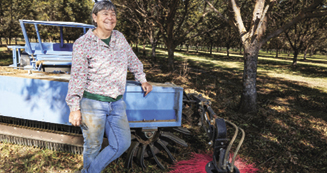
Theresa Jeffreys Bright
Colusa County pecan farmer
With the wet winter we had, the pecans did really well. I had some aphid activity early on. I waited it out, and the beneficials came up enough to where I didn’t have to spray, which is what I really prefer because it is so expensive (to spray). The aphid population is down, and the beneficial population is up, so I think I should be able to weather the storm and not have any aphid damage this year.
I have a fairly good pecan crop. My Pawnees, which hardly did anything last year, are probably pushing 2,000 pounds to the acre. The Wichitas are not quite as heavy this year. They’re probably down a thousand pounds to the acre. I am basically organic, even though I’m not certified. My customers are going for the most natural, most direct, farm-to-fork product.
Because of hit or miss with the orchard, I’m probably going to only harvest a small portion of the pecans. I will be getting the orchard floor ready. I didn’t do weed spray or strip spraying this year. I am trying to do minimal cost management. In just those rows that have a significant crop, I’m doing selective grooming as a cost savings. I haven’t irrigated my orchard. The trees would probably have benefited from it, but because of economics, I saved the water for the row-crop part of my operation that’s grown by a farm tenant. Everything’s going well with those crops.
Fuel cost is way up. Interest rates are up. The interest rates are huge on a farming operation. Most farmers have a production credit line, so you borrow money in the spring to get planted and to do whatever cultural practices you need, and then hope to pay it off after harvest. When you’re having to pay that kind of interest, you’re crossing your fingers that harvest is going to be enough to cover those costs.





.svg.png)
