


Study: Costs surge for growing processing tomatoes


Photo/Kathy Coatney
By Bob Johnson
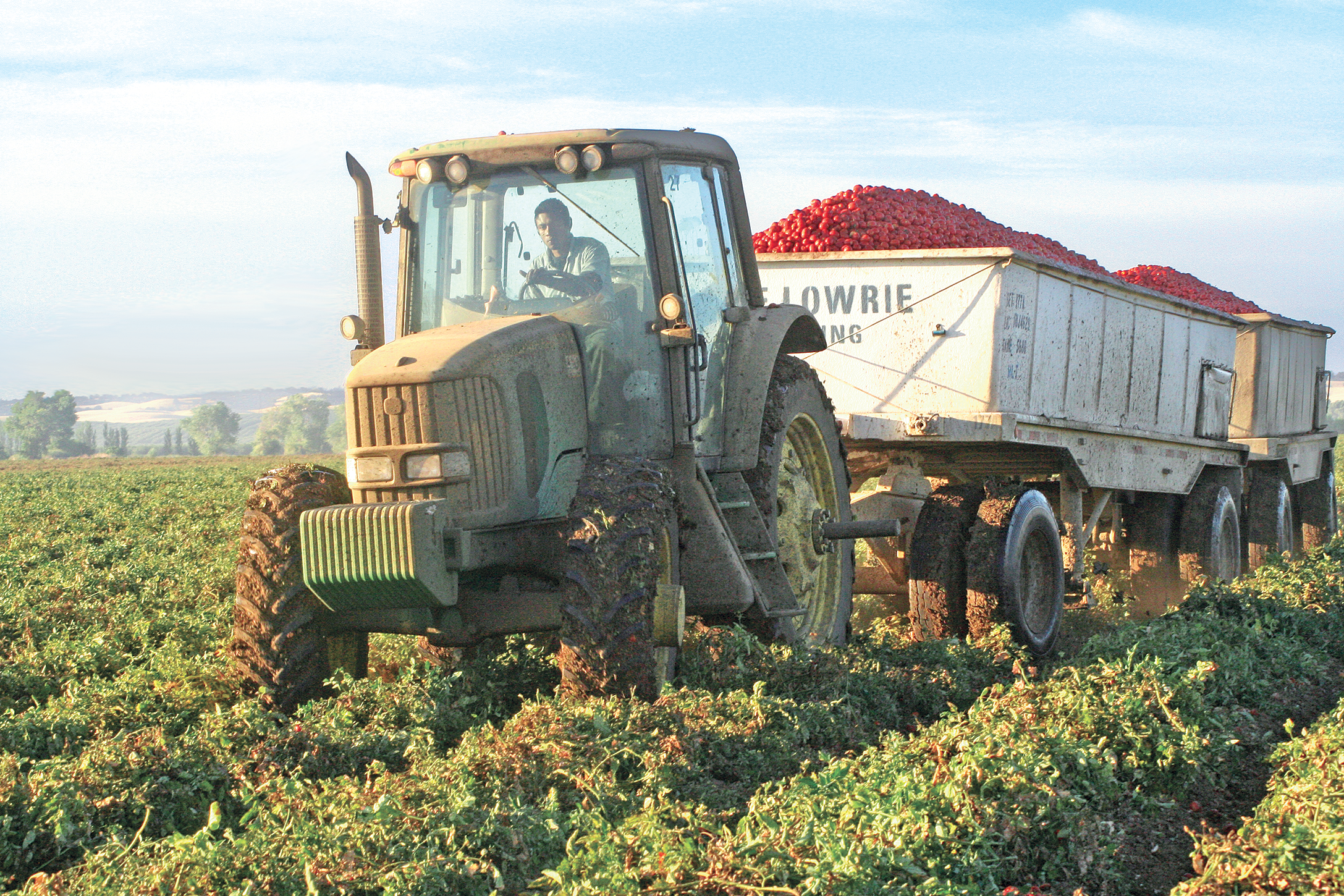
Costs to produce processing tomatoes increased substantially in the past six years, according to a study released in July by researchers at the University of California and UC Cooperative Extension farm advisors.
Based on the 2023 cost analysis for growing processing tomatoes in the Sacramento Valley and northern delta, researchers found that growers face surging input costs for expenses such as water, labor, fuel and fertilizer.
Rising production expenses translate to costs of close to $6,000 per acre to plant, grow and harvest processing tomatoes, study authors at the UC Davis Department of Agricultural and Resource Economics found. This is a 76% increase from 2017, the last time the UC conducted a cost analysis on farming processing tomatoes.
The survey noted that the $6,000 per acre production costs for processing tomatoes include a calculation of more than $1,000 an acre just to establish the plants. Irrigation costs approach $500 an acre, according to the study, while it costs $1,000 an acre for mechanical harvesting and for custom transplanting.
The analysis is based upon a well-managed farming operation of 3,500 leased acres using subsurface drip irrigation. For the study, processing tomatoes are grown on 1,000 acres, and the remaining 2,500 acres are planted to other rotational crops, including alfalfa hay, field corn, safflower, sunflower, vine seed and wheat. The yield of 46 tons per acre is used to reflect typical yields.
While researchers said multiple factors contribute to the rising costs, nothing has increased more in six years than the price of water used to grow processing tomatoes.
Brenna Aegerter, UCCE farm advisor for San Joaquin County, said the cost of water for processing tomato growers has gone up by 85% in six years.
While Sacramento Valley growers have been able to find water even before this year’s rains, the price to access that water remains elevated. The study noted water costs at $120 per acre-foot. It said growers use a combination of district canal water at $65 per acre-foot and groundwater at a cost of $150 per acre-foot to pump.
Aegerter was one of the authors of the study on the sample costs to produce processing tomatoes in the Sacramento Valley and northern delta. She is joined in the work by Patricia Lazicki, UCCE farm advisor for Yolo, Solano and Sacramento counties; Donald Stewart, a staff research associate at the UC Davis Department of Agricultural and Resource Economics; and Gene Miyao, emeritus UCCE farm advisor.
Since the cost study was last conducted, growers have also seen a 72% hike in fertilizer costs, a 66% increase in diesel fuel and a 52% to 63% jump in farm labor expenses, the study noted.
Brittney Goodrich, UCCE specialist and assistant professor at UC Davis, said, “Labor costs have increased substantially, partially due to new overtime regulations, and I was surprised at just how much it amounts to.”
Goodrich added that labor costs, not including harvest, have increased by 34% since 2017.
Processing tomato production in California has shifted north in recent years as droughts and regulatory restrictions have left growers in the San Joaquin Valley without enough water to grow tomatoes.
Average annual tomato yields across the Sacramento Valley and neighboring San Joaquin County in the past five years ranged from 35 tons per acre to 65 tons per acre, according to the study.
While late-winter rains should allow growers to produce more acres and tonnage that bring a premium this year, the weather brings its own set of challenges, Aegerter said.
In addition to increased production costs, Aegerter said growers face “increased risk of losses due to the weather and pests and diseases.”
Growers usually try to stage planting over a period of weeks and months to ensure they can deliver a steady stream of tomatoes to processors rather than a glut that temporarily overwhelms plant capacity.
However, planting was delayed and compacted this year because spring rains made it impossible to get into fields in some areas, Aegerter said.
“We have a lot of uncertainty about how harvest will go this year with too many acres planted at the same time and in a later-than-ideal window,” she said.
“Currently, we have a lot of acres that are trying to set fruit in this heat, and then it will be a challenge to harvest all the acres in a timely manner in the fall, with the usual risks of rain and resulting fruit rot,” she added.
Despite higher overall costs, study researchers concluded that record prices negotiated with processors should allow growers to earn a profit this year. Growers could net a return of $529 per acre for processing tomatoes in the Sacramento Valley. By comparison, a 2017 study showed net returns as negative.
“The current prices for processing tomatoes make it possible for operations to make a profit even though costs have increased substantially,” Goodrich said. But she added, “I also understand crop production risks are high for this perishable crop.”
Researchers say the return was calculated based on a record price of $138 a ton for tomatoes that the California Tomato Growers Association negotiated with processors. That is 31% higher than the 2022 base price of $105 a ton.
“When the tomato price was set, there was uncertainty about the continuation of the drought as it was before all the rain” in 2023, Aegerter said.
The study was based on interviews with growers and is intended to provide general guidelines for management decisions. The reporting counties were Colusa, Sacramento, San Joaquin, Solano, Sutter and Yolo.
(Bob Johnson is a reporter in Monterey County. He may be contacted at bjohn11135@gmail.com.)





.svg.png)
