


Central Coast ranchers promote sustainable grazing
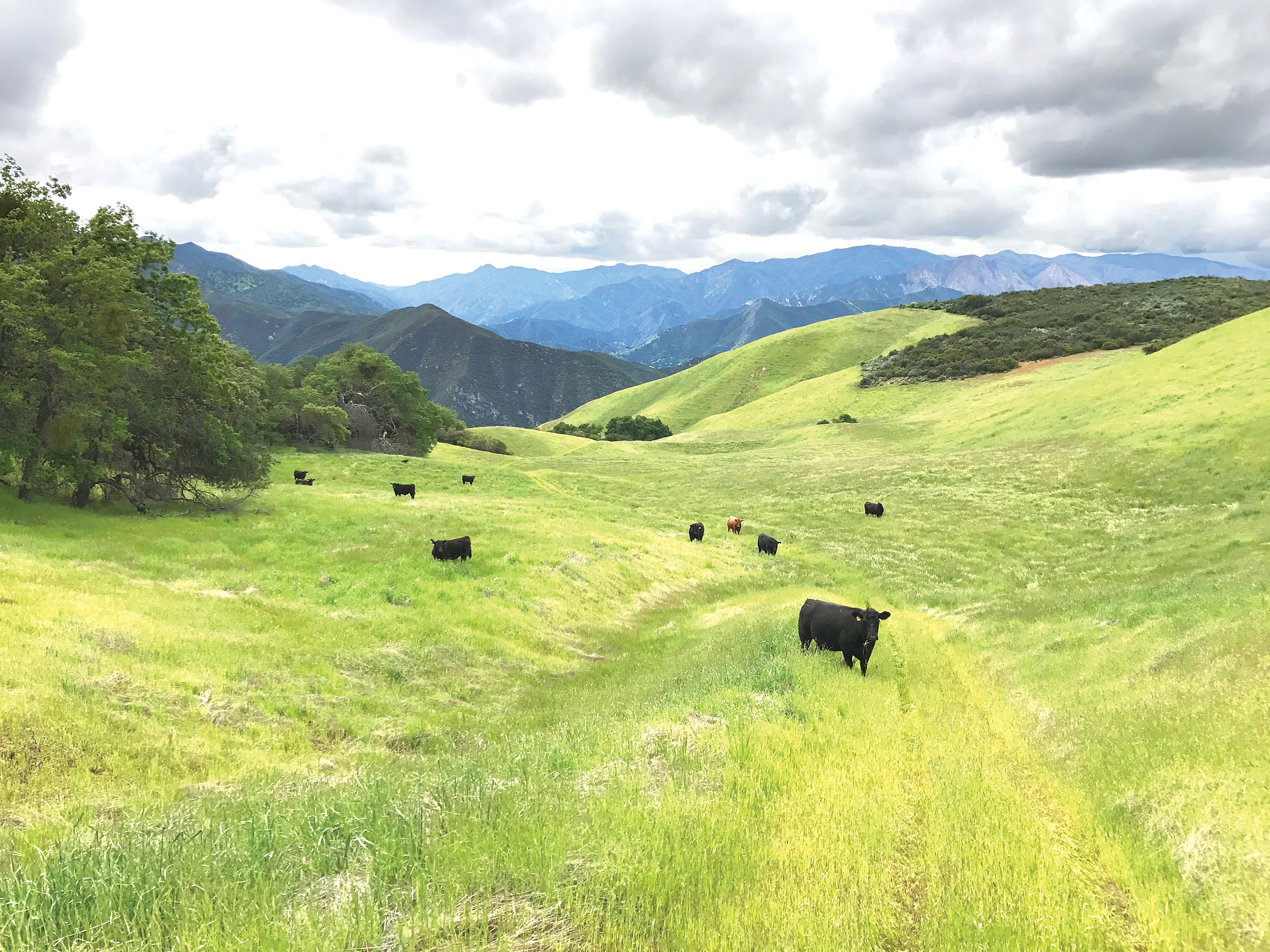
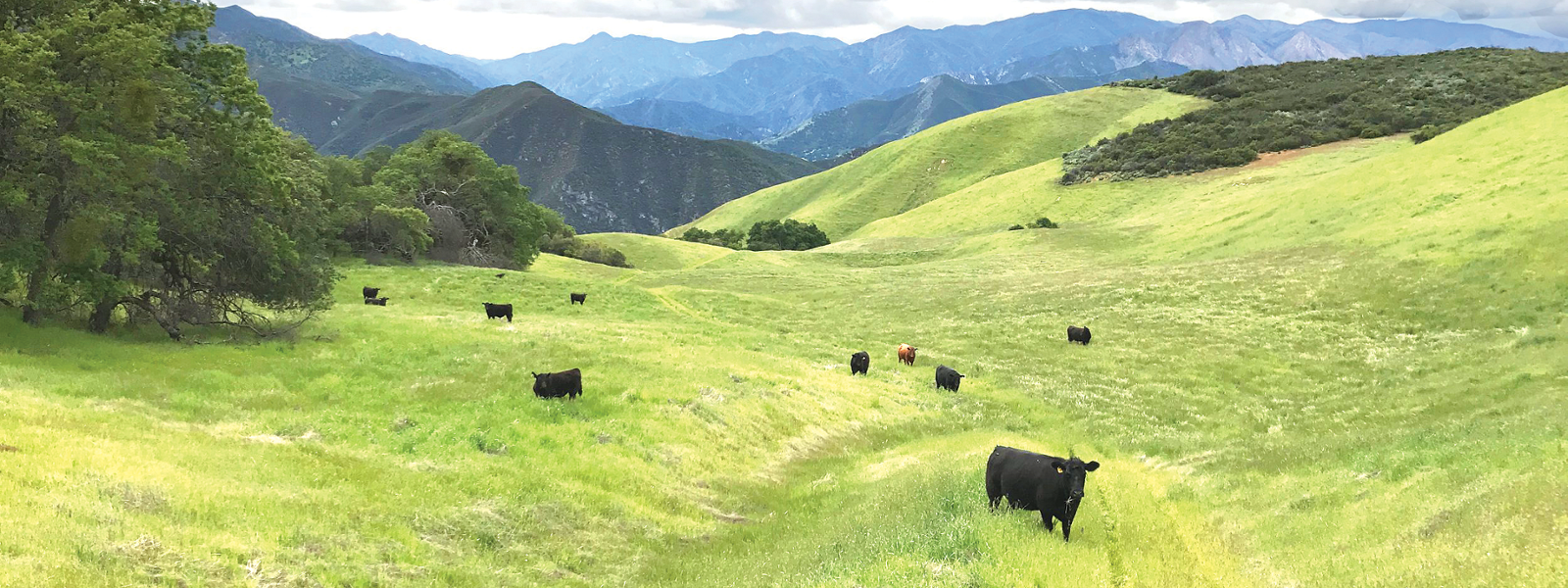
Beef cattle belonging to Corral de Tierra Cattle Co. in Monterey County are managed using a rotational grazing program designed to promote the natural diversity of the mountainous landscape.
Photo/Corral de Tierra Cattle Co.


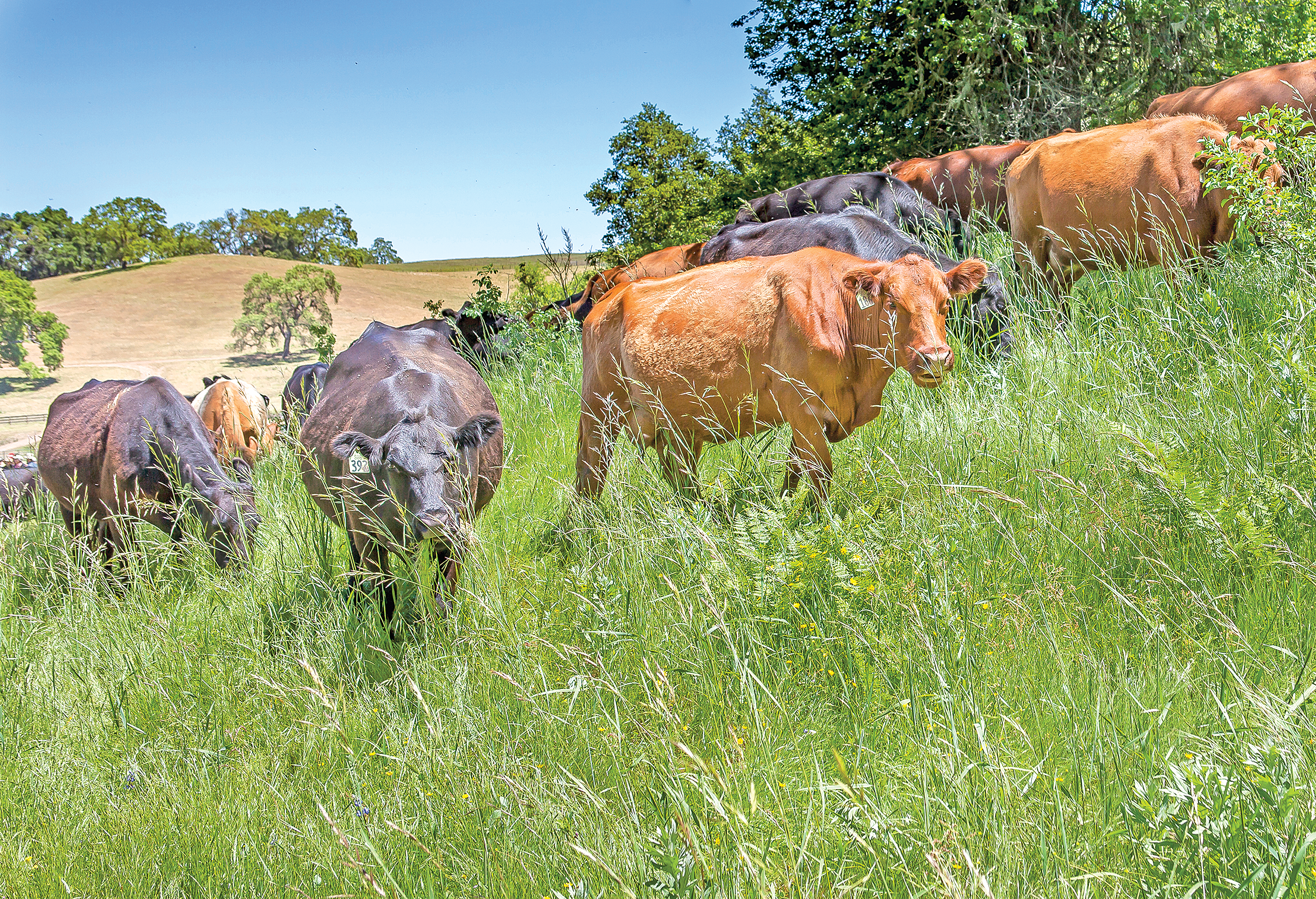
Photo/Saxon Holt/PhotoBotanic
By Caitlin Fillmore
Jeff Mundell, ranch manager at Gabilan Cattle Co., juggles diverse microclimates and geography across 11,500 acres of the mountainous Gabilan Range on the Central Coast.
The grassland plateau straddles Monterey and San Benito counties and includes the nearly 3,200-foot Fremont Peak. The Gabilan Cattle Co., with its 350 head cows-calf operation, serves as the headwaters for Gabilan Creek and Bird Creek, which respectively empty into the Salinas and Pajaro rivers.
The cattle company and some Central Coast livestock operations have embraced regenerative agricultural practices that seek to improve soil and animal health, with the goal of sustaining the environment in which they operate.
Mundell uses strategies such as intensive grazing in which cattle graze in selected areas and then are moved to allow regrowth for at least a year. Regrowth took off after heavy rains this spring, as dormant seed profiles underground sprang back to life. Native plants such as purple needlegrass, giant creeping rye, California oatgrass and blue-eyed grass established new footholds.
“Some of the plants we haven’t seen for 50 years can start to express as the soil changes with herd impact,” Mundell said. “The relationship between (grazing) impact and rest can push back a lot of invasive plants and allow native plants ability to express themselves.”
Perennial grasses have tripled on the ranch, adding deep-rooted plants into the landscape. The grasses also add more protein to the landscape, Mundell said.
“We can use animals to enhance the ecosystem, to enhance this landscape and California as a whole,” Mundell said.
Regenerative agriculture, whether applied to farming, forestry or ranching, contains a few basic components: soil health, biodiversity, water management and overall farm resilience, said Wendell Gilgert, director emeritus of the Working Lands Program at Petaluma-based Point Blue Conservation Science.
With cattle ranchers in his family since 1851, Gilgert said California suffers today by not mimicking the ecological processes that occurred “for millennia.”
“It’s not necessarily shifting the mindset away from a myopia of production, production, production,” Gilgert said. “It’s widening goals to embrace an ecological goal. When you apply ecological principles along with production goals, you come to a different mindset.”
Gilgert said viewing animals as part of the solution is similar to when creatures such as elk and bison helped manage and sustain the landscape.
“There has to be a broader recognition that cows are not the problem,” he said. “They are surrogates for herbivores that used to roam California’s landscape. We need them.”
But amid heavy atmospheric storms this year, the regional landscape and microclimate conditions—including sustained freezing rain—combined to put Mundell’s herd of mixed-Angus cattle in jeopardy. By mid-June, he was still collecting displaced cattle from deep in the rangeland’s canyon and from neighbors’ herds.
Yet the aftermath of the storms gave rise to lush fields for grazing, after prolonged drought dried pastures and drove up feed costs for California ranchers.
“I hope it’s another wet year next year,” said Monterey County cattle rancher Mark Farr. “I could get used to years like last year. The water for grass and cattle is a nice sight to see.”
Farr oversees a flexible, rotational grazing program at Corral de Tierra Cattle Co., which has 150 Angus cattle on 4,000 acres of rangeland in the Arroyo Seco region in south Monterey County.
He said this year’s storms underscored the importance of sustainable grazing practices.
“Through rotational grazing,” Farr said, “we feel our land has a better opportunity to catch the moisture that falls, stay growing and fertile longer during drought and provide a more diverse ecosystem for our cattle and the wildlife that call our ranch home.”
Gilgert said ranchers are buying into proactive practices that integrate native plants and use rotational grazing to protect against soil erosion over time.
“If you lose the thickness of a dime over an acre, you lose 5 to 10 tons of topsoil,” said Gilgert, adding there is new urgency to safeguarding that topsoil.
If not, he said, cattle production can wither, and “all of a sudden, that ranch that could sell 400 calves a year sells 200.”
Increasing organic matter in the soil by just 1% on cattle ranches results in holding an additional 13,000 to 22,000 gallons of water per acre each year, Gilgert said.
“For every 20 to 25 acres, (ranchers) would hold an acre-foot of water more in the soil profile,” he said. “Everybody talks about building a reservoir, but nobody talks about soil as a reservoir.”
Mundell and Farr partner with various conservation agencies on land management policies.
Gabilan Cattle Co. works with organizations including The Nature Conservancy and California Department of Fish and Wildlife. Corral de Tierra Cattle Co. is a member of California Rangeland Conservation Coalition and Big Sur Land Trust.
The ranchers say dedicated steps toward sustainable land practices are paying off.
“It’s a slow process trying to build resilient landscapes,” Mundell said. “Anything we can do to prepare for unpredictable weather events is money and time well spent.”
(Caitlin Fillmore is a reporter in Monterey County. She may be contacted at cslhfillmore@gmail.com.)





.svg.png)
