


Searching for tasty wheat that's safe from disease
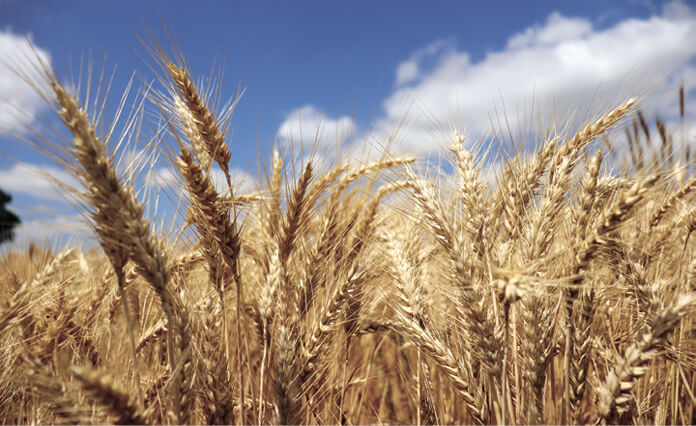


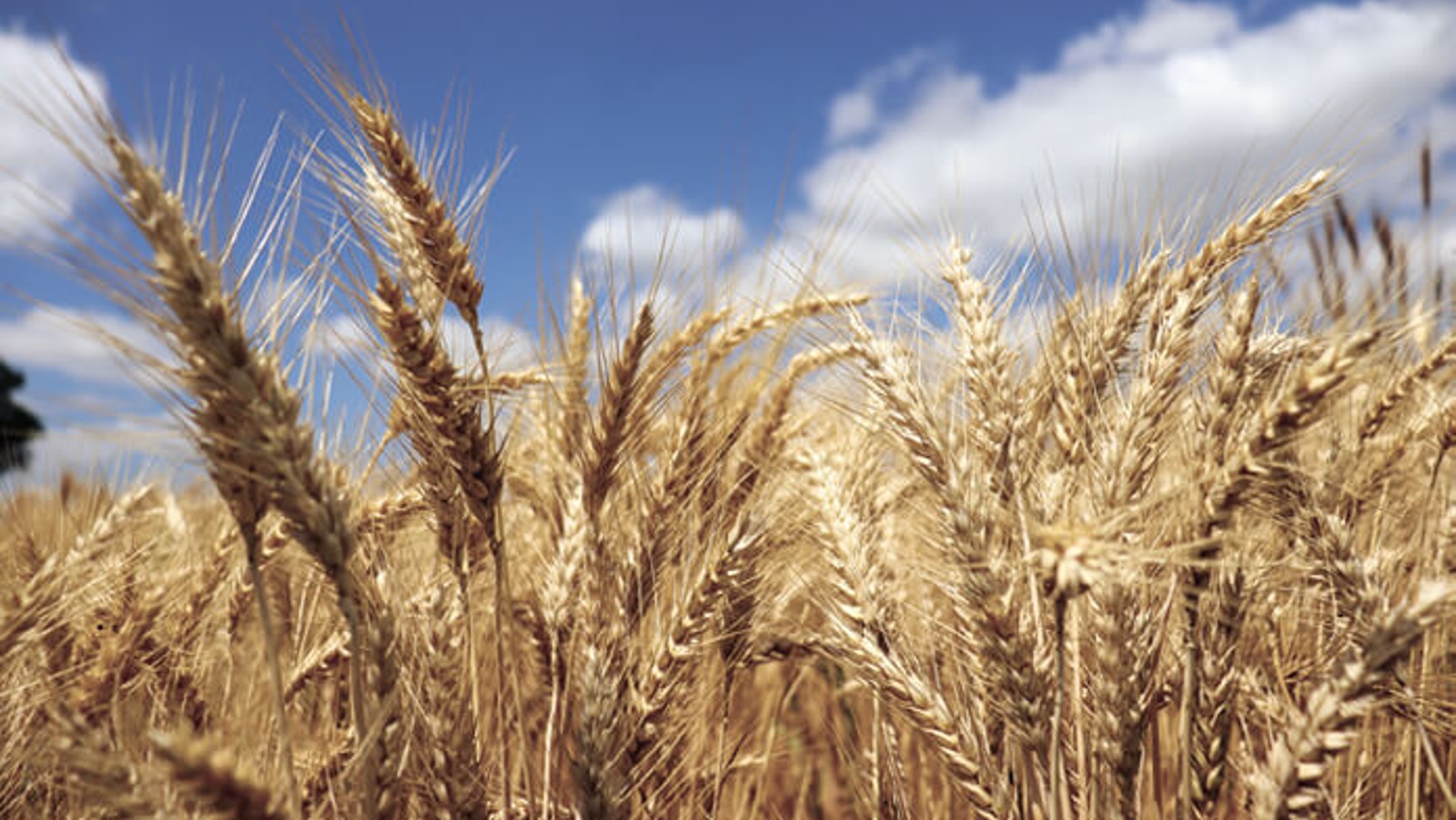
Hard red wheat thrives in a California field. University of California researchers are studying new wheat varieties with more resistant starch, which makes them safer from rust disease, more nutritious and appealing to artisan bakers for taste and texture
Photo/Courtesy of the California Wheat Commission and the Golden State Grains
It has been 50 years since the Yecora Rojo variety of hard red wheat was brought to California from its native Mexico, and the venerable variety has stood the test of time largely because of its baking quality.
Last year, California growers planted 17,000 acres of Yecora Rojo, making it the fifth most widely planted hard red wheat variety in the state, despite its susceptibility to the rust disease that wiped out entire wheat fields as recently as the turn of the 21st century.
University of California researchers have developed and released a version of this variety that retains its baking quality but has resistance to stripe rust.
"Yecora Rojo is a variety that has been popular for 50 years, but it is very susceptible to stripe rust," said Jorge Dubcovsky, University of California, Davis, grain geneticist and wheat breeder. "Yecora Rojo 515 has resistance to stripe rust."
As recently as 2017, California growers harvested 420,000 acres of wheat, with the harvest split roughly evenly between feed for dairies and grain for bakers.
Just four years later, however, the wheat harvest is down to 300,000 acres this year as water shortages and competition for land from more lucrative crops continue to take their toll.
For the future, UC wheat breeding efforts are focused on qualities that suit specialty markets that could bring growers a premium, improved yields and superior disease resistance.
Stripe rust is the most important disease in wheat, which is why many traditional varieties have been fortified with the Yr5 and Yr15 resistance genes. Because the disease can evolve to overcome variety resistance, UC researchers continue to search for more resistant genes and published the Yr48 and Sr60 genes this year. They are headed toward publishing the Yr78 gene.
In recent years, UC has released wheat with more resistant starch, which makes it more nutritious, and released a variety with yellower flour that holds promise among artisan bakers.
Wheat yields could benefit in the future with the discovery of genes that make for larger grains, or for more grains on each spikelet.
"We are continually trying to develop new and improved varieties," Dubcovsky said as he ran down the latest improvements in hard red, hard white and Desert Durum wheat varieties.
The 515 at the end of the name of the new, improved version of Yecora Rojo indicates that it, like other wheat varieties with that number, has been improved with two resistance genes. UC researchers discovered them after the epidemic two decades ago.
Rust resistance is a major priority of UC wheat breeders, and they even have resistant genes in reserve should the disease overcome varieties introduced over several years.
"We not only have resistant varieties, we have resistant genes in reserve if the disease overcomes that resistance," said Dubcovsky, who currently has the upper hand on the disease he has battled for decades.
Another priority of the breeding program is developing varieties that will produce ever-increasing yields of the highest quality bread-making grains.
"UC Central Red released two years ago is among the highest producing recommended varieties," Dubcovsky said. "Give it a try. You will not be disappointed."
The "recommended" varieties, the highest bread-making quality grains based on testing from years of trial data from all the state's wheat-growing areas, are part of a California Wheat Commission effort to convince growers to use plant varieties that will improve the state's reputation among millers and bread makers.
In three recent years of Sacramento Valley trials, UC Central Red had the highest yields of the "recommended" hard red varieties, followed by Sienna, WB 9229 and Joaquin Oro.
Another UC wheat star in the making could be UC 1932, which produces an abundance of unusually large grains.
"UC 1932 has 15% higher yields than Patwin 515 HP," Dubcovsky said. "The grains are huge, and it has a high baking score. We are very excited."
Patwin 515 HP is the most widely planted white wheat variety in the state, according to the California Wheat Commission annual grower survey.
In the most recent UC trials, the widely planted Patwin 515 HP yielded a little less than 9,000 pounds an acre, but a few feet away, the large-grained UC 1932 produced more than 10,000 pounds.
The Patwin variety does have higher protein content, as the HP in its name refers to high protein genes that have been crossed into the original Patwin.
California and Arizona growers already receive a premium for their patented Desert Durum wheat, which is prized by Italy's pasta makers.
Most of the 25,000 acres of durum grown in the state are in the Southern California desert fields, where growers can take advantage of the premium paid for patented Desert Durum.
These growers may soon benefit from durum varieties capable of greatly improved yields.
In the most recent trials, a fast-rising UC durum variety, Desert Gold, yielded 10,591 pounds an acre with protein a little less than 12%. The most promising experimental varieties, UC 1927 and UC 1928, both yielded more than 11,000 pounds with protein approaching or exceeding 13%.
(Bob Johnson is a reporter in Sacramento. He may be contacted at bjohn11135@gmail.com.)





.svg.png)
