


Produce marketers pitch to cafeterias, young consumers
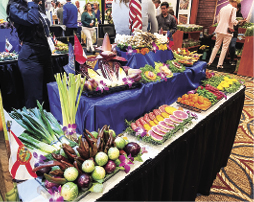
Healthy produce selections are on display at the Foodservice Conference of the International Fresh Produce Association, held in Monterey.
Photo/International Fresh Produce Association


By Bob Johnson
Celebrity chef Robert Irvine, host of the Food Network’s “Dinner Impossible” culinary series for 24 seasons, came to a conference of the newly created International Fresh Produce Association on a determined quest.
“I’m on a mission to educate mothers, fathers and grandparents on the benefits of fresh vegetables and fruits,” he said. “If it comes out of the ground, it is better than if it comes out of a can or is frozen.”
Irvine’s keynote address at the Foodservice Conference in Monterey last month outlined a cause embraced by the produce industry: increasing consumption of fresh fruits and vegetables, starting with the youngest generation.
That effort emphasizes the importance of making fresh produce more available at America’s school cafeterias.
“If we do not change the trajectory of children’s eating habits, they will be the first generation that will not live as long as their parents,” said Cathy Burns, CEO of the International Fresh Produce Association, which was formed last year by the merger of the Produce Marketing Association and United Fresh. “My vision has always been fruits and vegetables in the center of the plate with protein as a garnish.”
Presentations at the July 27-28 Monterey event emphasized the importance of fresh produce to improve the health prospects of wide swaths of the population, including students from kindergarten through high school, members of the military and low-income families relying on the federal Supplemental Nutrition Assistance Program, or SNAP.
Burns spoke during a session with nearly 100 K-12 meal planners from school districts around the country in attendance.
The school meal planners kicked off the conference with a tour of the nearby Salinas Taylor Farms plant. Meanwhile, speakers advised grower-shippers on the importance of offering plant-based products that are convenient and flavorful.
“We’re trying to be America’s favorite maker of salads and healthy foods,” said Taylor Farms CEO Bruce Taylor. “By making products convenient and ready to eat, we bring more people into the market. No one’s going to eat their vegetables because the government tells them to, but we have the opportunity if we pay attention to taste.”
The conference also underscored how California grower-shippers are creating new product packaging and hyping updated produce selections to make vegetables more convenient and inviting for kitchens and food customers.
The event featured a Fresh Ideas Showcase, where farm marketers presented leafy greens in appealing displays. They were looking to provide more healthy options to restaurants, hospitals, school districts and other food-service outlets whose representatives were in attendance.
Misionero Vegetables of Gonzales used the setting to debut its new Deli Leaf, a crunchy and smooth hybrid lettuce to serve as sandwich or burger toppers.
Castroville-based Ocean Mist Farms took advantage of the showcase to display food-service packs of fresh-cut and washed baby artichokes and other vegetables.
Gold Coast Packing of Santa Maria introduced a chopped cilantro, using new packaging that can keep the product fresh for longer than two weeks.
Taylor suggested that rising prices for animal protein are giving produce growers an opportunity to take a larger share of the food market.
Meanwhile, award-winning chef Michel Nischan discussed his vision for making produce-based diets available to millions of Americans who live with food insecurity.
“We’re lobbying to have produce prescriptions reimbursed by Medicaid,” he told the gathering. “If you put that money into specialty produce rather than pharmaceuticals, you’re going to create more jobs. This is a business opportunity.”
He is a leading advocate for the Food is Medicine movement and advocates using food-product businesses to generate funds for charitable activities.
Nischan is co-founder and chair of Wholesome Wave, which sells large batch plant-based soups to colleges and universities, hospitals and hospital systems to raise funds to double the value of SNAP coupons in select communities for buying produce at local farmers markets.
Most recently, he has contributed funds to a campaign to make fresh fruits and vegetables available to lower-income people through public health programs.
The International Fresh Produce Association was in Washington, D.C., in early May to lobby Congress about making fruits and vegetables more available as part of national health policy. Meanwhile, Irvine, the Dinner Impossible chef, has given his time to advise the U.S. military on offering troops healthier food.
“Up until recently, we haven’t cared about the people,” said Irvine, who noted research that says obesity costs the military more than $1 billion a year in healthcare and lost productivity.
He said “young soldiers want better food,” adding, “vegetables are not a second priority—they are the first priority.”
Irvine challenged produce growers to take the lead in building momentum for healthier plant-based diets.
“It’s the farmer’s job,” he said, “to educate consumers about what it takes to grow their food.”
(Bob Johnson is a reporter in Monterey County. He may be contacted at bjohn11135@gmail.com.)





.svg.png)
