


Dairies use IVF to tap strong beef market
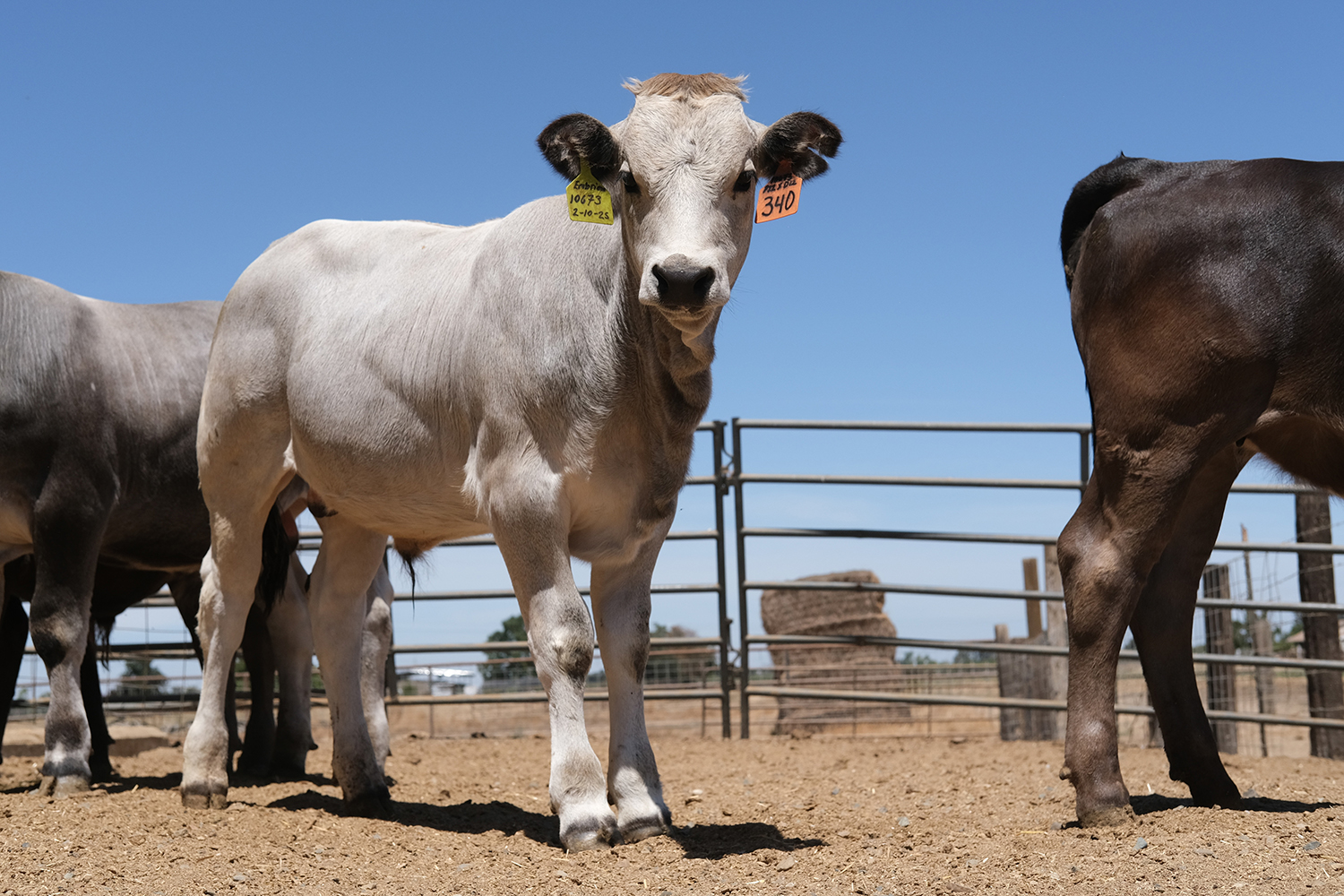
A Gascon calf wears a yellow ear tag indicating the calf came from an embryo that was transferred to a surrogate dairy cow in San Joaquin County.
Photo/Caleb Hampton


By Caleb Hampton
Recent improvements in bovine reproductive technology have given dairy farmers greater access to a lucrative market segment. Within the past few years, more dairies have begun transferring beef cattle embryos to dairy-cow surrogates, cashing in amid soaring demand for the calves.
“It’s becoming a much bigger piece of the puzzle,” Tulare County dairy farmer Blake Wilbur said. 
With milk prices fluctuating in recent years, dairy farmers have looked to the beef market as a “risk management opportunity,” said Daniel Munch, an economist at the American Farm Bureau Federation. “They’re also becoming beef producers.”
Retired dairy cows have long been culled and used for low-priced steaks and ground beef. And during the past decade, breeding a portion of dairy herds with beef genetics has become common, as dairies earn a premium for crossbred calves.
More recently, embryos made through in vitro fertilization have enabled dairies to sell purebred calves into the beef supply chain.
“There is always value in a black calf,” said Sean Nicholson, who farms with Wilbur in Tulare County, referring to the Angus calves their Jersey cows began birthing during the past couple years.
The reproductive strategy has gained traction on dairies in the San Joaquin Valley.
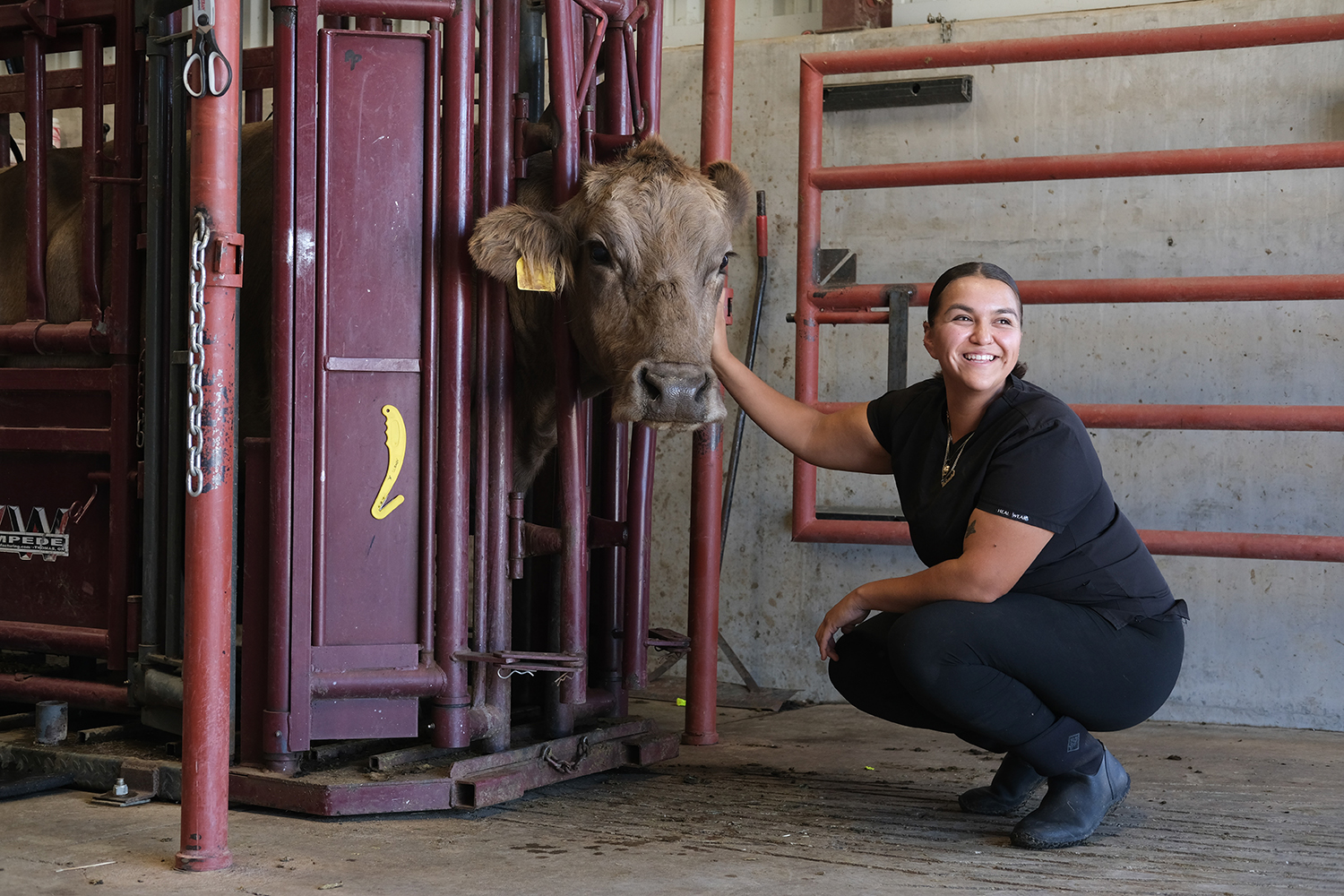
“It’s definitely gotten more prevalent,” said Michael York, a veterinarian in San Joaquin County who takes care of calves made from embryo transfers.
Veterinarian Clint Walhof said he has worked this year with 15 dairies that are using embryos to produce beef calves.
“It has increased a lot,” said Walhof, who is based in Tulare County. He estimated the number of dairies at which he transfers beef embryos roughly doubled within the past couple years.
Photo/Caleb Hampton
The development of three technologies paved the way for the emerging use of embryo transfer, according to Alison Van Eenennaam, professor of animal genomics and biotechnology at the University of California, Davis.
In 2009, dairies began taking skin samples from their cows to create a genetic profile of the herd. Genomic testing identified the best milking cows, roughly the top third of which are used to breed replacements.
Around the same time, the development of sexed semen ensured those high-performing cows would almost always give birth to heifers and not bull calves.
“That meant the majority of the animals—the low end of the herd—were then available to gestate something that’s not a dairy replacement heifer,” Van Eenennaam said.
Finally, recent advances in IVF made it possible to make embryos with better pregnancy rates, lowering the overall cost for farmers. Previously, embryo transfers were done by flushing already-formed embryos from donor cows, a labor-intensive procedure that largely limited its use to specialized purposes, such as breeding show animals.
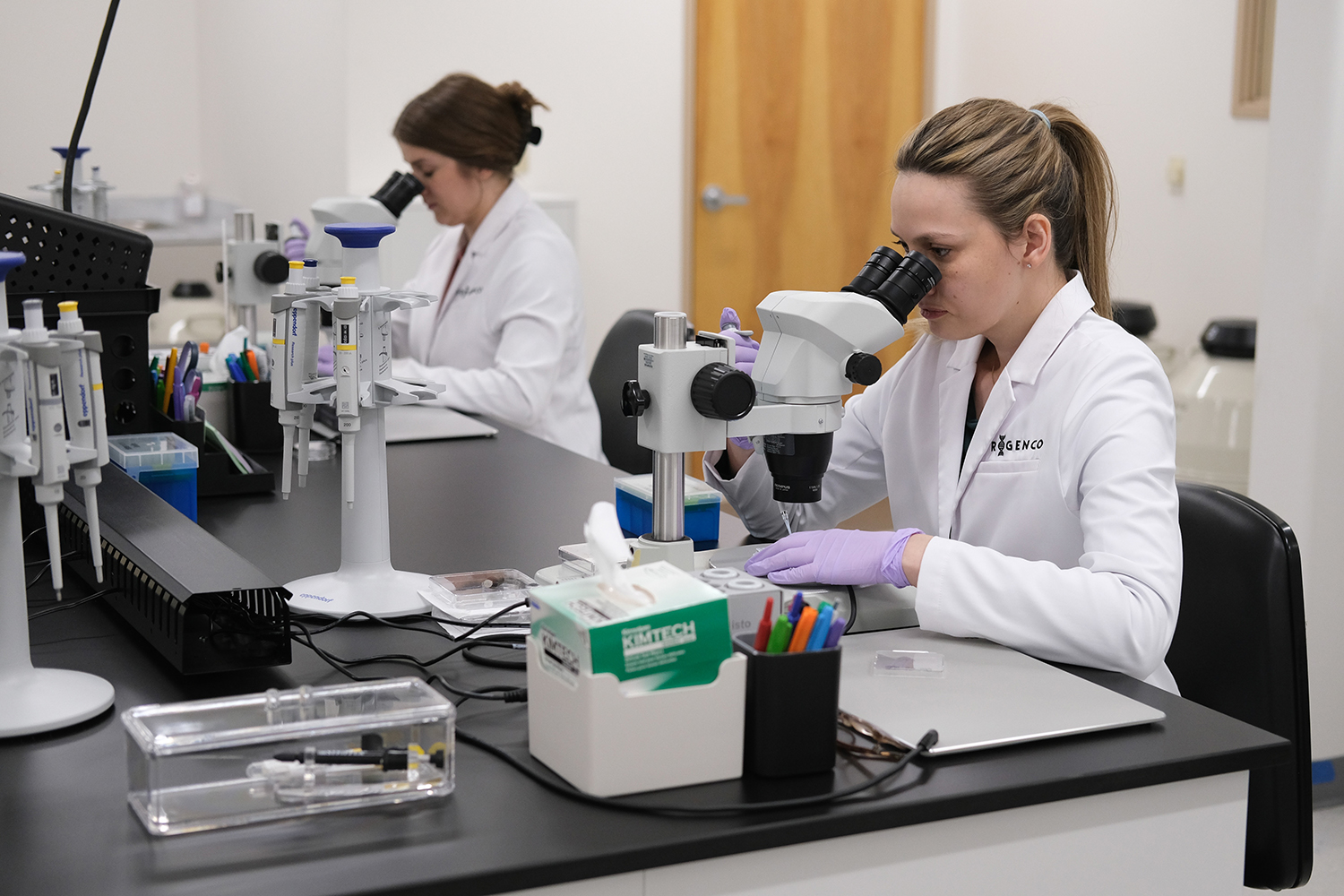
“We saw an opportunity to use emerging technologies—namely IVF—to bring the best beef genetics into the dairy industry,” said Chris Donati, a fifth-generation cattle rancher and owner of the Davis-based bovine genetics company Progenco. Since its founding in 2020, the company’s business has grown “fairly consistently,” Donati said, expanding to supply beef embryos to dozens of dairies, mostly in the San Joaquin Valley.
Photo/Caleb Hampton
“The more that embryos can match the fertility of just using semen, the more I think we’ll see adoption of embryos,” Van Eenennaam said. “It doesn’t make sense to produce a hybrid when you could have a purebred that is better suited to the beef market.”
Walhof estimated pregnancy rates from IVF-made embryos have increased by as much as 25% in the past decade. “The labs are producing embryos now that are essentially the same as an embryo that would be created in the cow,” he said.
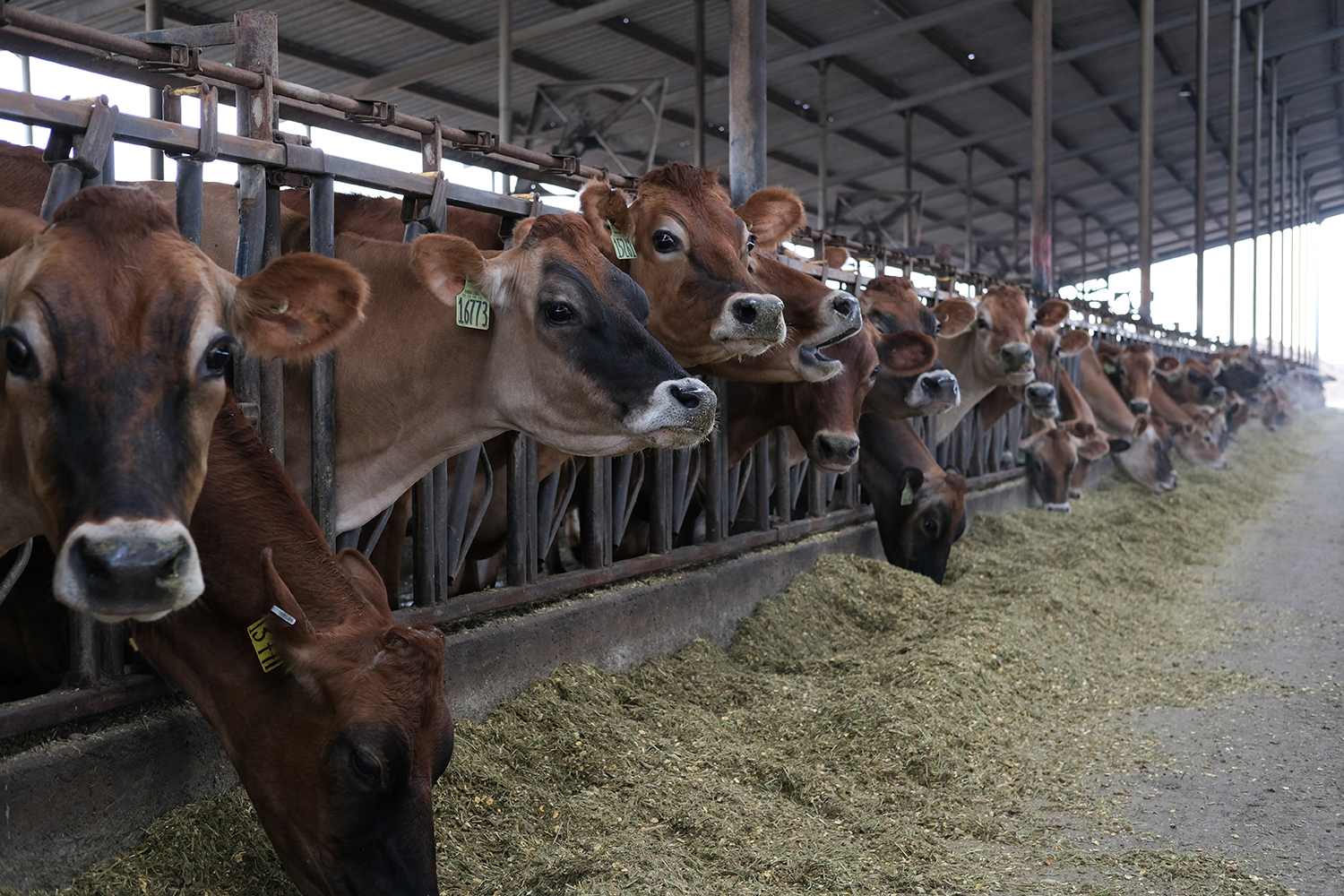
Nicholson, the Tulare County farmer, uses beef embryos for about 7% of the pregnancies in his herd of 1,600 milking cows.
Pregnancy rates from embryo transfers on his dairy have not only matched those of artificial insemination—generally around 50%—but surpassed them.
“They’re markedly better,” Nicholson said, especially during summer months when dairy cows’ fertility typically drops due to hot weather.
Taking into account service expenses and failed attempts, Nicholson said a pregnancy from beef semen—producing a crossbred calf—costs him about $25, while a pregnancy from a beef embryo might cost around $125. As of last week, buyers were paying about $400 more for the purebred Angus calf, which is typically sold at a day old.
“It’s a good margin,” he said.
Nicholson added that the economic opportunity in beef embryo transfers may be limited to dairies with Jersey cows. That’s because Holstein cows are bigger and better beef animals, and an Angus-Holstein crossbred calf already sells for almost as much as a purebred Angus calf, so the added input cost may not justify itself.
Photo/Caleb Hampton
Jeremy Howard, sales and marketing manager at Simplot Animal Sciences, which since 2020 has partnered with the cattle genetics cooperative Select Sires to produce beef embryos for dairies, said day-old Angus-Jersey calves sold last month for around $800, while Angus-Holstein crossbreeds sold for $1,200. The company’s purebred Angus calves fetched around $1,250.
Prices for beef calves are at or near record highs due to historically low U.S. cattle inventory. The overall beef cattle herd is not expected to recover to average levels until 2031, according to a U.S. Department of Agriculture analysis published in March, though Howard noted that calf prices can be “extremely volatile” from week to week.
It may be too early to determine whether embryo transfers will become the next trend on dairies or remain a small subset of beef-on-dairy.
Continuing to transfer beef embryos to some of his herd is “worth it,” Nicholson said, but he isn’t planning to phase out crossbreeding, which still accounts for the vast majority of his beef-on-dairy program.
Compared to using artificial insemination for crossbreeding, embryo transfers require more capital up front, which isn’t recouped until the calves are sold nine months later.
“You’re putting a lot of money out there, and you don’t know what the cattle market is going to do,” Nicholson said. “There is more gain, but there’s also more risk.”
Caleb Hampton is assistant editor of Ag Alert. He can be reached at champton@cfbf.com.
See related news stories...
• Fish and Game ditches proposal to limit coyote take
• Tariff uncertainty hurts agricultural exports, economy
• California dairies make progress in cutting emissions





.svg.png)
