


Innovation grant program boosts 'old school' dairy


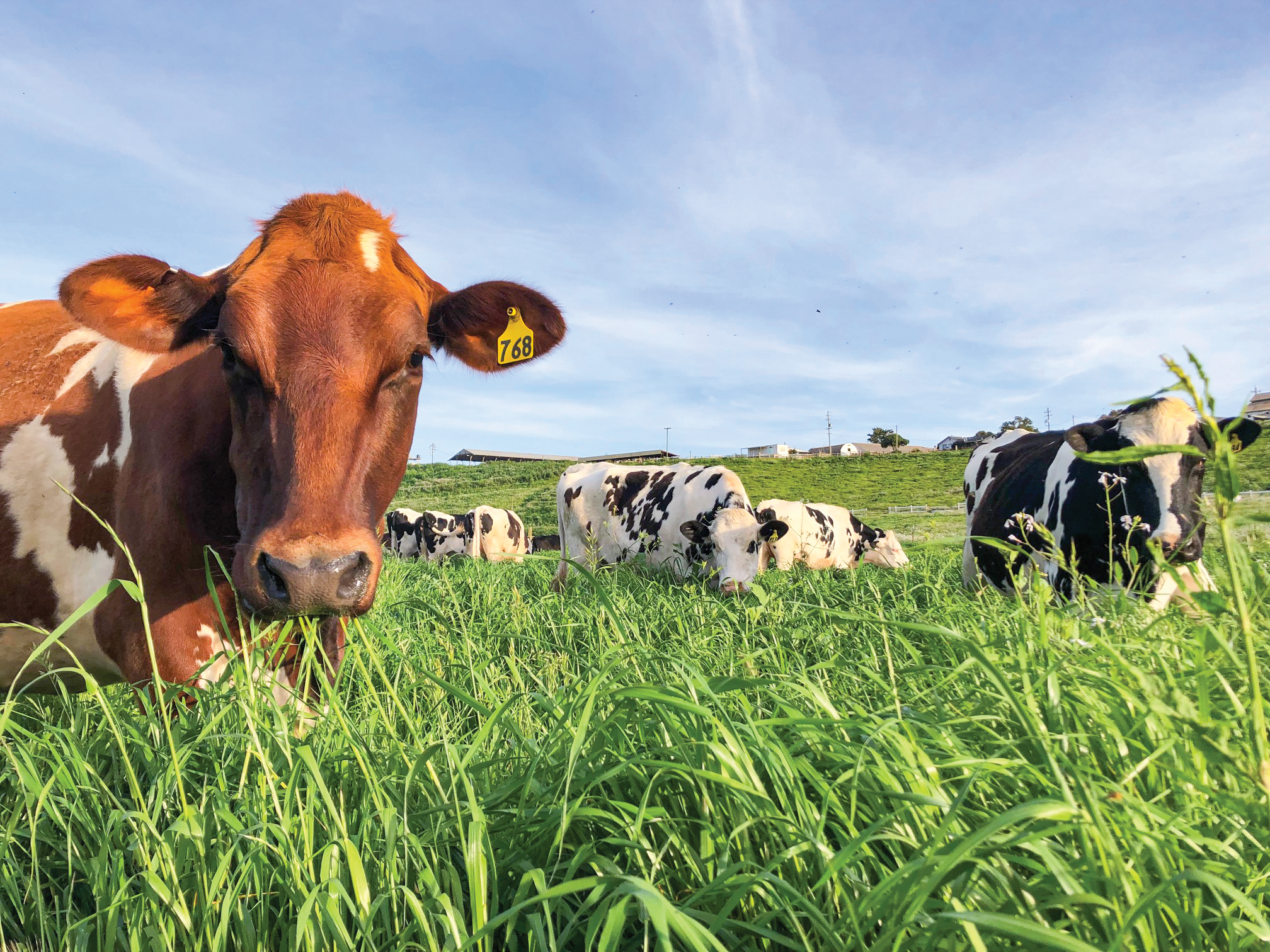
Photo/Courtesy Schoch Family Farmstead
.png)
Photo/Caitlin Fillmore
By Caitlin Fillmore
The family behind the Schoch Family Farmstead says it takes pride in doing things the old-fashioned way, even as it innovates.
The farm in the foothills of the Gabilan Mountains just north of Salinas was established in 1944 by Beau Schoch’s Swiss grandfather, Ernest Schoch, and his great uncle, Adolf, who immigrated to the region in the 1920s. According to Schoch (pronounced “shock”), the operation looks similar to a generation ago, when his father John led the Schoch Dairy.
“We’re a small family dairy—a tiny dairy by California standards,” Schoch said of the 100-acre, 100-head operation, which he runs with his father and older brothers Ty and Seth. “Almost to a fault, we do everything ourselves. It’s kind of an old-school way of managing the farm.”
The U.S. Department of Agriculture awarded the family one of California’s first Dairy Business Innovation Initiative grants in January.
Some $11.4 million is available through the grants program to help dairy businesses address supply-chain and food-system challenges, according to the Pacific Coast Coalition.
Eight other dairy operations received grant funding in the first round of the program. They include five California dairies, with Schoch Family Farmstead winning funding to help introduce its new product line: farmstead butter.
The PCC is the latest region established by USDA under the dairy business innovation program. The PCC region serves Arizona, California, Nevada, Washington, Oregon, and New Mexico. California State University, Fresno, was awarded grant administration for the PCC.
The program identifies needs for innovation within the dairy industry as customers’ tastes have elevated significantly, said Nancy Van Leuven, PCC’s director of strategic communication and engagement and a professor at Fresno State.
The grant’s focus areas provide a “shot in the arm” for adding diverse, value-added dairy products to the market and supporting business plan development and marketing, Van Leuven said.
Van Leuven pointed to trends such as agritourism and ice cream pop-ups that are starting to catch on in the dairy industry. She said dairies and creameries are increasingly borrowing ideas from the restaurant industry, such as farm-to-fork dinners and artisanal pairings.
Practical needs such as conducting feasibility studies, training employees, purchasing equipment or developing innovative dairy packaging also qualify for funding under the reimbursement-based grant.
The PCC says it hopes to energize these efforts with financial resources, educational tools, and opportunities to network and connect across the dairy sector.
“California already has a phenomenal network, but it can be sharing with other states. The dairy industry’s problems don’t stop at the state line,” Van Leuven said. “We want PCC to be in the right space to have the Pacific Coast covered with all the states working to energize the industry.”
Schoch Family Farmstead’s grant-winning farmstead butter proposal will support production of a small-batch, barrel-churned product with hand-ladled cream. As with many of Schoch’s existing cheeses and yogurt products made from its mainly Holstein herd, the dairy’s approach to butter is influenced by ancestors who established the family farm.
Beau Schoch, the primary crafter of the farm’s value-added products, manages an ever-expanding line. Schoch Family Farmstead sells five main varieties of cheese, from Monterey County’s last remaining Monterey Jack to East of Edam, the farm’s take on the Dutch cheese.
A Swiss-style yogurt recently joined the line-up. Schoch said the family hopes to add a farm store and other features to one day bring customers to the farm.
“We don’t see ourselves as being a big dairy in the commodity market,” he said. “If anything, our trend has been getting smaller as a dairy and getting into the value-added side. We’re trying to sell an existing customer a new product.”
Today, only 20% of milk produced at the Schoch dairy remains on the farm for its various products. The rest goes to a cooperative creamery.
“Because the cost to produce is increasing every year and outpacing commodity prices, we need to add value to our milk to stay relevant,” Schoch said. “We’re still in a transitional phase. Our goal long term is small space efficiency.”
The other California grant winners include: Central Coast Creamery in Paso Robles; Foggy Bottoms Boys in Ferndale; JG Weststeyn Dairy in Willows; and Wondercow in Madera County.
The winners represent an array of projects, from Wondercow’s market research into trend-predicting cow colostrum dietary supplements to Central Coast Creamery’s request to purchase a cheese-coating machine.
Central Coast Creamery estimated saving 30 hours a week in labor, boosting production capacity by 40% and increasing annual projected sales by $1.3 million after automating its cheese-coating process.
The coating machine will also improve the appearance of the business’s in-demand assortment of nine cow and goat milk cheeses, according to owner Reggie Jones.
The second round of funding for the PCC’s dairy innovation grants closed in late February with the anticipated announcement of winners in May, Van Leuven said. Future anticipated grant cycles open in July and next January. Information may be found at dairypcc.net.
Van Leuven said the work of the PCC hopes to energize the industry on the West Coast as similar coalitions have achieved across the country. Three other DBI regions are already operating in the Midwest, Northeast and across the South.
“If they’re going into this innovative space, they are thinking about themselves differently,” Van Leuven said. “There’s a whole lot of really good energy. These are the things that will help the industry grow.”
(Caitlin Fillmore is a reporter based in Monterey County. She may be contacted at cslhfillmore@gmail.com.)





.svg.png)
